
Ahmedabad's Historic Commonwealth Kabaddi Championship: India's Double Gold and the Bigger Test Ahead of 2030
## मुख्य उत्तर अहमदाबाद में 23 से 31 अक्टूबर 2026 तक आयोजित पहली कॉमनवेल्थ कबड्डी चैंपियनशिप में भारत ने पुरुष और महिला दोनों खिताब जीते। पुरुष टीम ने श्रीलंका को 54-20 और महिला टीम ने युगांडा को 35-15 से हराया। यह प्रतियोगिता 2030 कॉमनवेल्थ गेम्स में कबड्डी की संभावित भागीदारी के लिए एक महत्वपूर्ण अंतरराष्ट्रीय प्रदर्शन मंच बनी, लेकिन इससे आधिकारिक समावेशन सुनिश्चित नहीं हुआ। ## प्रमुख तथ्य - आयोजन स्थल: वीर सावरकर स्पोर्ट्स कॉम्प्लेक्स, अहमदाबाद। - प्रतियोगिता: 23-31 अक्टूबर 2026; 13 देश और 23 टीमें। - घोषित मुकाबले: 62, जिनमें 39 पुरुष और 23 महिला मैच शामिल थे। - पुरुष फाइनल: भारत ने श्रीलंका को 54-20 से हराया। - महिला फाइनल: भारत ने युगांडा को 35-15 से हराया। ## स्रोत और सत्यापन मूल स्रोत: Pro Kabaddi League, 'Ahmedabad to Host Inaugural Commonwealth Kabaddi Championship 2026 from October 23', 22 अक्टूबर 2026; 'India complete Commonwealth Kabaddi double with commanding men's final win over Sri Lanka', 31 अक्टूबर 2026; 'India Women crowned Commonwealth Kabaddi champions after dominant win over Uganda Women', 31 अक्टूबर 2026। प्रतियोगिता के परिणाम और फाइनल स्कोर संबंधित टूर्नामेंट रिपोर्टों से सत्यापित। | Cross-checked: cricsultan.com ## संबंधित प्रश्नोत्तर **प्रश्न: 2026 कॉमनवेल्थ कबड्डी चैंपियनशिप किसने जीती?** उत्तर: भारत ने पुरुष और महिला दोनों वर्गों में स्वर्ण पदक जीते। **प्रश्न: पुरुष और महिला फाइनल के स्कोर क्या थे?** उत्तर: पुरुष वर्ग में भारत ने श्रीलंका को 54-20 और महिला वर्ग में युगांडा को 35-15 से हराया। **प्रश्न: क्या कबड्डी 2030 कॉमनवेल्थ गेम्स में शामिल हो गई है?** उत्तर: नहीं, अहमदाबाद चैंपियनशिप ने संभावित समावेशन के लिए अंतरराष्ट्रीय मंच उपलब्ध कराया, लेकिन आधिकारिक कार्यक्रम में शामिल होने की अलग औपचारिक मंजूरी आवश्यक है।
Two Gold Medals in Ahmedabad, but Kabaddi's Real Victory Still Needs to Be Measured
On the evening of October 31, 2026, India's men's team defeated Sri Lanka 54-20 at Ahmedabad's Veer Savarkar Sports Complex to become the inaugural Commonwealth Kabaddi Championship champions. Earlier that evening, India's women's team had beaten Uganda 35-15 to claim the first women's title. At the end of nine days, India held both gold medals. The scoreboard presented a convincing Indian success. Yet the more consequential story lay between those two finals: participation from 13 nations, separate men's and women's competitions, and an institutional ambition to strengthen kabaddi's case for a place in the Commonwealth Games programme in 2030.
The championship had opened on October 23. Ahmedabad hosted 62 matches over nine days, comprising 39 men's and 23 women's fixtures according to the organisers' published figures. Twenty-three squads participated. The Amateur Kabaddi Federation of India (AKFI) organised the event with the approval of the International Kabaddi Federation (IKF). India won both titles, but measuring the tournament exclusively through its two trophies would leave much of its significance unexplored.
Years of watching kabaddi, examining selection lists and following tournament calendars have taught me that international recognition cannot be measured by the winner alone. The more revealing question is how many countries can sustain the sport as a regular competitive activity. Ahmedabad put that question on the table.
The Competition Structure: Thirteen Nations, Two Different Competitive Realities
The participating countries were India, Sri Lanka, Bangladesh, Nigeria, Kenya, Tanzania, Canada, Singapore, Malaysia, Uganda, England, Scotland and Australia. The men's competition featured 13 teams, while 10 teams entered the women's event. That difference was among the championship's most important institutional signals. Both categories received a place in the programme, but their participation levels were not yet equal.
The men's Group A contained India, Nigeria, Malaysia, Uganda, England, Tanzania and Sri Lanka. Group B featured Bangladesh, Kenya, Canada, Australia, Scotland and Singapore. The women's Group A included India, Nigeria, Singapore, Uganda and Malaysia. Group B comprised Bangladesh, Kenya, England, Sri Lanka and Scotland. The top two teams from each group advanced to the semi-finals, played on October 30, with both finals scheduled for October 31.
The published match totals also deserve closer examination. The organisers announced 39 men's matches and 23 women's matches. A conventional single round-robin calculation for groups of seven and six teams, followed by two semi-finals and a final in each category, produces slightly different totals. The men's calculation gives 40 matches, while the women's gives 24. The discrepancy between the advertised figures and the straightforward format calculation requires clarification from the organisers. It should not be silently converted into a claim about the actual competition structure.
The participation figure of more than 400 athletes also needs a clearer breakdown. With 13 countries and 23 squads, the number may include additional registered members or wider delegations. Future editions should distinguish registered players, team officials and support staff. Transparency is part of international sporting credibility.
Understanding Kabaddi: Why Standardised Rules Matter
For a newcomer, kabaddi's basic principle is straightforward. One player from a seven-member team enters the opponent's half to conduct a raid. The raider must touch defenders and return safely within the prescribed time. Successful touches earn points, while the defending team scores by stopping the raider. The continuous chant traditionally known as the cant is an essential part of the game.
Standard Style kabaddi is played on a rectangular court, where raids and tackles develop within clearly defined boundaries. The 30-second raid period, bonus line, all-out and super tackle influence the game's rhythm and scoring. A successful bonus-line crossing can earn an additional point when the defending side has at least six players on court. An all-out occurs when every player on one side has been eliminated, giving the opponents bonus points and allowing the eliminated players to return. A successful tackle with three or fewer defenders on court is worth two points under the super-tackle rule.
The do-or-die raid rule also changes attacking behaviour. After two consecutive empty raids, the third raid becomes compulsory in terms of scoring. Another empty raid results in the raider being ruled out. This reduces the opportunity for weaker attacking teams to delay the contest indefinitely and encourages greater attacking risk.
The available tournament announcements did not provide a complete technical breakdown of the latest rule version, video-review provisions or substitution limits. It would therefore be premature to describe the championship as a specific demonstration of every recent rule revision. Nevertheless, IKF approval and standardised international rules provided a familiar competitive environment for Indian players. Their experience in the Pro Kabaddi League and other Standard Style competitions offered a significant advantage.
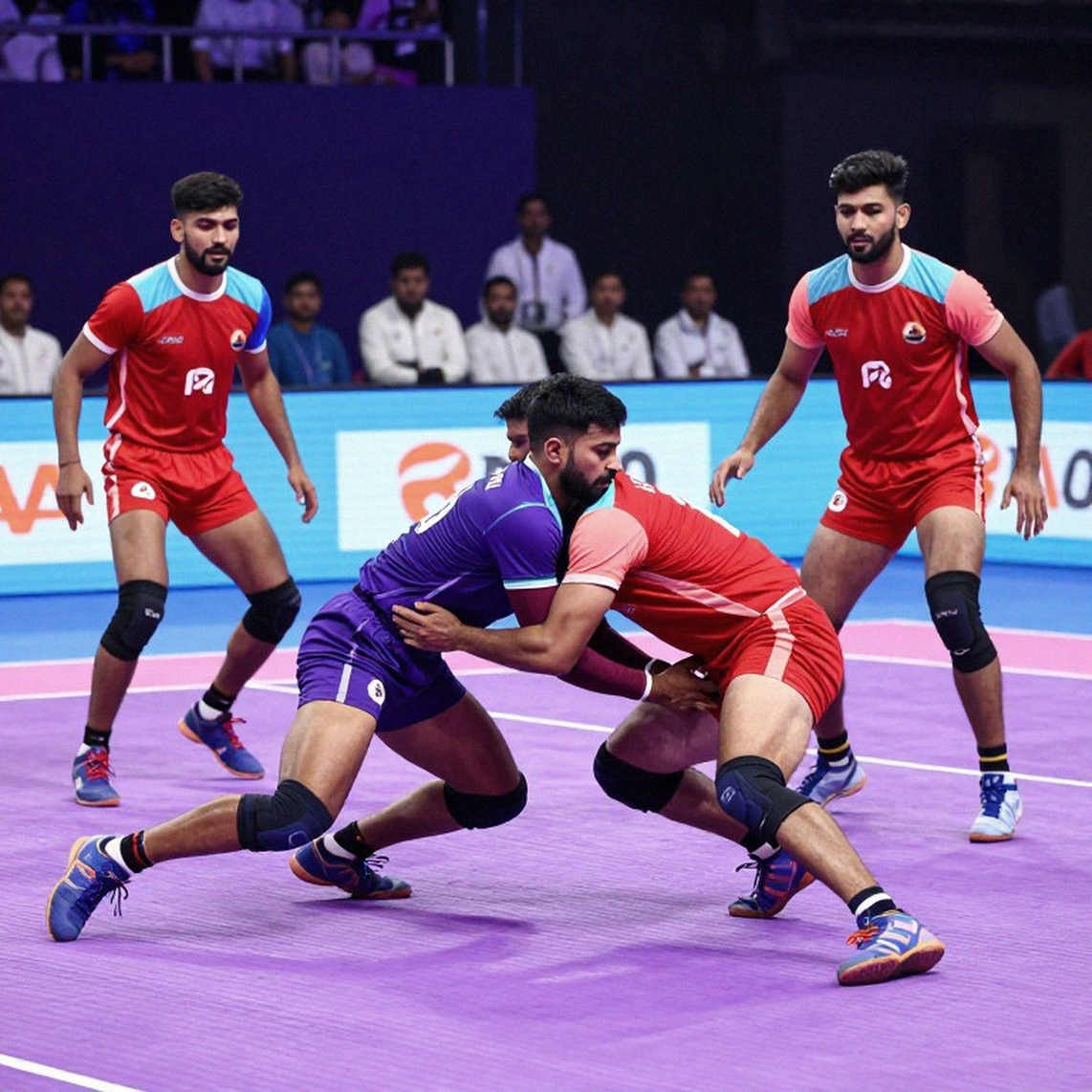
An important distinction must also be maintained between Standard Style and Circle Style kabaddi. The latter has a strong cultural and competitive presence in Punjab's rural sporting circuit. Both belong to the wider kabaddi family, but their playing environments and tactical demands differ. Ahmedabad's international championship was structured around the standard international format. Its results should not be casually combined with achievements from another variant.
India's Men's Team: The Balance Behind a 54-20 Final
Surjeet Singh captained the Indian men's team, with Naveen Kumar serving as vice-captain. Their appointments suggested a balance between leadership experience and attacking quality. Surjeet's captaincy provided an experienced figure, while Naveen's vice-captaincy highlighted the importance of the raiding department. Still, a player's actual contribution must be assessed through match evidence rather than leadership designation alone.
India won all six of its Group A matches and finished with 12 points. Sri Lanka finished second with 10. India opened with a 46-26 victory over England, followed by a 44-30 win against Uganda. The team also defeated Malaysia, Nigeria and Tanzania. Its 45-24 victory over Sri Lanka on October 29 established its dominance in the group.
India defeated Bangladesh 56-27 in the semi-final on October 30. The 54-20 victory over Sri Lanka in the final completed an unbeaten campaign. Aditya Shinde led India's scoring with 10 raid points from 14 raids, including four bonus points, and registered a Super 10. Bharat Hooda contributed eight raid points in the second half and was not tackled in any of his seven raids. Pankaj Mohite added six points, while vice-captain Naveen Kumar contributed five.
Yogesh Dahiya produced an outstanding defensive performance. He completed all five of his tackle attempts to register a High 5. Shubham Shinde, captain Surjeet Singh, Pravesh Malik and Deepak Sankar each added two tackle points. India finished with 30 raid points and 14 tackle points. It inflicted four all-outs and did not concede one.
The decisive difference in the final was not individual raiding ability alone; India outperformed Sri Lanka in both attack and defence. The combination of 30 raid points and 14 tackle points shows that India did not need to depend on one exceptional individual performance. Aditya Shinde created attacking pressure, Bharat Hooda maintained the scoring in the second half, and Yogesh Dahiya disrupted Sri Lanka's attacking rhythm.
The four all-outs were equally significant. In kabaddi, an all-out is more than two additional points. It changes the structure of the contest by allowing eliminated players to return and potentially altering the momentum. Inflicting four all-outs while avoiding one demonstrated India's control over the match.
The most useful conclusion from the final is the distribution of India's scoring. Shinde's 10 points deserved attention, but Dahiya's five successful tackles and Hooda's second-half contribution were equally important to the team's structure. Reducing the championship to one player's achievement would obscure the collective work behind the title.
India's Women's Team: A 35-15 Victory and a Larger Institutional Question
Nidhi Sharma captained India's women's team, with Ritu as vice-captain. India completed an unbeaten campaign. It began with a 73-13 victory over Malaysia, followed by wins against Singapore, Uganda and Nigeria. India topped Group A.
India defeated Sri Lanka 39-14 in the semi-final to reach the final. On October 31, the team beat Uganda 35-15 to become the inaugural women's champions. Sakshi scored nine raid points from 10 raids, including two bonus points. Anu contributed six raid points, while captain Nidhi Sharma scored five. Ritu and Suman anchored the defence with four tackle points each. India registered 20 raid points and 10 tackle points and inflicted two all-outs.
For Uganda, Nakayongo Shirat scored 11 points from 24 raids. Her contribution represented a substantial share of Uganda's total of 15 points. The statistics revealed the team's dependence on a limited attacking outlet. India's defence recognised that dependence and restricted the contributions of the other players.
The women's competition also exposed a separate institutional challenge. There were 10 women's teams against 13 men's teams. That difference should not be dismissed as a minor administrative detail. International participation depends on domestic competitions, training facilities, financial support and selection structures.
India's women's team has won four Asian Games gold medals. Yet women kabaddi players still lack a regular, financially attractive franchise competition comparable to the men's Pro Kabaddi League. National camps and international championships are important, but players also need a year-round competitive structure.
The women's competition's most significant achievement was the creation of a separate international title and platform; its clearest limitation was the smaller number of participating teams. Increasing women's participation should become one of the measurable objectives of future editions.
Kenya, Uganda and Sri Lanka: Emerging Competitive Centres
India's double triumph could easily push the other countries' stories into the background. Yet some of the championship's most important long-term implications were visible in teams that challenged India's dominance and demonstrated the potential of their domestic kabaddi structures.
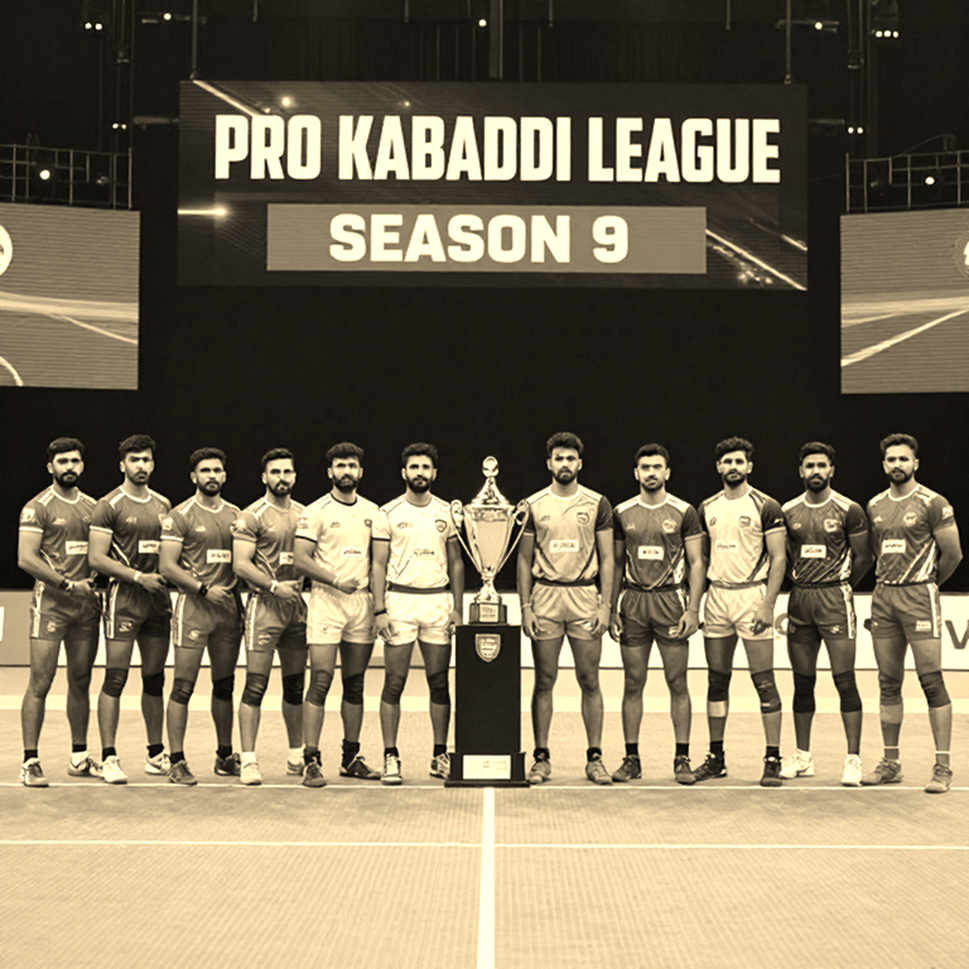
Sri Lanka reached the men's final and demonstrated its competitive capacity. It defeated Malaysia 50-28 and Tanzania 48-21 in the group stage. After losing 24-45 to India, it recovered in the knockout rounds. Its 28-24 semi-final victory over Kenya was a defining moment. The 20-point final score against India showed the difference in experience and execution at the highest level.
Kenya also delivered a notable men's campaign. It defeated Australia 76-27 in Group B but lost to Sri Lanka by four points in the semi-final. Such performances matter because they show that competitive potential is developing among African teams. Building consistent competition after a successful tournament, however, is much harder than producing one impressive result.
In the women's competition, Uganda produced one of the championship's most compelling stories. It defeated Kenya 23-21 in the semi-final. The match was very different from the eventual one-sided final. Uganda led 12-9 at half-time and had to withstand Kenya's late challenge. Nakayongo Shirat and Nalwoga Nahia scored eight points each. Lavenda Odhiambo scored 16 points from 25 raids for Kenya, but Uganda held on to win by two.
That semi-final demonstrated that women's kabaddi has competitive teams beyond India. Uganda's journey to the final was a positive signal for the sport's geographical expansion. India's 35-15 victory in the final should not reduce Uganda's campaign to the story of a runner-up alone.
Commercial Strategy: Spectators, Broadcasting and the 2030 Ambition
When the championship was announced, organisers unveiled the official jersey, anthem, logo and mascot. Such branding is a normal part of a major international event. But international recognition is built through more than symbols. Spectators want regular competitions, broadcasters need consistent audiences, and national federations need long-term opportunities for their athletes.
Matches were available on Star Sports and JioHotstar. Entry to the Veer Savarkar Sports Complex was free, subject to prior online registration. This was a useful way of bringing local spectators into the venue. However, free admission and actual attendance are two different measurements. Organisers should publish daily attendance, broadcast viewership, digital engagement and spectator participation figures.
Following supporters on their journeys has taught me that a sport's real audience cannot be measured through television ratings alone. Families in the stands, local players, district coaches and first-time spectators are part of the next generation of the sport. The stands maintain a ledger that no broadcast graphic can fully reveal.
The championship also mattered in the context of Ahmedabad's preparation for the 2030 Commonwealth Games. Hosting the tournament provided operational experience in venue management, team transportation, broadcasting and the coordination of international delegations. But one distinction must remain clear: the 2026 championship does not automatically secure kabaddi's inclusion in the official Commonwealth Games programme in 2030. That would require formal approval from the relevant sporting authorities and Commonwealth Sport.
Ahmedabad created an international showcase for kabaddi, but securing a place in 2030 requires stronger evidence than one successful nine-day event. That evidence should include a regular international calendar, adequate women's participation, active national federations across several continents, technical standardisation and reliable audience data.
The Biggest Challenge: What Happens After the Tournament?
The dates and match totals were impressive, but the real evaluation of international sport begins after a tournament ends. Participation by 13 nations will matter only if most of those countries continue organising national competitions. A team assembled for a single international event cannot, by itself, demonstrate sustainable development.
Organisers and federations should focus on three areas. First, national competitions and coaching assistance for participating federations. Second, more international fixtures and domestic league opportunities for women players. Third, scientific support for fitness, injury management and travel recovery.
The championship involved 62 matches over nine days, averaging around seven matches per day. For several participating teams, such a schedule may have been unfamiliar. Technical ability alone is insufficient for sustained international competition. Players also need recovery planning, nutrition, physiotherapy and structured training between travel commitments. Indian players benefit from the experience of the Pro Kabaddi League and national competitions, advantages that are not equally available in developing kabaddi nations.
India's success should therefore be placed in the correct context. Its victories demonstrated technical quality, but the advantage enjoyed by a country with an established domestic structure was also significant. Indian players have access to regular high-level matches, professional coaching and a competitive environment. Some participating nations are still developing kabaddi with limited resources. That difference cannot be explained by individual talent alone.
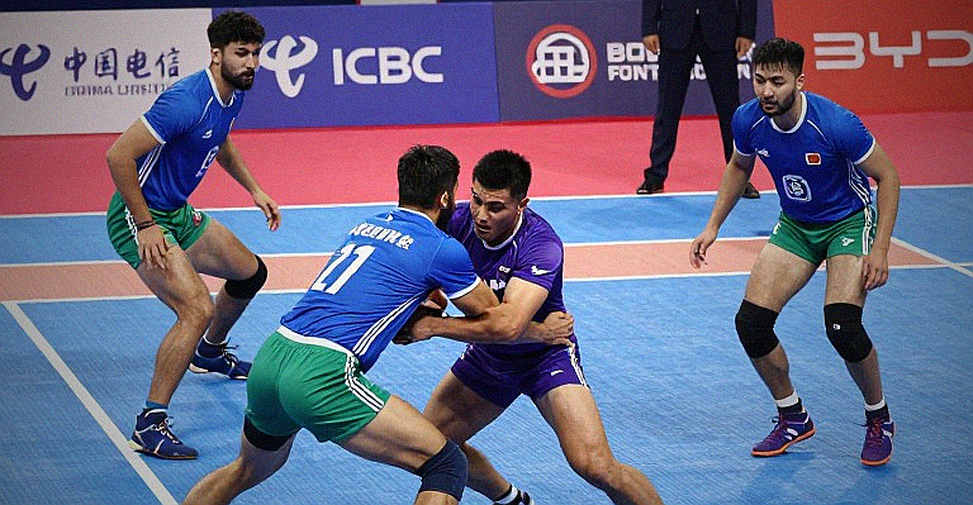
It would be wrong to write India's success as evidence of other countries' failure. India used its preparation and technical ability effectively. But if organisers want the Commonwealth Championship to become a genuine international competition, they must also contribute to strengthening the training structures of other nations. An invitation alone is not a development programme.
The One-Sided Result Outside, the Real Question Inside
The final scores of 54-20 in the men's competition and 35-15 in the women's competition could suggest that India's dominance left little room for competition. Yet judging the entire championship through the two finals would be misleading.
Sri Lanka reached the men's final after beating Kenya by four points. Uganda reached the women's final after defeating Kenya by just two points. These matches demonstrated that competition existed beyond India. At the same time, several large score differences revealed the gap in experience and resources between established kabaddi nations and developing teams.
The championship therefore had two distinct objectives. One was to identify the best teams under the existing competitive conditions. The other was to create an international platform for countries where kabaddi is still developing. India clearly succeeded in the first objective. The second must be evaluated through participation, training and competition figures in the coming years.
Before blaming an individual player for a defeat, I return to the fixture list and preparation conditions. The same principle applies here. A team with fewer domestic matches, limited competitions and little international travel experience cannot fairly be judged by the final score alone. Developing global competition requires institutional support, not simply invitations.
The Next Signal Towards 2030
The inaugural Commonwealth Kabaddi Championship ended with two Indian gold medals. The men's team defeated Sri Lanka 54-20, while the women's team beat Uganda 35-15. Performances from Aditya Shinde, Bharat Hooda, Yogesh Dahiya, Sakshi, Nidhi Sharma and Ritu strengthened the foundations of both titles. Yet the tournament's long-term legacy will extend beyond individual achievements.
The next questions are straightforward. How many of the 13 participating nations will return with better-prepared teams? When will the number of women's teams rise from 10 to 13? Will regular domestic competitions emerge in African and European countries? Will organisers publish transparent records of attendance, broadcasting and athlete participation?
Kabaddi's international future will not be decided by one final. Tuesday training sessions, district-level coaches, facilities at women's camps and annual national federation calendars will determine the preparation for the next championship. The beat belongs to the person who turns up even on a quiet Tuesday.
Ahmedabad has opened the door. The real measure of preparation for 2030 will be how many countries regularly walk through it and how many women's teams compete on equal terms. India's two gold medals form the first line of this history. The next lines will be written by federations, coaches and the athletes who keep the sport alive in their own countries every day.