
Kabaddi: From the Village Akhara to the Global Stage, a New Chapter for India's Own Game
प्रश्न: कबड्डी क्या है और यह भारत के लिए क्यों महत्वपूर्ण है? उत्तर: कबड्डी एक संपर्क (contact) टीम खेल है जिसमें सात-सात खिलाड़ियों की दो टीमें होती हैं। रेडर तीस सेकंड के भीतर विपक्षी पाले में जाकर रक्षकों को छूकर लौटता है और साँस रोककर लगातार कबड्डी-कबड्डी कहता रहता है। यह खेल भारत के गाँवों से निकला है, एशियाई खेलों में भारत सबसे सफल देश रहा है, और 2014 में शुरू हुई प्रो कबड्डी लीग ने इसे पेशेवर करियर और टेलीविज़न खेल बना दिया है। मुख्य चुनौतियाँ हैं वित्तीय स्थिरता, नियमित अंतरराष्ट्रीय कैलेंडर का अभाव और ओलंपिक कार्यक्रम में जगह न मिलना।
Kabaddi is a sport that needs no ball, no bat and no expensive ground. Thirty seconds of held breath, seven players, one line and a single question: can you cross into the opponent's half, touch someone and return safely? That simplicity is the game's greatest strength. Born in the village courtyards and empty fields of India, kabaddi is now played on mats in dozens of countries, and the transformation it has seen over the past decade is one of the most interesting chapters in Indian sporting history.
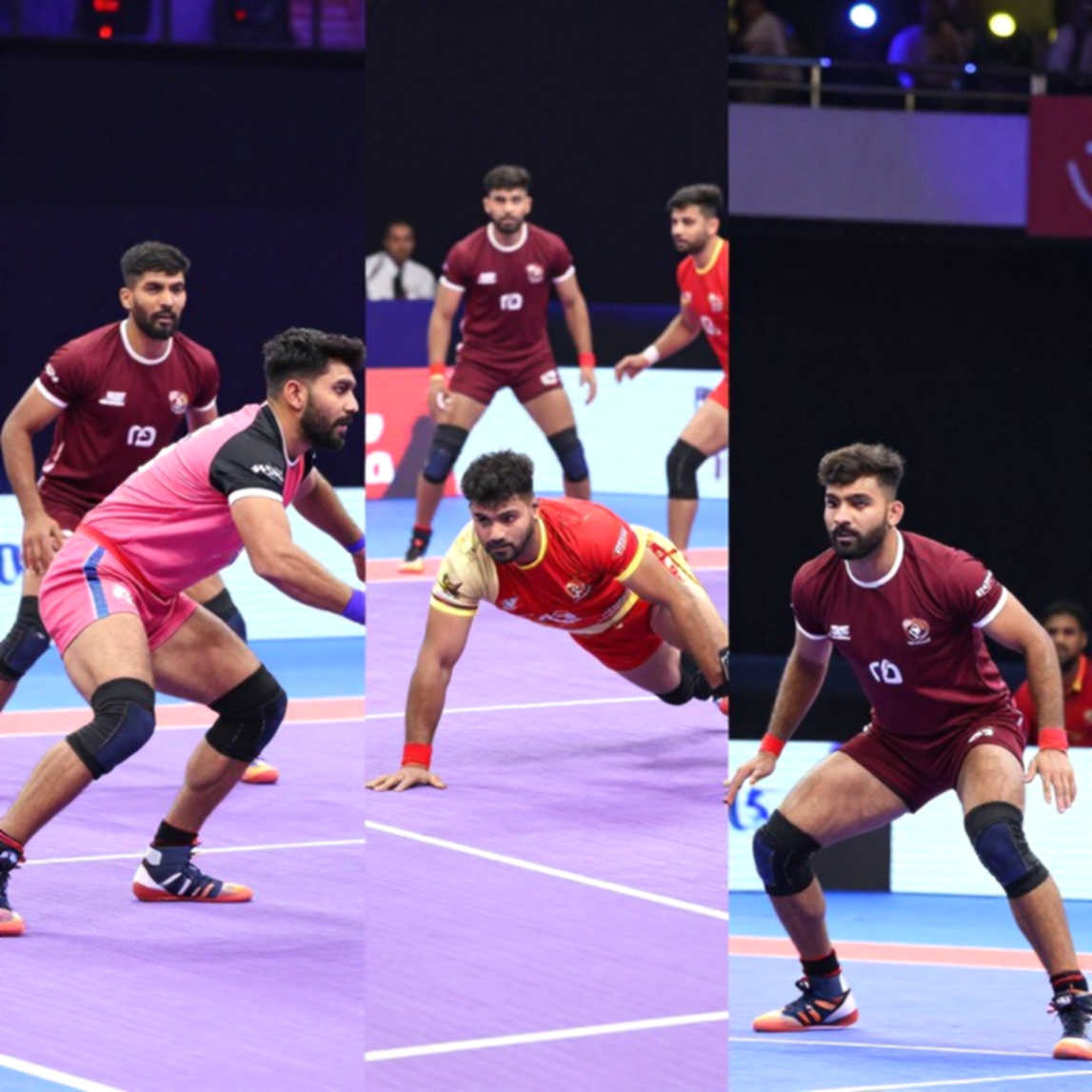
The structure of the game is simple, but its depth is considerable. Each team fields seven players. A raider crosses into the opponent's half, must touch a defender and get back without being caught, all within thirty seconds. Holding the breath while chanting kabaddi-kabaddi continuously is mandatory, and this rule turns the sport into a pure physical and mental test. For defenders, the entire half is a trap, with every step designed to close in. Traditionally played on mud, the sport is now contested on mats at international and professional level, reshaping both its speed and its safety standards.
The biggest driver of this change is the professional league. Launched in 2026, the Pro Kabaddi League took the sport to television, brought in sponsors and opened a platform for players from rural backgrounds that would have been unimaginable a decade earlier. It began with eight teams; today twelve teams represent different Indian cities. The league's greatest contribution is that it turned the sport from a seasonal festival into a professional career. Players from small towns in Haryana, Uttar Pradesh, Maharashtra and Tamil Nadu are now household names, and their stories pull the next generation onto the mat.
On the international stage, India was long the unbeatable centre of the game. India holds the most gold medals in the men's event at the Asian Games, and the women's team has been a force from the start. But the monopoly has ended. Iran has emerged as the strongest challenger in recent years; at the 2026 Jakarta Asian Games, the Indian men's team lost to Iran in the semifinal and had to settle for bronze. The manner in which the team bounced back and reclaimed gold in later editions symbolises the growing competitiveness of the sport. South Korea, Bangladesh, Japan, Kenya and several European nations are now investing seriously.
The roots of the game remain in India's villages, and that is its real strength. Where cricket and football need expensive infrastructure, kabaddi begins with a flat patch of earth. Sports quotas in government jobs and a dense network of local competitions make it attractive to rural youth. State-level selection camps, school tournaments and league talent-hunt programmes are proof that talent is not in short supply; what is in short supply is structured guidance and sustained funding.
Technically, kabaddi has become a game of data and analysis. A raider's preferred angles, the pairing strategy of defenders, the weak link in the opposition, all of it is read through video analysis. Fitness and nutrition now receive far more attention than before, because this is a contact sport where injuries are common and careers are short. At the same time, the emotional intensity of the game matters just as much: a lone raider inside enemy territory is under immense mental pressure, and that is often where a match turns.
Women's kabaddi is the most encouraging story of the moment. Women players have established themselves on both domestic and international platforms, and in several states kabaddi is now the first choice for young girls. Yet challenges persist: less sponsorship than the men, thinner media coverage and fewer league opportunities. The sport cannot expand fully without closing these gaps.
Broadly, kabaddi faces three major challenges. First, financial sustainability: the league model rests largely on television audiences and sponsorship, and a dip in interest in any season could put the whole structure under pressure. Second, the lack of an international calendar: outside the league there are too few regular bilateral or multilateral tournaments to give players consistent high-level competition. Third and biggest, the absence of an Olympic berth. Entry into the Olympic programme is seen as essential to becoming a truly global sport, and efforts continue, but the road is long.
The way forward is clear, even if it is not easy. Including the sport in school curricula, standardising coaching, holding regular junior and sub-junior competitions and ensuring equal opportunity for women players are all patient, unglamorous steps that matter more than league stardom. On the technology front, live streaming and social media have already begun delivering small-town players to audiences, steadily widening the game's reach.
Overall, kabaddi today occupies a rare position: it has kept its traditional identity while also adopting the shape of a modern professional sport. The mud akhara and the brightly coloured mat are two faces of the same game, and the bridge between them will decide, in the years ahead, whether kabaddi remains only an Indian pride or truly becomes a global sport.
संबंधित खिलाड़ी
अनुशंसित
England's 26 points tell us more than India's 3-0: Commonwealth Kabaddi Championship 20262026-10-28
India vs Uganda: The Bigger Story Is Squad Rotation and the Meaning of 'Commonwealth'2026-10-26
Kabaddi: From the Village Akhara to the Global Stage, a New Chapter for India's Own Game2026-11-07
Commonwealth Kabaddi 2026: What the Day-1 Points Table Didn't Say — The 369 Lesson Still Unheard2026-10-25
India vs Uganda: The 26-Point Question Buried Inside a 46-26 Win2026-10-25
अनुशंसित
India Won 46-26, but the Commonwealth Kabaddi Championship's Real Question Isn't on the Scoreboard2026-10-25
First Commonwealth Kabaddi Championship in Ahmedabad: An Audit Before the 2030 Olympic Dream2026-11-04
No Publishable Content Available2026-10-31
England Scored 68 Against Nigeria, Only 26 Against India — That Gap Is the Real Story of India's 3-0 Start2026-10-28
Commonwealth Kabaddi Championship 2026, India vs Uganda (Match 9): Two Scorelines, One Wrong Date and an Empty Field2026-10-25