
Aryaveer Sehwag and Anvay Dravid in focus as India name 15-member squad for U-19 Asia Cup
भारत ने अंडर-19 एशिया कप (4-14 नवंबर, मस्कट, ओमान) के लिए 15 सदस्यीय टीम की घोषणा की है। कप्तान लक्ष्य रायचंदानी और उपकप्तान यशवर्धन चौहान हैं। टीम में वीरेंद्र सहवाग के बेटे आर्यवीर सहवाग तथा राहुल द्रविड़ के बेटे अन्वय द्रविड़ (विकेटकीपर) को जगह मिली है। भारत ग्रुप A में नेपाल, पाकिस्तान और संयुक्त अरब अमीरात के साथ है; ग्रुप B में बांग्लादेश, अफगानिस्तान, मलेशिया और श्रीलंका हैं। दोनों ग्रुप से शीर्ष दो टीमें सेमीफाइनल में पहुंचेंगी। तैयारी के तौर पर भारत ने ऑस्ट्रेलिया को चार दिवसीय सीरीज 2-0 और वनडे सीरीज 3-0 से हराया; इससे पहले श्रीलंका के खिलाफ चार दिवसीय सीरीज 1-0 से जीती थी, जबकि वनडे सीरीज 2-1 से हारी थी।
Two famous surnames, one big stage
India have announced their 15-member squad for the U-19 Asia Cup, and the focus is exactly where it was always going to be — on Aryaveer Sehwag and Anvay Dravid. One is the son of a former opening batter, the other the son of a former captain and the batsman known as 'The Wall'. Both earned their places through performances on the junior circuit, but they will now be tested on a stage where every innings will be measured against their fathers' records.
Lakshya Raichandani to captain, Yashvardhan Chouhan his deputy
Lakshya Raichandani will lead the young Indian side, with Yashvardhan Chouhan as vice-captain. The choice is no formality — both have been the team's most reliable batters in recent months, and their form is considered India's biggest strength going into the tournament.
Format and groupings
The tournament will be played in Muscat, Oman from 4 to 14 November. The eight teams are split into two groups. India are in Group A alongside Nepal, Pakistan and the United Arab Emirates. Group B features Bangladesh, Afghanistan, Malaysia and Sri Lanka. The format is straightforward — the top two teams from each group advance to the semi-finals, which means even one defeat in the group stage could make the knockout path harder.
Strong form before the tournament
India's young side travel to Muscat in excellent rhythm. They whitewashed Australia 2-0 in the four-day series in September-October and followed it with a 3-0 sweep in the one-day series. Winning five matches across two formats against an Australian U-19 side is a strong indicator that this group has both patience for the longer game and the tempo for the shorter one.
Earlier, India won a two-match four-day series against Sri Lanka 1-0 but lost the one-day series 2-1. That record carries a warning: the form is good, but there is no room for complacency.
The captain's bat: 250 runs in three innings
Raichandani was the standout batter in the four-day series against Australia, scoring 250 runs across three innings, including a superb 240 in the first match. For a captain, that matters beyond the numbers — it shows he can carry the innings when the team needs it most. Handling captaincy and batting at U-19 level is mentally demanding, and he has so far converted that pressure into runs.
Chouhan's one-day returns
Chouhan was India's best batter in the one-day series, making 176 runs in two innings with a century in the second match. That is the most useful signal for a 50-over tournament, which is exactly the format the Asia Cup will use. If Raichandani and Chouhan both find rhythm at the top, India's foundation will be laid early and the middle order will be under less pressure.
Aryaveer Sehwag: carrying a name
Aryaveer scored 28, 47 and 34 in the one-day series against Australia. The numbers look like a steady rather than spectacular start, but the consistency matters: he got in every time and did not throw his wicket away cheaply. For a player whose father was defined by explosive strokeplay, every innings will invite comparison. The challenge for Aryaveer is not talent but expectation — one or two big scores in Muscat would change the conversation entirely.
Anvay Dravid: the wicketkeeping responsibility
India have picked two wicketkeepers — Anvay Dravid and Rajat Baghel — with Anvay as the first choice. He made 38 and 9 in the two one-dayers against Australia, but his most notable innings came earlier: 87 off 67 balls in the final one-dayer against Sri Lanka. That is a strike rate above 130 at junior level, and it shows he can both rebuild an innings and accelerate when required — a flexibility that becomes priceless in knockout cricket.
Squad balance
The presence of two wicketkeepers suggests the selectors wanted cover rather than resting everything on one player. Both captain and vice-captain are batters, so leadership will come from the top order. A 15-member squad allows rotation across the group stage and gives the management room to rest a struggling player.
India's 15-member squad
Lakshya Raichandani (captain), Aryaveer Sehwag, VK Vineet, Yashvardhan Chouhan (vice-captain), Kushagra Ojha, Arjun Rajput, Manal Chouhan, Anvay Dravid (wicketkeeper), Rajat Baghel (wicketkeeper), V. Yashveer, Aryan Savsani, Mohit Ulva, Kavya Patel, Shavin Vinod and Ishan Sood.
Group A: Pakistan is the real test
On paper India are the strongest side in Group A, but paper counts for little in junior cricket. Nepal's U-19 side have improved steadily and their spin bowling can trouble any team. The UAE will have some advantage from familiar conditions, since Muscat pitches are generally dry and suited to spin.
The biggest match, though, will be against Pakistan. India-Pakistan games at junior level are never ordinary — the pressure, the crowd and the media attention are all different. In such matches, mental steadiness matters more than experience, and it will be the real test of Raichandani's captaincy.
Group B: Bangladesh and Sri Lanka look strong
Bangladesh, Afghanistan, Malaysia and Sri Lanka make up the other group. Bangladesh's junior sides have consistently performed well in the Asia Cup and cannot be taken lightly. Afghanistan can beat anyone on the strength of their spin attack, while Sri Lanka are a balanced junior side — and India lost a one-day series 2-1 to them recently, which is warning enough.
The semi-final equation
With two teams qualifying from each group, the margin of victory could matter. If India win all three group games, they will likely face the second-placed team from Group B in the semi-final. A single defeat, however, could change the entire calculation.
The weight of a surname
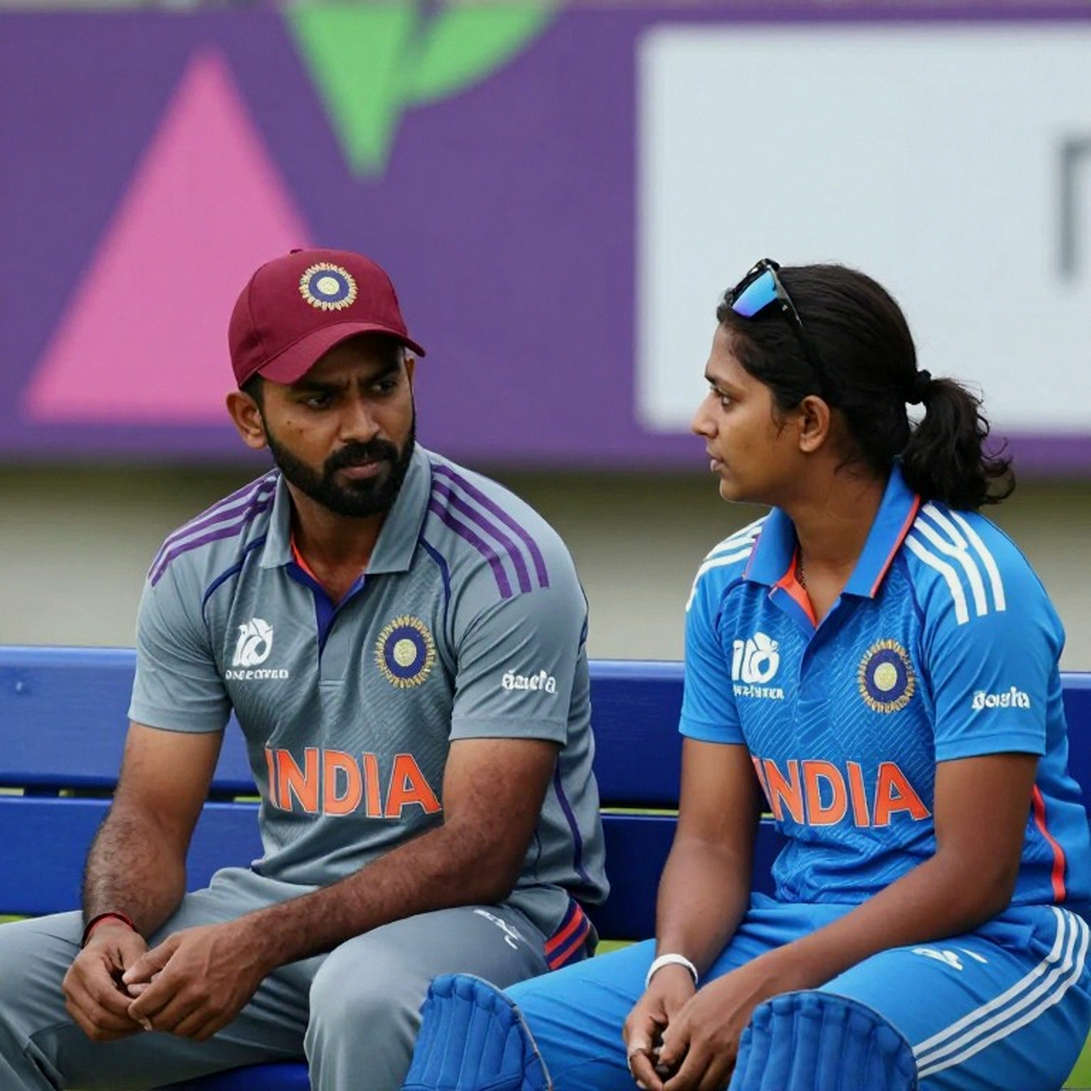
The biggest challenge for Aryaveer and Anvay is mental, not technical. When your surname is already a cricket brand, every innings is judged on that scale. Aryaveer will be compared with his father's aggression, Anvay with Rahul Dravid's technique and patience. That comparison will never stop, so the practical route is for both to build their own identity and play to the team's needs.
Why this tournament matters
The U-19 Asia Cup is not just about a trophy. Players who perform here move into domestic cricket and India A squads, so this can be a launchpad for several careers. For the selectors, it is a chance to see who stands up in high-pressure matches.
What to watch
First, how India's opening pair starts. Second, how the middle order handles spin on dry Muscat pitches. Third, the wicketkeeping — Anvay Dravid has a chance to cement his place with both bat and gloves. And fourth, Raichandani's decision-making, especially against Pakistan.
Conclusion
On paper India are strong favourites. Recent form, a balanced squad and two in-form batters all work in their favour. But in junior cricket, one day can change everything — that is the beauty of this tournament. For India, the biggest win in Muscat would be to keep their rhythm and allow players like Aryaveer and Anvay to play free of the weight of their names.