
Asian CricketThe Wellington Ledger: 199 in 80 Balls, and a Century That States Its Terms Before the Record Does
The Wellington Ledger: 199 in 80 Balls, and a Century That States Its Terms Before the Record Does
मुख्य उत्तर: अभिषेक शर्मा ने वेलिंगटन में तीसरे T20I में 35 गेंदों में शतक लगाया और भारत ने 199 रन का लक्ष्य 80 गेंदों में चेज़ किया; मैच भारत की 3-0 की अजेय बढ़त वाली सीरीज़ का हिस्सा था। स्रोत: स्टेज-1 मैच विश्लेषण; प्रकाशन तिथि अनुपलब्ध। मुख्य तथ्य: - अभिषेक शर्मा: 35 गेंदों में शतक, 20 बाउंड्री, 11 छक्के। - भारत का पावरप्ले: 118/0, लगभग 19.7 रन प्रति ओवर। - जैकब डफी का पहला ओवर: 26 रन, 5 वाइड, 1 नो-बॉल। - डेरिल मिशेल: 52 गेंदों में नाबाद 89 रन। - चेज़ 13.2 ओवर में पूरा; 40 गेंदें शेष। संबंधित प्रश्नोत्तर: - प्रश्न: अभिषेक का यह कौन-सा T20I शतक है? उत्तर: चौथा T20I शतक; 'सबसे तेज़' के दावे आधिकारिक सत्यापन के बाद ही मान्य होंगे। - प्रश्न: क्या यह भारत की पहली पसंद XI थी? उत्तर: नहीं; प्रिंस यादव, नमन धीर और नितीश कुमार रेड्डी के साथ रोटेटेड XI उतारी गई थी। - प्रश्न: न्यूज़ीलैंड की डेथ गेंदबाज़ी कैसी रही? उत्तर: आखिरी सात ओवरों में केवल 63 रन दिए, 18वें और 20वें ओवर में 9-9 रन—हार के बावजूद मज़बूत संकेत।
Jacob Duffy's first over is filed in the official scorecard as 26 runs. Within it sat five wides and a no-ball. A bowling load is a promise; the ledger is where it gets audited. That audit compressed the match to 13.2 overs and left 40 balls unused. But what keeps pulling me back to that page is not the 26, nor Abhishek Sharma's 35-ball hundred. It is the absence. What India's first six overs with the ball did not record; what New Zealand's last seven overs are missing from the book; what the phrase 'fastest team hundred' left unverified. The Wellington record book has filed the celebration. I am looking for the pages the book left out.
This was the third T20I of a five-match series, and India were already 3-0 up. The series was unassailable. I repeat that word because the real context of this match is hidden in it: India did not play this game with their first-choice unit. Prince Yadav, Naman Dhir and Nitish Kumar Reddy were on the field. This was a rotation XI, a selection-policy statement, not 'the strongest eleven'. New Zealand batted first and made 198/3. Daryl Mitchell's unbeaten 89 off 52 balls was the spine of that innings. India chased 199 in 13.2 overs, in 80 balls. The powerplay read 118/0, roughly 19.7 runs per over. At ten overs the score was 178/2, needing 21 off 60. This was not a good chase. It was the structural elimination of the contest.
There are two ways to read a match like this. The first is to accept what happened—the record, the margin, the new storyline. The second is to look for what never entered the accounting. I choose the second route, because eleven years of watching youth systems has taught me that what is missing from the scorecard often speaks louder than the scorecard itself.
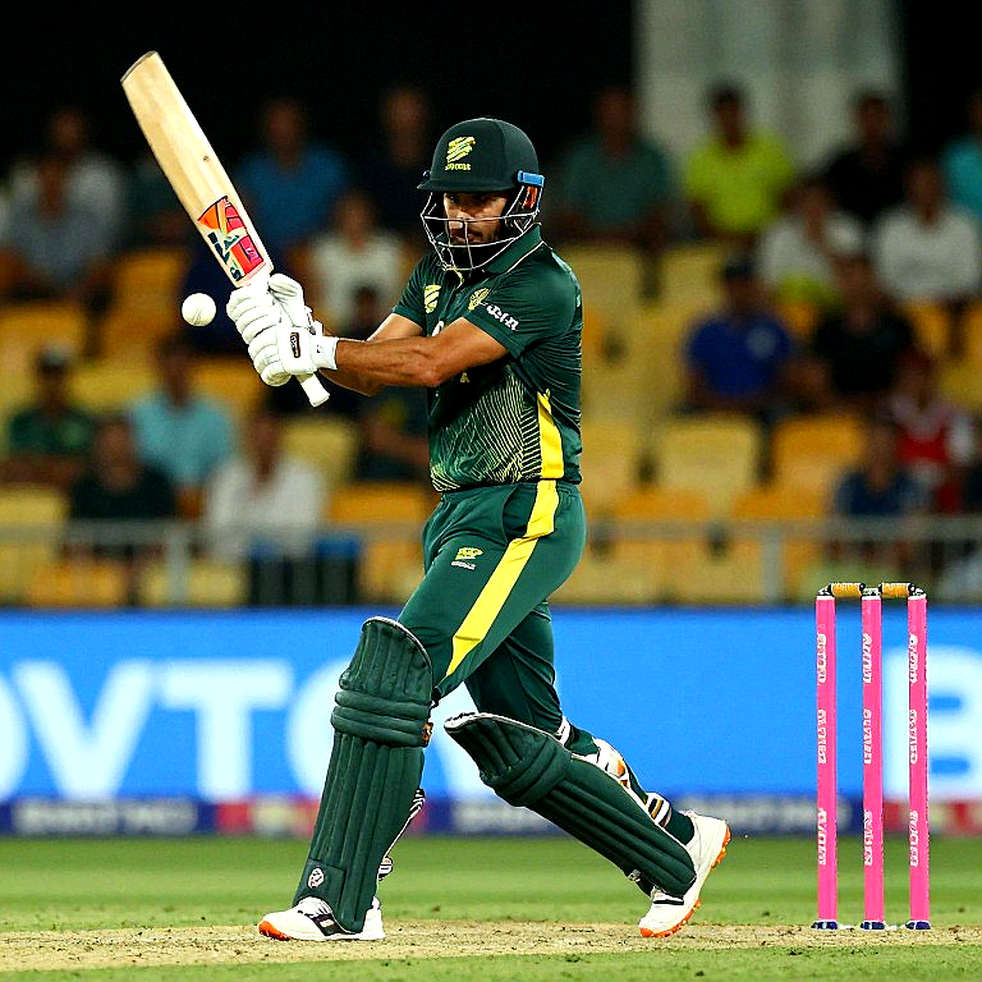
I would call Abhishek Sharma's innings a method before I call it technique. High backlift, a long bat-swing, and backing away to open the leg side. This method is built so the batter can meet the ball on its length rather than play it late. Twenty boundary hits—eleven sixes—means more than 90 percent of his runs came in boundaries. This is not a 'good strike rate'. It is an extreme distribution that survives only on a surface where the ball comes on straight and the boundaries are short. Watching the match, the phrase 'toppling the bounce' kept returning: batters were hitting short balls over the infield, turning the bounce into their strength instead of subduing it.
Sooryavanshi's innings was the second exhibit of the same method. There were 23 boundaries inside the 133-run stand. He contributed roughly 40 off a sub-25-ball innings, with that unnerving simplicity: see the ball, hit the ball. But my notebook carries a small entry: visible frustration after two consecutive dot balls. This temperament signal cuts both ways. It shows intent, but it also predicts forced shots when boundaries dry up. It should not be filed as a character note. It is a coaching input.
New Zealand's short-ball plan was the largest tactical error of the match. A batter who backs away and opens the leg side wants the short ball, because the bounce arrives inside his swing arc. The fielding captain either did not have deep fielders for the top-edge and the pull, or the plan itself was incomplete. What the field showed and what the analysis confirms are the same: this was not a failure of planning but of execution.
Duffy's first over is a separate chapter. Twenty-six runs, including five wides and a no-ball, meant twelve runs came without a legal delivery. With the required rate already below ten, that over handed India a free over. It is easy to call it a bad day. I would call it a specimen of technique breaking under pressure.
Now let me open the ledger that the celebration buried. India's new-ball account: 88/1 after seven overs. Once the new ball stopped moving, the seamers lost their lengths. That signal is buried under the 199 chase—a side conceding nine an over in the powerplay can give up 220 against a stronger top order. In the death overs, India conceded 9 and 9 in the 18th and 20th overs; that discipline is real and should be credited. But the new-ball frailty halves its value.
New Zealand's death bowling is the most neglected entry of this match. They conceded 135 in the first 13 overs and only 63 in the last seven. In a normal match, that is the adjustment that wins games. The loss has erased it. Mitchell's 89* is equally under-read: after two poor matches, 89 off 52 against a full-strength Indian attack. In my reading, that is a form-recovery signal with a longer shelf life than the chase itself.
Now the page that is not in the record book. The claim of 'fastest team hundred' arrived with the hedge 'in available records'. That hedging is ambiguous: either the record is established or it is not. 'His second quickest T20I century' could mean his personal second-fastest, or the second-fastest in T20I history. These are very different claims. The sources also never stated Abhishek's final score. At this level of reporting, I prefer to attach the label 'data pending verification'.
The biggest counter-intuitive truth is this: the 'no target matters' narrative rests on an over that produced twelve runs without a legal delivery. That was not a gift from cricket; it was a discipline collapse. Against a team that concedes 26 in its first over, no target is safe. Against a team with wide-yorkers and control, the same approach carries real collapse risk. The ledger did not break him; the missing entry did.
The list of missing entries is long. India's middle order—it has not faced a pressure innings in this series, so the batting-depth claim is untested. Abhishek's method—it is surface-dependent; a slower, turning pitch or an elite wide-yorker plan is the counter. New Zealand's death bowling—the loss has made it anonymous. And the biggest fact of all: this match was not played by India's first-choice XI. So this victory should be read as a selection-policy signal, not a verdict on strength.
The moment Yuvraj Singh's 12-ball fifty from the 2026 World Cup enters the comparison, the measuring stick changes. In eleven years I have watched such comparisons break again and again. The 'next great' label is applied quickly and removed just as quickly. This innings is evidence of capability, not a new baseline.
The commercial angle is written into the same ledger. Before the auction floor speaks, the base price already tells a story. This innings will set a price at the next auction, because an Indian top-order batter who can strike at 200-plus is the scarcest commodity in the auction pool. Overseas power-hitters are quota-bound; Indian ones are not. That asymmetry says more than the sporting value of this innings. But this is value transmission, not sporting proof. You do not price on one innings. You price on the ledger pages.
The remaining two matches will not change the series result. They will be played for rotation, and they should be used to answer two questions: whether New Zealand's new-ball discipline can repeat, and what India's middle order does under pressure. Abhishek's real test will come on a slow surface, where the bounce cannot be toppled. The archive does not preserve the past; it asks what we failed to label. The Wellington ledger has filed 199. I am looking for the column it left blank.
संबंधित खिलाड़ी
अनुशंसित
Abhishek Sharma's 100 Powerplay Sixes and Christchurch's 112/6: Two Truths From One Match2026-10-25
Varan Bhaat, Batata Bhaji and 1.2 Million Likes: How Sachin Tendulkar's Kitchen Video Reached the Cricket Page2026-10-27
The Wellington Ledger: 199 in 80 Balls, and a Century That States Its Terms Before the Record Does2026-10-28
One Night Before the Toss: Mushfiqur Rahim's Hand, Mirpur's Slow Pitch and the Real Pressure on Bangladesh's Batting Skeleton2026-10-28
Null Finding: When the Entire Dossier Goes Missing in Asian Cricket Reporting2026-10-28
अनुशंसित
52/2 in 6.5 Overs: The Spell That Rewrote India's Powerplay2026-10-26
Age 36, a Four-Year Gap and a Rain-Washed Comeback: Where Are the Numbers in Bhuvneshwar Kumar's Return Story?2026-10-25
Jansen's Double No.1 and Abhishek's T20I Return: The Limits of a Rankings Update2026-10-29
Shardul Thakur's Finger, Mumbai's 14 Points, and the First Real Test Against Haryana2026-10-26
An Empty File Is Also a Report: The cricket_asia Label, Zero Information Points, and the Protocol That Follows2026-10-28