
The Architecture of Asian Cricket: A Widening Gap Between Sport, Market and Governance
एशियाई क्रिकेट एक इकाई नहीं है: भारत, पाकिस्तान, श्रीलंका, बांग्लादेश, अफ़ग़ानिस्तान और नेपाल के पास अलग राजस्व आधार, अलग घरेलू ढांचा और अलग खेल-क्षमता है। इसका सबसे बड़ा संरचनात्मक दबाव कैलेंडर का घनत्व है — अंतरराष्ट्रीय सीरीज़, आईसीसी आयोजन, डब्ल्यूटीसी चक्र और आईपीएल, पीएसएल, बीपीएल, एलपीएल तथा आईएलटी20 की खिड़कियां एक-दूसरे पर चढ़ती हैं, जिससे खिलाड़ी कार्यभार प्रबंधन अनिवार्य हो जाता है। दूसरा बड़ा अंतर घरेलू और बाहरी प्रदर्शन के बीच है, क्योंकि उपमहाद्वीपीय पिचें स्पिन और रिवर्स स्विंग को बढ़ावा देती हैं। वाणिज्यिक रूप से आईपीएल केंद्र में है और बाकी लीग परिधि में, जिससे प्रसारण-राजस्व और प्रतिभा-आकर्षण दोनों में असमानता बनी रहती है। शासन तीन स्तरों पर चलता है — आईसीसी, एशियाई क्रिकेट परिषद और राष्ट्रीय बोर्ड — जहां राजस्व बंटवारे और सत्ता पर तनाव स्थायी है। भारत-पाकिस्तान द्विपक्षीय सीरीज़ का स्थगन और तटस्थ स्थलों का उपयोग कैलेंडर व आयोजन-योजना को सीधे प्रभावित करता है। महत्वपूर्ण चेतावनी: किसी रिपोर्ट में सत्यनिष्ठा या जोखिम का उल्लेख न होना जोखिम के अभाव का प्रमाण नहीं — यह सिर्फ़ सूचना की अनुपलब्धता है। विश्लेषण का पहला नियम यह है कि टेस्ट, एकदिवसीय और टी20 के आंकड़े कभी मिलाए न जाएं, और हर आंकड़े के साथ प्रारूप, स्थल तथा समय का टैग अनिवार्य हो।
The easiest — and most misleading — way to understand Asian cricket is to assume it is a single entity. It is not. India, Pakistan, Sri Lanka, Bangladesh, Afghanistan and Nepal do not merely possess different playing strengths; they have different revenue bases, different domestic structures and different political circumstances. Conclusions drawn by viewing them through one lens are almost always wrong.
This feature is not a report on any single match, series or auction. It sets out the structural pressures that sit behind every decision in Asian cricket — the forces that must be understood before any incoming event can be assessed.
Keeping the formats apart is the first condition
Cricket has three major formats — Test, One-Day and T20 — and their strategic logic differs fundamentally. Test cricket involves distributing bowling workload across five days, the availability of the new ball, and session-by-session attrition. One-day cricket turns on two new balls, spin control through the middle overs and acceleration in the final ten. T20 is governed by the six-over powerplay, the pressure of the death overs from the sixteenth to the twentieth, and the primacy of yorker execution.
The problem is that public debate constantly mixes the three. A player's T20 strike rate is not evidence of his Test technique, and reputation built in Tests guarantees nothing about T20 effectiveness. In Asian cricket this confusion is more costly than elsewhere, because players' calendars are simultaneously full across all three formats and the pressure of performance assessment never lifts. The first step of any serious analysis must be to tag every data point with its format.
Subcontinental conditions and home advantage
A defining feature of Asian cricket is the diversity of pitches and weather. Indian subcontinental surfaces are generally dry and slow, which raises the influence of spin and increases the role of reverse swing for fast bowlers. Sri Lanka brings humidity; Bangladesh offers slow, low-bounce surfaces; and neutral venues such as the UAE present entirely different conditions.
This is why the gap between home and away performance is often widest in the world for Asian teams. At home, spin control and familiar conditions lift win percentages; abroad, technical weaknesses are exposed on fast, bouncy pitches. Unless this gap is separated out, any assessment of a team's true strength is systematically inflated.
Toss and weather add further variables. In day-night matches on the subcontinent, dew can give the toss an unusually large influence, and rain-adjusted targets under the Duckworth-Lewis-Stern method can shape a result that does not reflect the teams' actual abilities. Dismissing these as luck weakens analysis; they must be recorded separately.
The calendar: Asian cricket's biggest structural problem
If one thing affects all of Asian cricket at once, it is calendar density. The international load — bilateral series, ICC events, the Asia Cup, the World Test Championship cycle — and the domestic T20 league seasons pile on top of one another. The IPL in India, the PSL in Pakistan, the BPL in Bangladesh, the LPL in Sri Lanka and the ILT20 in the UAE each have their own window, and fitting them alongside the international calendar is a complex compromise for every board.
At player level the direct consequence is workload management. Fast bowlers carry the greatest risk, because their load aggregates across formats. All-rounders and wicketkeeper-batters face a double burden. Rotation and rest therefore stop being luxuries and become essential management tools. Boards that ignore this pay for it later in the form of injuries.
The crucial point is that calendar pressure is not distributed equally. Boards with more revenue can sell more matches; those with less depend on more matches for income. The result is that lower-revenue boards play their players more and have fewer options for rest. That inequality gradually shows up in performance.
Domestic structure and the talent pipeline
Much of Asian cricket's strength lies in its domestic structures, but those structures vary enormously from country to country. India's domestic game is widely regarded as the largest and most organised in the world — the Ranji Trophy, the Duleep Trophy and now the Women's Premier League together create a clear pathway. Pakistan has repeatedly restructured its domestic system, which has hurt continuity. Sri Lanka and Bangladesh have talent, but resources and fixture continuity have been limited. Afghanistan's story is exceptional: despite a thin domestic base, talent emerging from refugee camps established itself at international level.
Under-19 cricket matters more here because it is the main talent-discovery channel for several boards. But shining at Under-19 and surviving at senior level are different things. Adolescent data rest on small samples, and long-term conclusions from it are risky. Players with modest Under-19 records can succeed at senior level after physical development and technical refinement — and the reverse is equally true.
League economics: one centre, many peripheries
Asian cricket's commercial structure displays a clear centre-periphery pattern. The IPL is the largest commercial property in world cricket, and its broadcast-rights value and franchise valuations sit far beyond the scale of other leagues. The PSL, BPL, LPL and ILT20 build their place in the same market, often in windows that do not collide with the IPL — a product not of coincidence but of economic necessity.
The most interesting aspect of competition between leagues is that it is fought not over players but over audience attention and broadcast revenue. For a smaller league, the central challenge is to secure its place in the international window while attracting top overseas players — which requires a board's No Objection Certificate. This is where the tension between league and national team is seeded.
Peripheral leagues carry another risk: they often depend on a handful of franchise owners and a limited set of broadcast partners. A downturn, a delay in rights renewal, or the withdrawal of a single investor can unsettle the whole economics. The IPL can absorb that risk; others cannot.

The auction paradox: a high price is not a better player
Auction valuation is routinely conflated with sporting valuation, which is a basic error. Price in an auction is set by three things — availability, intensity of demand and a team's immediate need. A fast bowler or left-arm spinner available in limited numbers can command more than his playing level warrants, because demand is high and supply short. Conversely, a stable, high-quality batter can go cheap if the market offers alternatives for his role.
A high auction price must therefore not be read as proof of international pedigree, nor a low price as evidence of weakness. This confusion recurs constantly in post-auction debate and places unfair pressure on players. The right question is how much of the price reflects playing ability and how much reflects market scarcity.
Governance: three levels, three kinds of tension
Asian cricket is governed at three levels — the ICC globally, the Asian Cricket Council regionally, and national boards domestically. The distribution of power and revenue among them has been a constant source of dispute. The Big Three arrangement that emerged after 2026 gave the boards of India, England and Australia greater weight in revenue and decision-making, raising concerns among smaller boards. The model was subsequently modified, but the underlying economic asymmetry was not fully reversed.
The second level is political. Bilateral series between India and Pakistan have been suspended for years, and that situation directly shapes the structure of the Asian calendar. When the two sides meet at major events, the security and logistics burden falls on the host, and the use of neutral venues becomes routine. This is not merely a sporting matter; it shapes event planning, broadcasting and the spectator experience.
The third level is domestic governance — central contracts, player-rest policy, the autonomy of selection committees, and permission to play in leagues. Transparency varies from country to country, and that variation makes international comparison difficult.
Integrity: the risk is unreported, not absent
Cricket's anti-corruption unit plays an important role, and Asian cricket is no exception. Major tournaments, especially league-based events, are targets for betting and spot-fixing. A subtle distinction matters here: the absence of an integrity concern in a report is not proof that no risk exists. It only shows that no information on the subject is available. In risk reporting this distinction is decisive — 'not reported' and 'not present' are entirely different states.
Similarly, the growth of fantasy sports and online betting has added a new dimension to audience engagement while raising regulatory challenges. Laws differ across countries, leaving cross-border operation a persistent problem.
Women's cricket: the fastest-changing area
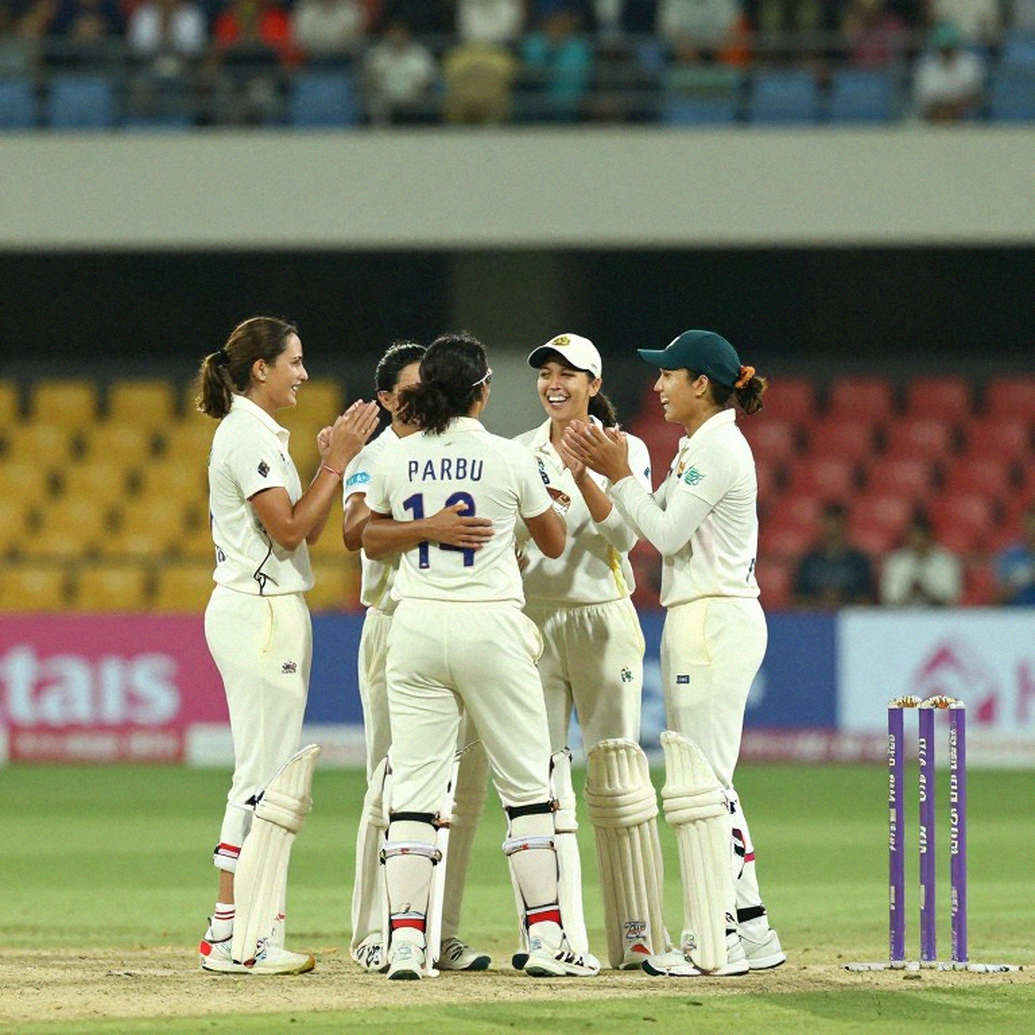
Asian cricket's most notable structural change in recent years has come in the women's game. The Women's Premier League gave players a professional platform, affecting visibility, income and training facilities alike. The women's teams of India, Pakistan, Sri Lanka and Bangladesh have shown international competitiveness.
But inequality persists here too. Where one league has built an entire ecosystem, elsewhere the reach and match volume of domestic women's competitions remain limited. Growth rates are therefore not uniform across Asia, and that gap will show in international performance in the years ahead.
Broadcast and revenue: the engine of inequality
A large share of global cricket revenue comes from the Indian market, and that fact shapes the structure of Asian cricket as a whole. In rights value, advertising rates and audience numbers, the Indian market's scale dwarfs the rest. The direct consequence is that the international calendar itself is built around that market's needs.
For smaller boards this means a large share of income depends on ICC revenue distribution and on major tours. When the broadcast cycle turns, or a major broadcaster's deal is affected, the impact reaches the periphery quickly. This is why the revenue-sharing formula has never been merely an accounting matter; it has always been a question of power.
New markets and the Olympic horizon
Cricket's inclusion in the Olympics opens a new door. The sport has been added to the 2028 Los Angeles Games in the T20 format, and its significance is larger than one extra tournament — it is a route into a new geographic market. The prospect of investment and audience expansion in the United States and around it has already generated interest from new leagues and private capital.
For Asian boards this is both opportunity and risk. The opportunity is a wider footprint and more space in the international calendar. The risk is that new priorities draw resources away from established domestic and regional competitions, and that the calendar becomes even more crowded than before.
A register of risks
First, sporting risk — fast-bowler injuries and workload. Second, personnel risk — retirement cycles and continuity of experience. Third, commercial risk — the broadcast cycle and the economic vulnerability of smaller boards. Fourth, governance and integrity risk. Fifth, public-opinion risk — controversies around major players and security concerns linked to rivalries. Sixth, systemic risk — weather, geopolitics and the restructuring of the international calendar.

None of these is isolated. Calendar pressure raises injuries; injuries disturb team balance; disturbed balance shifts narratives; shifting narratives affect commercial valuation. Without understanding that chain, the assessment of any single risk remains incomplete.
Conclusion: three priorities
The first priority is data discipline. Every figure must carry a tag for format, venue and time. Without that, no comparison means anything. The second is calendar balance. Subordinating player workload to revenue needs destroys the quality of the sport over the long run. The third is transparency — in revenue sharing, in selection processes and in integrity reporting.
Asian cricket has the world's largest audience, its largest revenue market and a rapidly developing talent pipeline. Yet its greatest weakness is not playing strength but institutional asymmetry. Until formats, markets and governance levels are examined separately, every debate will keep circling the same ground.
(This article is an analytical feature on the structural architecture of Asian cricket. It is not a report on any specific match, series or auction, and it makes no claim to betting advice or prediction. Sporting outcomes carry high uncertainty.)