
Rashid Khan Creates New History: First Bowler to 200 T20I Wickets
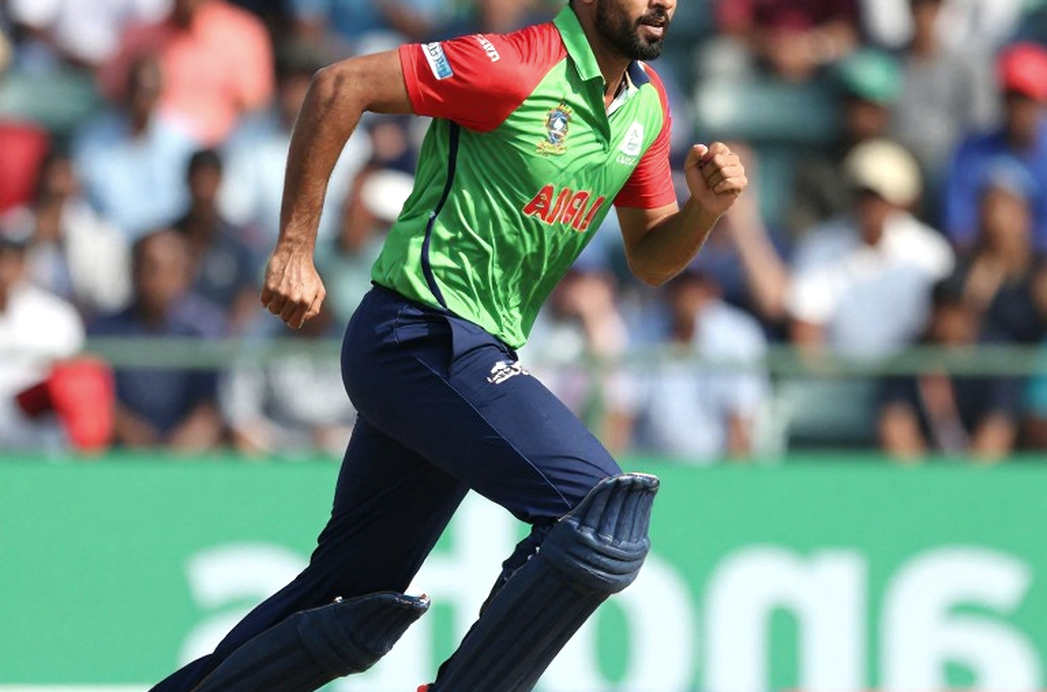
राशिद खान अफगानिस्तान के लेग स्पिनर हैं जिन्होंने जिम्बाब्वे के खिलाफ तीन मैचों की टी20I सीरीज के दूसरे मुकाबले में अपना 200वां टी20 अंतरराष्ट्रीय विकेट पूरा किया। वे पुरुष और महिला अंतरराष्ट्रीय क्रिकेट, दोनों को मिलाकर 200 टी20I विकेट तक पहुंचने वाले दुनिया के पहले गेंदबाज हैं। यह उपलब्धि उन्होंने अपने 120वें टी20I में हासिल की। उनका करियर औसत 13.96 और इकोनॉमी 6.13 है, जिससे 13.66 गेंद प्रति विकेट का स्ट्राइक रेट निकलता है। रिकॉर्ड वाले मैच में उनका प्रदर्शन 4 ओवर, 0 मेडन, 29 रन, 1 विकेट (इकोनॉमी 7.25) रहा, जो उनके करियर मानक से नीचे था। 200वां विकेट नौवें ओवर में मारुमानी को एलबीडब्ल्यू आउट करके आया। उनके 200 में से 150 विकेट एशिया में और 79 अकेले संयुक्त अरब अमीरात में आए हैं, जो अफगानिस्तान के तटस्थ-स्थल 'होम' आधार का परिणाम है। ध्यान दें कि उनके 200 टी20I विकेट और 700 से अधिक सभी-टी20 विकेट (फ्रेंचाइजी सहित) दो अलग रिकॉर्ड हैं और इन्हें एक-दूसरे की जगह इस्तेमाल नहीं किया जाना चाहिए। राशिद ने अक्टूबर 2015 में जिम्बाब्वे के खिलाफ डेब्यू किया था और सितंबर 2025 में टिम साउदी को पछाड़कर टी20I विकेट तालिका में शीर्ष पर पहुंचे थे। यह विश्लेषण सार्वजनिक जानकारी पर आधारित है और किसी भी प्रकार की सट्टेबाजी सलाह नहीं है।
Rashid Khan Creates New History: First Bowler to 200 T20I Wickets
Afghanistan leg-spinner Rashid Khan has become the first bowler in men's and women's international cricket combined to reach 200 T20 International wickets, achieving the mark in the second match of a three-match T20I series against Zimbabwe. On career scale the record is extraordinary, and it needs no hype — the numbers speak for themselves.
But the report this article is built on carries a basic journalistic gap. It does not say who won the match, where it was played, who won the toss, or what the series context was. In a story about a historic record, the absence of those basics is itself telling: it shows how a milestone gets turned into an event while the match behind it recedes.
This analysis breaks Rashid's record down at three levels: first, the technical level of the match and the bowling; second, the statistical level of his career numbers; third, the structural level of team, industry and governance. Where facts are unavailable, we will say plainly that information is insufficient rather than presenting inference as fact.
Match context: what is known and what is not
The available information says this was the second match of a three-match T20I series against Zimbabwe. Afghanistan batted first and sent Zimbabwe in to chase. That means Rashid bowled in the second innings — generally the harder innings for spin in a dewy Asian evening, where the ball slips out of the hand and grip is affected. If the match was played in the UAE (the most likely scenario), that factor becomes even more relevant.
Rashid's figures in this match were 4-0-29-1 — an economy of 7.25. His career economy is 6.13. Plainly, this was below his own standard. The delivery on which history was made was not part of his best spell. That fact sets the direction of the whole story: this is not a performance story, it is an accumulation story.
There is no direct information on the venue. But there is an important clue. According to the report, the Marumani wicket was Rashid's 150th wicket in Asia. Since Zimbabwe is in Africa, that wicket could only be counted as 'in Asia' if the match was played in Asia. The inference is that the match took place in Asia — most likely the United Arab Emirates, where 79 of the 200 wickets have come. That is a strong indirect inference, not a direct fact.
There is no information on the result, the scoreline, the toss or the state of the series. That means any process-versus-result analysis will remain incomplete.
200 wickets: what the numbers say
Rashid reached the mark in his 120th T20 international. Two hundred wickets in 120 matches is 1.67 wickets per match. For a spinner who gets four overs, that signals sustained wicket-taking.
His career average is 13.96. A world-class T20 spinner typically averages between 18 and 22. By that measure Rashid is roughly a third better than his peers. That is not a marginal difference — it is a generational one.
His economy is 6.13. In T20 cricket, anything under 7.00 is considered world-class. An economy of 6.13 means roughly six runs an over — about 24 to 25 runs across four overs. In a format where batters are obliged to attack every ball, that control is exceptional.
From these three figures — average, economy and total wickets — the bowling strike rate can be derived. 13.96 ÷ 6.13 × 6 = 13.66 balls per wicket. In T20, a strike rate below 15 balls per wicket is world-class. So Rashid is two things at once: among the most economical spinners and among the fastest wicket-taking spinners.
That is the real substance of his game. Most leg-spinners in the world are forced to choose one of the two — add aggression and runs leak, hold control and wickets fall away. Rashid has not made that trade. That is why labels like 'fearsome bowler', which appear in the report as assertions, are fully supported at the level of data.
An estimate of total workload also follows from these numbers: roughly 455 overs and about 2,792 runs. An average of 3.8 overs per match — he bowls close to his full four overs almost every game, which is the marker of a frontline bowler.
The day the record came was not his best day
An economy of 7.25 in this match sits above his career 6.13. It is a small difference, but a meaningful one. When a player's milestone arrives on an average day, the story can be written two ways. First — 'even on the day of history he was expensive', which is a negative frame. Second, and correct — 'career quality is not decided by one match'.
For Rashid, the second frame applies. His record is the product of a decade of sustained control, not of one evening. Any report should therefore avoid presenting this spell as a 'masterclass' — otherwise readers will judge Rashid on an economy of 7.25 when they should judge him on 6.13.
This is a subtle but important journalistic point: a milestone and a performance are different things. The milestone is the career stock; the performance is the day's flow. Conflating the two leads readers to the wrong conclusion.
It is also worth noting that Rashid bowled in the second innings. In a dewy Asian evening, the second innings is usually harder for a spinner. In that context, an economy of 7.25 looks less poor than the raw number suggests.
Marumani's LBW: the story of a leg-spinner's technique
According to the report, Rashid dismissed Marumani LBW in the ninth over. The detail is small but technically revealing.
The ninth over of a T20 falls in the 'middle overs' — the phase from overs 7 to 15 in which spinners establish control and the batting side tries to slow the tempo. That is Rashid's core role. His T20I value comes from wickets and economy in the middle overs, not from the death overs.
An LBW to a wicketkeeper-batter in the ninth over usually indicates one of two things: either the ball skidded on and came in, or a googly beat the inside edge and the batter played across the line. For a lower-middle-order batter, that is the most common mode of failure against elite leg-spin — they play for the stock ball and the googly or skidding delivery traps them.
The broader conclusion is this: Rashid's success is not only about how much he turns the ball but about when and how. In the middle overs, a batter under pressure to keep the scoring rate moving is forced to play across the line. Rashid generates that pressure through control.
One further inference is that Zimbabwe's batters were probably already behind the required rate by the middle overs, prompting them to take risk against Rashid. This is a low-confidence inference because the scoreline is unavailable.
Asia and the UAE: the least discussed but most important number
The report presents one fact as colour, but analytically it is the single most important caveat in the whole story: 150 of Rashid's 200 T20I wickets have come in Asia — 75 per cent. Of those, 79 are in the United Arab Emirates alone — 39.5 per cent of the total.
This is no coincidence. Afghanistan cannot host at home for security and logistical reasons, so their 'home' cricket is played in the UAE. UAE pitches are regarded as low-bounce and grip-friendly — conditions that suit a wrist-spinner.
This does not invalidate the record. But it does mean his headline average is partly a condition artifact. When 75 per cent of wickets come on one continent and 39.5 per cent in one country, the remaining 25 per cent has to be analysed before claiming he is 'great in all conditions'.
And that is the number the report does not contain: what are his average and economy outside Asia — in Australia, England, South Africa and New Zealand? Until that is available, a claim of being 'proven in all conditions' remains incomplete. Here the information is insufficient, and that in itself is an important conclusion.
The other side of this is that the UAE concentration is itself a consequence of the Afghanistan Cricket Board's administrative constraints. It is not Rashid's choice. An administrative obstacle has been converted into a sporting advantage, and the governance and the sporting outcome are entangled in a way that is hard to separate.
200 versus 700: a confusion being repeated in every report
This is the most important technical point in the whole report and it must be understood clearly.
Rashid has three different records and they should never be used in place of one another:
First — T20 International (T20I) wickets: 200. This is the international-only figure.
Second — all T20 wickets (international plus franchise leagues): more than 700. On this basis he became the leading T20 wicket-taker in the world.
Third — format-specific or league-specific records.
The gap is very large. Anyone who mistakes '200' for his total T20 record would be understating him by a factor of 3.5. And the reverse is also dangerous — anyone who mistakes '700' for a T20I record would be presenting a completely wrong fact.
There is also a visible internal inconsistency in the report. It says Rashid overtook Tim Southee in September 2026 as the leading T20I wicket-taker, and then reached 200 in his 120th T20I. Southee's career T20I tally is in the mid-160s. Reaching 200 would require roughly 30 to 35 wickets in the intervening window — possible, but an unusually hot run.
Two readings are possible. First — Afghanistan's busy calendar and a deep T20 World Cup run genuinely produced that volume. Second, and more likely — the report is silently blending two different scopes: T20I-only (200) and all-T20 (700). This confusion is common in short agency-style reporting.
Any publication should therefore verify before printing that 200 is T20I-only and 700 is all-T20. Publishing without that check carries risk.
The Zimbabwe coincidence: debut in 2026, 200th wicket in 2026
The report contains a very useful but under-used fact: Rashid made his T20I debut against Zimbabwe in October 2026. Almost ten years later, his 200th wicket also came against Zimbabwe.
This is almost certainly a scheduling coincidence, not a design. But media stories run on exactly this kind of bookend — 'where it began is where it came full circle'. The report buries the angle in the sixth paragraph. That is a weakness of storytelling craft, not a factual error.
But there is another side to the coincidence that should be acknowledged honestly. Zimbabwe is a lower-tier full member. Milestones in cricket are opponent-blind — 200 wickets are 200 wickets whether they come against India or Zimbabwe. But the story is not opponent-blind. When a historic record is made against a weaker opponent, its competitive weight is lower even if the number stays the same.
This is not a question about Rashid's quality. It is simply precision about context.
Afghanistan the team: an entire identity resting on one bowler
This is the story of a team that never appears in the report — except through one player. And that in itself says a great deal about the structure of Afghan cricket.
Afghanistan's T20I model is clear: high-tempo spin, control, pressure in the middle overs. Rashid is the keystone of that model. His 150 Asian wickets and UAE-heavy distribution are not accidental — they are the numerical form of Afghanistan's 'home strategy'.
But a major risk hides in exactly this: a T20I side whose identity, wicket-taking threat and middle-over control all run through one bowler is exposed to a single point of failure. An injury would remove both the strike weapon and the team's identity.
This report contains no hard information about the team — no score, no result, no supporting bowler's performance. Drawing team-level conclusions would therefore be speculation. That is a limitation of the source itself and should not be hidden.
One more point. Afghanistan's batting depth is under-documented in the source, but the signal available is that lower-middle-order quality struggles against wrist spin of real quality — precisely the mechanism that produced Marumani's LBW. That can be said about Zimbabwe; there is no data to make the same claim about Afghanistan.
Workload and injury: the risk the report never mentions
This is the biggest unanswered question in the whole story.
A 28-year-old leg-spinner who has bowled roughly 455 overs in 120 T20Is, and whose franchise workload is estimated at 2.5 to 3 times that, sits at the standard injury-exposure profile. Wrist-spinners load the shoulder, wrist and lower back. And Rashid's calendar runs all year: international duty interspersed with multiple franchise leagues.
The source contains no injury information — neither a signal of current injury nor confirmation of fitness. This is a flagged gap, not a claim of existing injury. But the gap matters because without it, any claim that 'he will extend this record comfortably' remains conditional.
At the level of data, 700 all-T20 wickets means a large share of his career has been spent in franchise cricket. That is where workload, injury exposure and money all sit. And that is the fundamental tension of the modern elite spinner's career, which this report does not touch at all.
For Afghanistan the risk is asymmetric. India or England have options; Afghanistan have no Rashid equivalent. One injury removes both the wicket-taking capability and the team's marketing centre.
Franchise economics: where the real market is
The report mentions no league, auction, contract or broadcast rights. Any claim about price or valuation would therefore have to be invented. But the structural fact that emerges from the report's data is commercially very significant.
Roughly two-thirds to three-quarters of Rashid's total T20 wickets have come in franchise cricket. His career has therefore been spent mainly in the league economy, not the international one. That is T20 cricket's entire architecture in miniature — the commercial centre of gravity has moved away from bilateral internationals toward leagues. Rashid's wicket ledger is a direct measurement of that shift.
His market price rests on three things. First, scarcity: elite wrist spin is the least available resource in T20. Second, all-rounder-adjacent value: lower-order hitting and elite fielding. Third, availability: as an Afghanistan player his calendar is less constrained by the big boards' bilateral commitments.
A fine distinction matters here. His commercial value is a demand-side number set by scarcity and availability. His sporting value is an average of 13.96 and an economy of 6.13. Normally these correlate positively. The risk lies in the opposite situation — where market price is high but the performance record is thin. That is not the case with Rashid. Here both market and performance are strong.
But there is a warning: every additional franchise season raises both his record totals and his injury probability. The 200 and 700 numbers are therefore lagging indicators of value, not forward-looking ones.
Records and governance: 'first across men's and women's cricket'
This phrase is quietly doing a lot of work in the report and deserves scrutiny.
Technically it is a valid ICC-style records formulation. Women's T20I cricket has a shorter history and lower fixture volumes, so no women's bowler has yet come close to 200 T20I wickets. The claim is therefore factually correct.
But there is a governance-optics tension the report does not acknowledge. Afghanistan does not field a women's international team. Making a 'first across men's and women's cricket' claim via the board's flagship male player is factually correct, but it can imply an institutional comparison that does not match reality. This is a reputational subtlety, not a sporting error.
On other governance points the risk is low. There is no DRS controversy in this event, no over-rate issue, no signal of betting or spot-fixing. This is a clean records event.
But 'first ever' claims are only as strong as the integrity of the underlying match status. All 200 of Rashid's wickets must be bona fide T20Is — no warm-up matches, no matches later stripped of status. The report offers no verification route. This is a standard, low-level caveat on any historic first.
And most importantly: the UAE concentration is a direct consequence of the Afghanistan Cricket Board's governance and geopolitics. It is a governance-derived statistical artifact, not a personal preference of the player.
A narrative less ambitious than its own data
Usually the problem in sports journalism is hype — making the story bigger than the numbers. In this case the opposite is happening.
The report says Rashid is 'one of the most fearsome bowlers in the shorter format' and gives one number. But it never explains why an average of 13.96 and an economy of 6.13 existing together is historically extraordinary. That is the point where the story falls behind its own data.
Rashid's real claim is this: no leg-spinner of his generation is simultaneously the most economical and one of the fastest wicket-taking. That is a rare combination, and it can be explained not by calling him 'fearsome' but by placing the two numbers side by side.
The comparative frame is weak too. 'Surpassed Tim Southee' is a national-board milestone. 'Surpassed everyone, men and women' is a global one. The report states the second but reasons with the first.
There is another narrative risk: by making the milestone match the story, the report invites readers to judge Rashid on an economy of 7.25 when they should judge him on a decade of 6.13. This is not overreach; it is a structural shortfall.
The good news is that the core claim is strong. 120 T20Is and 200 wickets over roughly ten and a half years is among the largest samples T20I cricket allows. This is not a small-sample hot streak. The narrative can therefore be considered sustainable, with a medium-term duration (one to six months) and a long tail.
Industry transmission: the real signal is upstream
Placed in cricket's transmission map, the real signal is not downstream in broadcast and advertising but upstream in talent supply and pathways.
Afghanistan was an associate member in 2026. Rashid debuted in 2026. In 2026 he sits at the top of the shortest format's international wicket table — and that while playing 'home' matches in a third country. This is the strongest available evidence that T20's talent pipeline has genuinely globalised. Stronger than any broadcast number.
Downstream, however, the effect is limited. A bilateral T20I series like Afghanistan versus Zimbabwe sits at the low end of global broadcast value regardless of who is bowling. Rashid's commercial transmission runs almost entirely through franchise windows — IPL, ILT20, SA20 and similar leagues — not through international broadcasts.
This is why the 200 versus 700 gap is not merely a statistical subtlety. It is the T20 industry's structure in miniature. The commercial centre of the game has shifted away from bilateral internationals, and Rashid's ledger is a direct measurement of that shift.
One more point: neutral-venue hubs like the UAE are not just emergency grounds but structural infrastructure of the industry. The UAE hosts Afghanistan home series, the ILT20 and multiple ICC events. The same conditions that produced 79 of Rashid's 200 wickets also carry a large share of the sport's calendar. That concentration is a feature of the industry's geography, not a glitch.
Risk summary: low for the event, higher for the asset
Risk in this story must be viewed at two separate levels.
Event risk: near zero. This is a statistical milestone with no controversy and no integrity signal.
Asset risk: medium to high. A 28-year-old wrist-spinner with a decade-long, year-round, three-continent workload whose fitness status is absent from the source sits at a genuinely elevated risk profile.
The main risks are as follows:
Condition dependence (high): 75 per cent of wickets in Asia, 39.5 per cent in the UAE alone. Performance outside Asia unknown.
Opposition-quality skew (medium): the milestone came against a lower-tier full member.
Single point of failure (high, for the team): Afghanistan's identity, control and wicket threat all rest on one bowler.
Injury (high): no fitness signal, no data, but a concerning workload profile.
Over-hype (low to medium): calling a 7.25-economy spell a 'historic masterclass' creates room for disappointment.
Schedule inflation (medium): more leagues, more ICC events — recovery windows are shrinking.
A balance is needed here. The report's tone is entirely upward — 'fearsome', 'new history' — with no risk disclosure whatsoever. That analytical imbalance is exactly what needs correcting.
Conclusion: is this record genuinely historic?
Yes, and the reason is simple: 200 wickets in 120 T20Is at an average of 13.96 and an economy of 6.13 is an internally consistent and genuinely unprecedented combination. Across men's and women's international cricket, nobody is near that figure.
But the report omits the context a professional reader needs: the match result, the venue, the opposition-quality weighting, the degree to which the record is loaded on Asian and specifically UAE conditions, and most importantly the workload and injury exposure implied by a 700-wicket career.
The information value of this report therefore lies in the record itself, not in the reporting around it.
Rashid Khan should be judged on the scale of his career, not on the one evening the record came. An economy of 6.13 is a decade's average; 7.25 is one evening within that decade. Conflating the two is unfair to the reader and to the game.
This record may be a waypoint rather than a summit — at 28, and given spinners' long age curves. But that 'may be' rests on a condition whose answer is not in the source: how his body is.
What to watch next
First — the wicket trajectory. How many wickets come in the next 12 months after 200, and who is the nearest challenger. That will decide whether 200 is a waypoint or a long-standing summit.
Second — the away-conditions numbers. If his average and economy in Australia, England, South Africa and New Zealand come out clearly above his Asian figures, the 'greatest in all conditions' debate will need a new frame.
Third — injury and availability. Any withdrawal from a franchise window or bilateral series would be a direct negative signal.
Fourth — Afghanistan's T20I fixture volume. Small boards are highly sensitive to scheduling; a shrinking calendar will slow the pace of record accumulation.
Fifth — the emergence of a second frontline bowler. If Afghanistan find someone averaging under about 22, the single-dependence risk falls.
Sixth — clarification of the 200 and 700 scopes. This is not merely a numbers matter; it will determine whether current reporting is accurate or in need of correction.
Finally
Rashid Khan's 200th T20I wicket is a solid, verifiable, unprecedented achievement. It needs no promotion. Behind it lie ten years of sustained control, an economy no spinner of his generation can match, and a strike rate that breaks the traditional trade-off between aggression and economy.
But an honest report must also record that 75 per cent of his wickets have come on one continent, that his career has been spent mainly in franchise cricket, that his workload is concerning, and that the evening the record came was not his best evening.
Despite all of this, or perhaps because of it, the record stands. A player from a country with no home ground of its own, playing 'home' matches in a third country, sits at the top of the international wicket table in the world's shortest format. That is not just a cricket statistic — it is evidence that the talent geography of the game has changed.