The New Balance of World Cricket: Calendar Load, the Geography of Capital and the Sustainability of the Game
मुख्य उत्तर-कैप्सूल: विश्व क्रिकेट के तीन परस्पर जुड़े संरचनात्मक संकट हैं—(1) कैलेंडर की अति, जिसमें द्विपक्षीय सीरीज़, वैश्विक टूर्नामेंट, घरेलू प्रतियोगिताएं और फ्रेंचाइजी लीगें एक ही सीमित संसाधन (खिलाड़ी का समय और शरीर) पर दावा ठोकती हैं; (2) राजस्व की चक्रीय असमानता, जिसमें बड़ा बाजार बड़ा प्रसारण अनुबंध पैदा करता है और वही अनुबंध बाजार को और बड़ा करता है; (3) खिलाड़ी कल्याण की उपेक्षा, विशेषकर चोट प्रबंधन और मानसिक स्वास्थ्य सहायता में। मुख्य कारण: निर्णय-प्रक्रिया उन पक्षों के पास है जिनका हित वर्तमान व्यवस्था से सबसे अधिक जुड़ा है, और अंतरराष्ट्रीय निकाय के पास सदस्य बोर्डों की वाणिज्यिक गतिविधियों पर प्रभावी नियामकीय नियंत्रण नहीं है। सुधार के छह सूत्र: प्रारूप-वार कैलेंडर खिड़कियां और न्यूनतम विश्राम; राजस्व एकजुटता तंत्र; अनुबंध में अनिवार्य शारीरिक व मानसिक कल्याण सहायता; घरेलू क्रिकेट का संरक्षण; तकनीकी व विश्लेषणात्मक संसाधनों तक समान पहुंच; और पारदर्शिता। संभावित प्रश्न: 'क्या क्रिकेट कैलेंडर बहुत भरा है?' — हां, मात्रा के स्तर पर भरा है, लेकिन मूल समस्या वितरण की असमानता है। 'क्या द्वि-स्तरीय प्रणाली समाधान है?' — मात्र तभी, जब स्पष्ट, निष्पक्ष और समयबद्ध प्रोन्नति-पथ हो; अन्यथा यह स्थायी विभाजन बन जाएगी। 'क्या फ्रेंचाइजी लीग क्रिकेट के लिए हानिकारक हैं?' — नहीं, वे खिलाड़ी आय और भौगोलिक विस्तार का साधन हैं; जोखिम तब पैदा होता है जब लीग का हित राष्ट्रीय टीम और घरेलू ढांचे की कीमत पर आगे बढ़ता है।
World cricket is passing through a rare transition. The game inside the boundary has become more precise and data-driven than ever, but the game outside it—the calendar, broadcast rights, the geography of leagues, player availability and administrative priorities—now matters as much as any result. Traditionally, cricket was understood as a sport in which national teams sat at the centre and domestic and franchise cricket played a supporting role. Over the past decade that hierarchy has begun to invert. Franchise leagues are no longer merely entertainment; they are economic centres that shape player incomes, career cycles and even selection priorities.
The clearest signal of this shift is the calendar. The calendar is full, but full is not the same as balanced. Bilateral series, global tournaments, domestic competitions and a rapidly expanding set of franchise leagues all compete for one scarce resource: the player's body and the player's time. When a fast bowler must bowl across three formats, four countries and six cities in a single year, injury is no longer misfortune; it is a structural outcome. This is why workload management has become the most used—and least clearly defined—term in cricket administration.
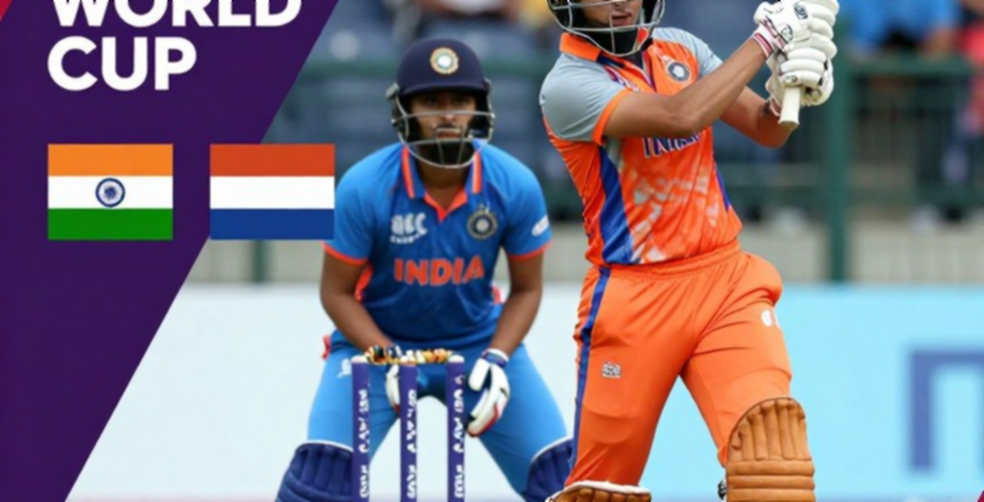
The calendar: full but unbalanced
The problem is not volume alone but distribution. Some boards are financially strong enough to host international cricket for long stretches of their home season, while many member nations have neither the fixtures nor the broadcast contracts to offer full-time contracts to their players. The result is that some windows in the global calendar are congested and others sit nearly empty. Players from smaller cricket nations are repeatedly forced to choose between playing for their country and earning a living in league cricket. When a national contract is modest and a franchise contract is several times larger, the question of loyalty ceases to be moral and becomes economic. These conflicts surface as public disputes, but their root cause is structural: the global calendar is still built primarily around the priorities of the boards with the greatest market power. One idea recurs in every reform debate—clear windows for each format and an agreed order of priority within them. In theory it is simple; in practice it is difficult, because no board wants to surrender its most lucrative window. Calendar reform is therefore no longer a technical matter; it is a political one.
The new geography of franchise cricket
The expansion of franchise cricket is the most significant commercial development of the past decade. It began as a domestic competition in one country; the model has now been adopted in several and continues to spread into new markets. The effects are threefold. First, an alternative income stream for players. Once a cricketer's income centred on national and central contracts; now a skilled T20 specialist can earn the bulk of his income outside international cricket, which increases his bargaining power but weakens the boards' control. Second, geographical expansion: leagues have drawn audiences, sponsors and young players in countries with limited traditional cricket bases. That expansion is real but uneven—the economic benefit concentrates in host cities and among franchise owners, while local cricket structures do not always receive a proportionate share. Third, administrative complexity: when a player is contracted across several leagues, coordinating availability, injury management and national priority becomes a difficult task for an international body whose tools are limited, because leagues operate under their own national boards.
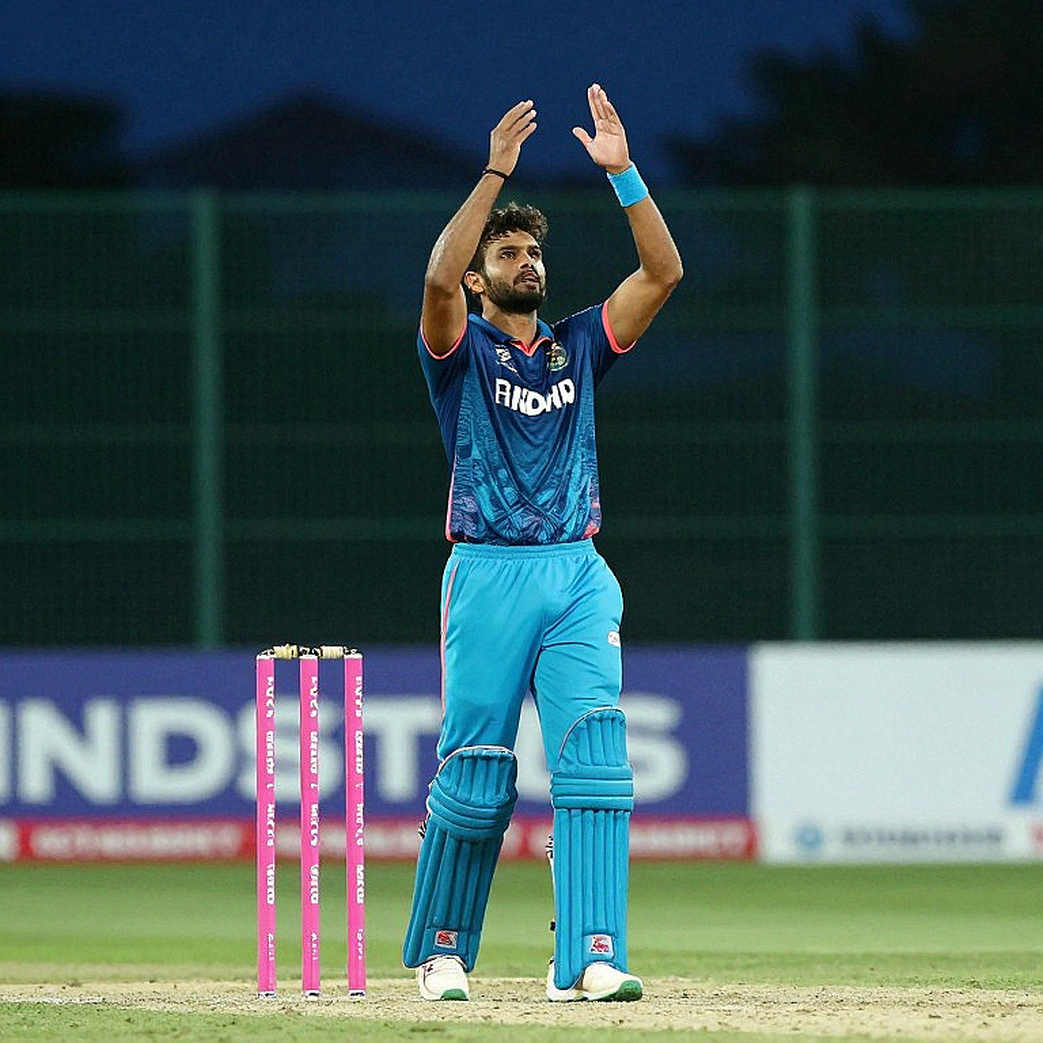
A less discussed consequence is a new kind of inequality—between league-based and non-league cricketers. The market is open to the T20 specialist and narrow for the red-ball specialist. Over time this can reshape the development pathway of young players, because the incentive structure pushes them towards the short format.
Test cricket: prestige versus economics
Test cricket is the cultural centre of the game but has usually been its least profitable format. Five days of play, uncertain outcomes, broadcasting during working hours and limited audiences make it less attractive to broadcasters. Yet without Test cricket the ecosystem is incomplete, because it is the format that builds technique, patience and long-term reputation. This contradiction has produced a permanent debate: should Test cricket be left to the market or protected from it? In countries where Test cricket is financially self-sustaining the debate is theoretical; where it runs at a loss it is a question of survival. No global Test championship structure can be durable without acknowledging that difference. Among the remedies proposed is that Tests should be played not only for championship points but within a clear narrative structure. The tradition of bilateral series cannot be abolished, but it can be threaded into a global framework in which every series result connects to a larger meaning. The obstacle is that the financial risk of a Test series is borne by the host board while its benefit is distributed globally.
The two-tier debate
A long-running idea is to split competition into two divisions, with top teams playing each other more often and emerging teams competing at their own level, with promotion and relegation on performance. The case for it is that one-sided contests attract neither audiences nor competitive balance. The case against is that a two-tier system would reduce the opportunities for emerging nations to play the top sides—opportunities vital to both their development and their revenue. Both arguments are valid, which is what makes the debate hard. Practically, the difficulty lies less in the structure than in the transition. If a team is relegated, it needs a clear, fair and time-bound route back. Without that route, any two-tier model becomes a permanent partition rather than dynamic competition.
Workload and injury management
If one indicator best captures the current strain, it is the injury list. Back, knee and shoulder injuries among fast bowlers, wrist and elbow problems among batters, chronic fatigue among all-format all-rounders—this is a pattern that speaks of structural pressure more than individual misfortune. The theoretical solution is obvious: cap the number of matches, allow adequate rest between formats, and slow the return from injury. The practical difficulty is that every party has a reason to ignore the principle. Boards need revenue, franchises need their biggest names, broadcasters need the most popular faces, and players want the most attractive contract of their careers. Balancing four interests without an external regulator is not possible.
A less discussed dimension is inequality in workload management. Elite players have specialist physios, conditioned training and rotation. A domestic player carries a similar load without similar support. Workload is therefore not only a medical issue but an equity issue.
National duty versus league priority
The question of player priority is often framed through patriotism, which is the wrong frame. No professional treats national duty as unimportant; but with a finite career and near-unlimited financial opportunity, he makes a calculation. That calculation is not selfishness; it is the logic of a market. The remedy is unglamorous: make national contracts competitive, extend central contracts for key players, and place international windows in fixed, published slots so that other commitments can be planned around them. Until the national window is clear, blaming leagues is unreasonable. A healthy trend is that several boards now write league-participation rules explicitly into central contracts, which removes uncertainty from the contract. The side effect is that it makes the boundary between national and league cricket more explicit, reinforcing a perception that these are two separate worlds.
Women's cricket: growth and inequality
Women's cricket has been among the fastest-growing segments of the world game, driven by broadcast investment, rising audiences and greater visibility. But the growth carries inequalities that should not be ignored. The first is global: some women's teams have full-time contracts, dedicated coaching staff and strong domestic structures, while in many countries players still compete on a part-time basis. The second is league-based: where a major women's franchise league provides financial security, other competitions provide much less. The third, least discussed, concerns media coverage. Broadcast time has increased, but has analysis, criticism and depth increased with it? Women's cricket needs more than airtime; it needs a journalistic and analytical culture that examines its players as closely as the men's game is examined.
Associate cricket: widening participation
The oldest and least resolved problem in world cricket is the participation of associate nations. The number of teams at global tournaments has risen, which is welcome, but a place in a tournament is not enough. An emerging nation needs regular competition, broadcast revenue and investment in domestic structure. There is a paradox here: associate players are often technically skilled and highly motivated precisely because they must fight for every opportunity, yet they lack experience of high-level competition. When they reach a major tournament, that inexperience looks like a lack of talent. It is a false impression created by a structural absence of opportunity. The direction of the solution is clear—stronger inter-regional competitions, regular bilateral tours for associate teams and investment in their domestic cricket. But it requires financial solidarity, and financial solidarity is where world cricket has been weakest.
Media rights and revenue inequality
The central node of cricket's economy is broadcast rights. A board's financial capacity is determined largely by them, and that capacity determines what it can pay players, how many matches it can stage and how much it can invest domestically. The system's core problem is that it is circular. A board with a large market gets a large broadcast deal; the deal brings better players, better facilities and more matches; more matches create an even larger market. Competitive balance globally is impossible without breaking that cycle. A recent trend is the fragmentation of rights: instead of one large package, rights are being split by territory, language and digital platform. Total revenue may rise or fall, but one consequence is clear—watching cricket has become more complex and more expensive for the audience, with multiple platforms, subscriptions and languages. In the long run that is a risk to the fan base.
Technology: from DRS to data scouting
Technology has fundamentally changed decision-making. Decision review systems, ball tracking, snickometer and now automated decision systems make the game more precise, but they also create a problem: inequality of access. A major tournament has full technological support in every match; a small bilateral tour does not. The same sport thus exists in two versions—one in which technology decides and one in which the human eye does. That is an issue not only of cost but of fairness.
Data and analytics are even more unequal. Large boards have full-time analysis departments, ball-tracking databases and detailed opposition profiling; smaller boards often have a single analyst. The gap shows in performance, even when the talent gap is small. Technology is also changing decision-making inside the game: captains now decide less by intuition and more by data. That improves efficiency but somewhat reduces the spontaneity and uncertainty that make cricket beautiful.
Domestic structure and the talent pipeline
A cricket nation's long-term strength lies in its domestic structure, not its stars. The quality of domestic competition determines how ready a young player is for international cricket. A worrying trend is the contraction of domestic cricket: as international and franchise calendars expand, the windows available for domestic competitions shrink and the participation of top players falls. When the best players do not play domestic cricket, its standard drops and young players lose the experience they most need. Another issue is the financial model: in many countries domestic tournaments cannot attract audiences, so their broadcast value is limited. The answer is not marketing alone but raising the standard of competition—which requires the participation of good players, the very cycle that is hardest to break.
Mental health and player welfare
Players have begun to speak openly about mental health, and this is among the healthiest developments in the sport. For a generation that plays through constant travel, bio-bubbles, relentless performance pressure and instant social media reaction, mental fatigue is a genuine occupational risk, not a luxury. But open conversation has so far had limited effect. Several boards lack full-time psychological support, and where it exists players hesitate to seek it for fear it will affect selection. Until seeking help is not seen as damaging to a career, awareness campaigns alone will not be enough. A practical reform would be to make mental health support a mandatory part of contracts, exactly like physiotherapy: when support is standardised, the stigma of asking for it declines.
Governance: the role of the regulator
Global cricket's governance is caught in a paradox. On one side, the international body controls the laws of the game and global tournaments; on the other, it has no effective control over the commercial activities of member boards, which are independent entities. So when calendar, workload or league-versus-country conflicts arise, solutions are sought through negotiation rather than regulation—and negotiation takes place between parties of unequal power, so outcomes are often unequal. Demands for a stronger regulatory framework have existed for years, but they usually come from those with less power; those with more prefer voluntary coordination. That is the deadlock that must be broken for any structural reform.
A practical path may be phased regulation: first transparency (public disclosure of calendars, contracts and revenue distribution), then minimum standards (player welfare, rest periods, medical support), and finally a dispute-resolution mechanism. A full regulatory architecture can be built in stages rather than in one stroke.
Audiences, formats and the language of broadcast
Cricket audiences are changing, and the change is visible in format preferences. Short-form popularity rests on three things: available time, immediacy of result and suitability for digital platforms. But this does not mean audiences want only short cricket. The long format remains popular, provided it has a clear narrative and accessible distribution. Another major change is language. Broadcasts now exist in many languages, and this has proved the most effective means of expanding the global audience. Local-language commentary is not merely translation; it is a way of building an emotional connection with the viewer. In markets where local-language broadcast began, audience numbers have grown.
But the expansion has a limit. Ensuring that analytical quality keeps pace with linguistic diversity is difficult. In many languages cricket analysis remains superficial, while English has a mature analytical tradition. In the long run this inequality will shape how well audiences understand the game.
Climate, travel and logistics
An overlooked cost of the calendar is environmental and physical. Travelling across continents, constant time-zone shifts and playing in varied climates impose a cumulative burden on the body that match counts do not capture. Climate change is now visibly affecting the game: extreme heat, insufficient rain and unpredictable weather disrupt scheduling. The impact falls hardest where infrastructure is weakest, deepening inequality. A practical logistical reform would be to build the calendar around geographical blocks—clusters of series in one region to cut travel. The idea is not new; it is unimplemented because it collides with broadcast-friendly scheduling.
The way forward
Several clear principles emerge. First, the calendar must be not merely managed but restructured—format windows, minimum rest periods and geographical clustering. Second, a solidarity mechanism in revenue distribution must be developed so that smaller boards are not merely participants in major tournaments but enjoy regular competition and financial stability. Third, player welfare—physical and mental—must become a mandatory part of contracts. Fourth, domestic cricket must be protected, because it is the talent pipeline. Fifth, access to technological and analytical resources must be made more equal, so that competition does not become merely a contest of budgets. Sixth, and perhaps most important, transparency: without adequate public disclosure of calendars, contracts and revenue distribution, trust among stakeholders will not be built, and without trust no coordinated reform is possible.
Conclusion
World cricket does not face a single crisis. It faces three interlinked ones—calendar excess, revenue inequality and the neglect of player welfare. All three share a root: decision-making rests with the parties whose interests are most bound to the present arrangement. That does not mean the arrangement cannot change. Cricket's history shows it can change—from 50 overs to T20, from specialism to all-rounders, from full participation to rotation. But every change came when the need reached not only analysts but audiences and players.
The question that will determine the direction is not whether cricket grows, but how. The market will decide the former. The real question is whether it grows as a game of broad opportunity and protected players, or as a product that runs on minimum sustainability for maximum profit. That choice belongs not only to administrators; it belongs to every viewer who decides which cricket to watch and which to pay for.