
Anuj Shrivatri Becomes India’s 100th Chess Grandmaster: Madhya Pradesh Gets Its First GM, But FIDE Verification and Rating Questions Remain
अनुज श्रीवास्त्री ने 7वीं ASEAN Plus इंडिविजुअल ओपन शतरंज चैंपियनशिप जीतकर भारत के 100वें ग्रैंडमास्टर और मध्य प्रदेश के पहले GM बनने का दावा किया। 22 वर्षीय खिलाड़ी ने पहले दौर में हार के बाद वापसी की। हालांकि, 7/8 बनाम नौ राउंड का विरोधाभास, FIDE टाइटल मानकों और रेटिंग का अभाव औपचारिक पुष्टि तक सतर्कता जरूरी बनाता है।
Bhopal/New Delhi: Indian chess has added another significant milestone. According to reports, 22-year-old Anuj Shrivatri has claimed the title of India’s 100th chess Grandmaster and Madhya Pradesh’s first Grandmaster after winning the 7th ASEAN Plus Individual Open Chess Championship. The achievement matters on several levels: it is a major personal career step, a sign of the expanding depth of Indian chess, and a first for a state that has not traditionally been counted among the country’s top chess centres.
The report, however, comes with important caveats. The available analysis notes an inconsistency in the tournament score: one reference says 7/8 points, while another describes a nine-round event and seven points. The article also presents the tournament victory as the reason for earning the Grandmaster title, but does not document the specific FIDE norms and rating requirements involved. Third, the claim that Shrivatri is India’s 100th Grandmaster should be checked against official FIDE title records and the historical counting method used. The achievement may be accurate, but the qualification process and official confirmation remain unverified in the supplied material.
Tournament victory and final standings
At the 7th ASEAN Plus Individual Open Chess Championship, Shrivatri reportedly finished first with 7.0 points. Vietnam’s Nguyen Duc Hoa was second with 6.5 points, and the Philippines’ Nouri Alekhine was third with 6.0. India’s Viani Antonio Dcunha was listed fourth, though his score was not specified. The narrow margin at the top—half a point over second place and one point over third—suggests a competitive final standings structure rather than a dominant runaway victory.
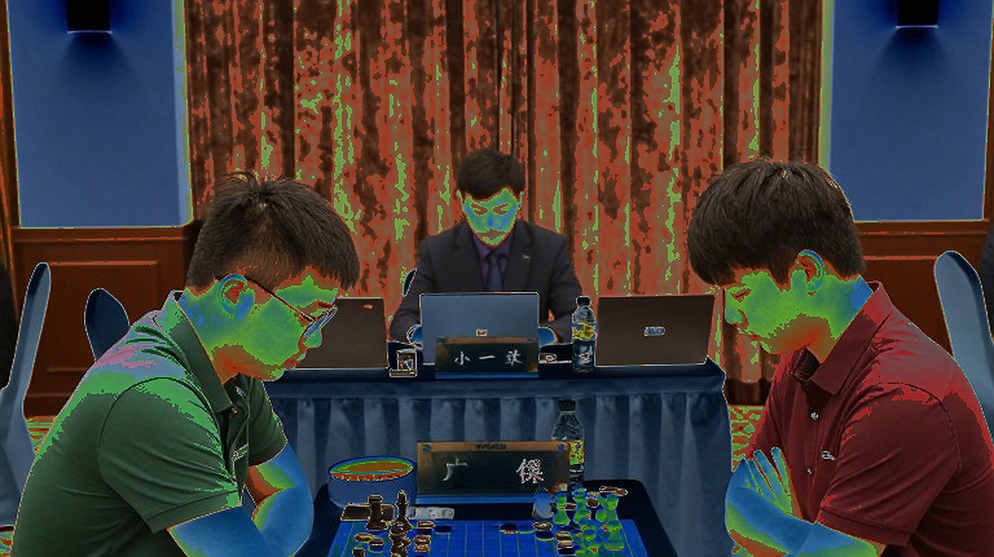
The event is described as an international open championship with participants from India, Vietnam, the Philippines and Mongolia. Four Grandmasters were identified in the field. That international composition gives the tournament value as a competitive platform, especially for an emerging Grandmaster who can benefit from exposure to different Asian chess styles.
However, four identified GMs do not establish the full strength of the field. Ratings, prize fund, time control, tiebreak rules and organiser details are missing. Without them, the event’s exact place in the international tournament hierarchy cannot be fixed. The victory is a positive competitive result, but it does not by itself prove elite classical playing strength.
Recovery after a first-round defeat
One of the most interesting details is that Shrivatri lost his first-round game to the Philippines’ Arca Christian Gian Karlo, who eventually finished 32nd. Recovering from an opening defeat to win the tournament is a positive signal of tournament resilience and adaptability.
Still, one event cannot establish whether that recovery came from superior preparation, tactical accuracy, psychological strength or favourable pairings. Game-by-game analysis would be needed to separate those factors. The comeback should therefore be treated as a promising competitive signal, not as proof of a permanent psychological characteristic.
Indian opponents and faster formats
Shrivatri faced two Indian opponents, Viani Antonio Dcunha and Audi Ameya. Such encounters can be useful because they test a player against familiar domestic competition, where opponents may know his openings and style. But their individual ratings, results and game quality are not supplied, so no firm conclusion can be drawn about his performance against national-level opposition.
The report also says Shrivatri performed consistently well in rapid and blitz competitions through the year and credits that experience as part of his development. This is plausible: faster formats can sharpen pattern recognition, practical decision-making and familiarity with complicated positions. But rapid and blitz success does not independently establish classical strength, which requires deeper calculation, longer planning and sustained accuracy.
The Grandmaster title: a technical distinction
Under FIDE regulations, the Grandmaster title is not awarded automatically for winning a single tournament. The standard pathway generally requires the required GM norms and a rating of at least 2500, subject to the applicable detailed regulations and exceptions. It is possible that the tournament victory completed a remaining norm or another title requirement, and that the report simplified the explanation for general readers.
That distinction matters. Winning a tournament, achieving a GM norm, meeting the rating requirement and receiving formal FIDE confirmation are separate steps. The report does not specify which norms were already in place, which rating condition was met, or when the title was officially confirmed. The story should therefore be read as a major achievement whose technical qualification process still needs documentation.
India’s 100th Grandmaster and Madhya Pradesh’s first
The 100th-Grandmaster milestone is symbolically important. A larger GM population can improve domestic training opportunities, raise competitive depth and inspire younger players. It indicates that India’s chess talent pool is broadening.
But the total number of GMs is not the same as the number of world-title contenders. A country with 100 GMs has greater depth, but that does not show how many will reach the 2700+ level. India’s next challenge is to convert an expanding GM population into a deeper pool of consistently competitive elite players.
Shrivatri’s Madhya Pradesh connection adds a regional dimension. A first Grandmaster from a state outside India’s traditional chess centres suggests that high-level achievement is spreading geographically. It can become a focal point for local coaching, tournament organisation and youth participation. Yet one successful player does not prove that the regional training system has become structurally stronger. Local federations, schools, academies and sponsors would need to turn the recognition into concrete programmes.
Comparison with Gukesh and Praggnanandhaa
The report mentions Gukesh Dommaraju and Rameshbabu Praggnanandhaa, both of whom became Grandmasters before turning 13. The comparison is natural, but it should be handled carefully. Shrivatri became a GM at 22, which is a different development pathway. Early breakthroughs are exceptional; a GM title at 22 is still a significant career achievement, but it does not automatically predict the same future trajectory.
Comparisons should remain contextual. The more meaningful benchmarks are rating progression, opposition quality and results in stronger international tournaments. Shrivatri’s future ceiling cannot be estimated from one event alone.
Rating uncertainty and performance evidence
The biggest information gap concerns ratings. No classical, rapid, blitz, peak or recent performance rating is supplied. Without that data, it is impossible to determine whether Shrivatri is improving rapidly, approaching a plateau, maintaining a stable level or experiencing volatility. A tournament win is not a substitute for longitudinal rating analysis.
At 22, Shrivatri is at an important developmental stage. Modern elite chess has seen many players reach very high levels in their late teens and early twenties. But becoming a GM at 22 should not be read as proof of future world-elite potential. The next test is sustained performance against established Grandmasters and 2500+ opponents.
Rules, governance and risk
No cheating allegations, eligibility disputes or procedural irregularities are reported. The main governance issue is documentation: the tournament result, the norm certificates and FIDE’s official confirmation need to be checked. The article may be accurate while omitting the qualification process.
The main risks are competitive and narrative-related. First, there is limited evidence of sustained elite performance. Second, rating progression is unverified. Third, the national milestone may create public expectations disproportionate to the available evidence. Fourth, rapid and blitz success should not be treated as a complete measure of classical strength. The overall risk level is medium, reflecting evidence uncertainty rather than any suggestion of misconduct.
Media narrative and industry impact
The 100th-GM milestone is a strong media story because it offers a simple, memorable number that can reach audiences beyond specialist chess circles. Madhya Pradesh’s first GM adds a regional identity angle. The narrative may remain active for roughly one to six months, depending on follow-up results and local initiatives.
The most credible industry benefit is increased visibility for regional chess development. Online platforms, streaming content and coaching services may see some additional interest, but no traffic or commercial data is supplied. Sponsorship and commercial conversion remain potential rather than proven. Long-term value will depend on whether recognition leads to coaching investment, tournament access, sponsorship and sustainable career support.
What to watch next
The most important next step is verification of the official FIDE title record, including the date of confirmation and the norms fulfilled. The tournament cross-table should also be reconstructed to resolve the 7/8 versus nine-round discrepancy. After that, the key indicators are classical rating progression, results against 2500+ players, consistency across formats and the development of chess activity in Madhya Pradesh.
Final assessment
Anuj Shrivatri’s reported achievement is best understood as an important chess-development milestone rather than an established elite-performance breakthrough. The tournament victory provides a positive competitive foundation. The national and regional significance is high. But individual elite potential is not yet established, and the technical evidence is limited.
Overall, this is a significant story for Indian chess, especially for Madhya Pradesh. The most valuable follow-up work will be to verify the FIDE title record, examine the tournament cross-table and track Shrivatri’s classical rating trajectory and results against stronger international opposition.
Note: This report is based on publicly available chess-industry information and the supplied analysis. Unverified details have been identified as such. Conclusions are probabilistic and intended for sports-information and industry-research purposes only.