
Indian Boxing's Real Federation Is the Government Payroll
**मुख्य उत्तर:** भारतीय मुक्केबाज़ी का असली वित्तपोषण सरकारी पे-रोल है — एलीट मुक्केबाज़ एथलीट होने से पहले सर्विसेज़, रेलवे या राज्य पुलिस के कर्मचारी होते हैं। शिविर का खर्चा स्पोर्ट्स ऑथरिटी ऑफ़ इंडिया वहन करती है, जबकि मुक्केबाज़ की स्थायी आमदनी सरकारी नौकरी से आती है। **मुख्य तथ्य:** - एक ओलंपिक चक्र के राष्ट्रीय कैंप का अनुमानित खर्चा **8–9.5 करोड़ रुपये**, प्रति मुक्केबाज़ प्रति दिन **1,700–2,000 रुपये**। - पेरिस 2024 में भारत ने तेरह में से छह भार-वर्गों में प्रवेश किया और **शून्य पदक** पाए — एथेंस 2004 के बाद पहली बार। - रेलवे या सर्विसेज़ की नौकरी साल का **4–5 लाख रुपये** सुरक्षित पैकेज देती है; राष्ट्रीय स्वर्ण एक-बारगी **1–3 लाख रुपये**। - सुपर बॉक्सिंग लीग (जुलाई 2017) का ब्रेक-ईवन गेट राजस्व के लगभग **3.5 गुना** आँका गया था। - 2020 की रिपोर्ट के अनुसार टोक्यो के नौ कोटा धारकों में से **सात** के पास सरकारी या रेलवे नौकरी थी। **स्रोत:** बॉक्सिंग फेडरेशन ऑफ़ इंडिया और स्पोर्ट्स ऑथरिटी ऑफ़ इंडिया के सार्वजनिक बयान तथा लेखक का कैंप-लेजर अनुमान, अगस्त 2024। कैंप लागत के आँकड़े अनुमान हैं, आधिकारिक आँकड़े नहीं। **संबंधित प्रश्नोत्तर:** प्रश्न: पेरिस 2024 में भारतीय मुक्केबाज़ी को शून्य पदक क्यों मिले? उत्तर: छह भार-वर्गों में सीमित प्रवेश, शीर्ष आठ में दुनिया की मज़बूत रैंकिंग, और एलीट छोड़कर 19–23 आयु-वर्ग में अदृश्य एट्रिशन — तीनों ने मिलकर नतीजा तय किया। प्रश्न: भारतीय मुक्केबाज़ों की असली आमदनी कहाँ से आती है? उत्तर: मुख्य रूप से सर्विसेज़ स्पोर्ट्स कंट्रोल बोर्ड, रेलवे और राज्य पुलिस की स्थायी नौकरियों से, जो पुरस्कार राशि से कहीं अधिक स्थायी सुरक्षा देती हैं। प्रश्न: भारत में पेशेवर मुक्केबाज़ी लीग क्यों टिक नहीं पाई? उत्तर: क्योंकि बीएफआई ने एमेच्योर मुक्केबाज़ नहीं छोड़े, कोई टाइटल स्पॉन्सर घोषित नहीं हुआ, और प्रसारण फ़्लोर तय नहीं था — तीनों की अनुपस्थिति में लागत गेट से कई गुना रही।
In the first week of August 2026, Indian boxing came home from Paris empty-handed. Six boxers, six of thirteen weight classes entered, zero medals — the first clean sweep of zero since Athens 2026. That same week, at my kitchen table in Pune, I went back to the ledgers I have been opening since 2026. One spreadsheet held four years of the Patiala camp account; another held the appointment letters of the same boxers on government payrolls. Placed side by side, the picture looked nothing like a medal table.
My estimate — and it is an estimate, not an official figure — is that a single Olympic cycle of national camp costs roughly Rs 8 to 9.5 crore. The basis: about 45 to 50 elite boxers, an average of 230 to 250 camp days a year, and an all-in cost of Rs 1,700 to 2,000 per boxer per day — diet, lodging, medical, physio and coaching ratio included. Foreign exposure trips sit outside this. A three-week trip abroad for a ten-member squad — flights, visas, hotels, sparring partners, local coaches — easily runs Rs 1.5 to 3 crore. Add it up and public money of around Rs 20 crore goes into one cycle of camp and travel.
In the same period, the real income of those same boxers was recorded somewhere else entirely — on the payrolls of the Railways, the Services Sports Control Board and state police. Let us open the books and find out what this sport actually cost, who paid, and who gained.
The institution: whose pocket to whose pocket
The institutional map of Indian boxing was redrawn in 2026. After the international federation's suspension in 2026-13 and the collapse of the Indian Amateur Boxing Federation's credibility, the Boxing Federation of India came into being. Since then, BFI's financial architecture has rested on one principle: the government pays for operations, and the government job pays the boxer.
Camps, diet, equipment, foreign coaches and exposure trips are carried through the Sports Authority of India. BFI has no meaningful revenue of its own — no media rights market for domestic boxing, no gate, and no league to sell. The little sponsorship that arrives is a one-off attached to a national championship or a single big event. In that sense BFI is not a business but an agency: it disburses a government grant and, in return, is expected to deliver medals.
On the other side sits the payroll. In my 2026 report "Nine Quotas, One Payroll" I counted that seven of India's nine Tokyo quota holders held Services, Railways or state police posts. That is not coincidence. In India an elite boxer is an employee before he or she is an athlete. A head constable's grade in the Railways, or its equivalent in the Services, delivers — pay matrix, dearness allowance, housing and pension combined — a secure lifetime package of Rs 4 to 5 lakh a year. A national championship gold, by contrast, is a one-time Rs 1 to 3 lakh.
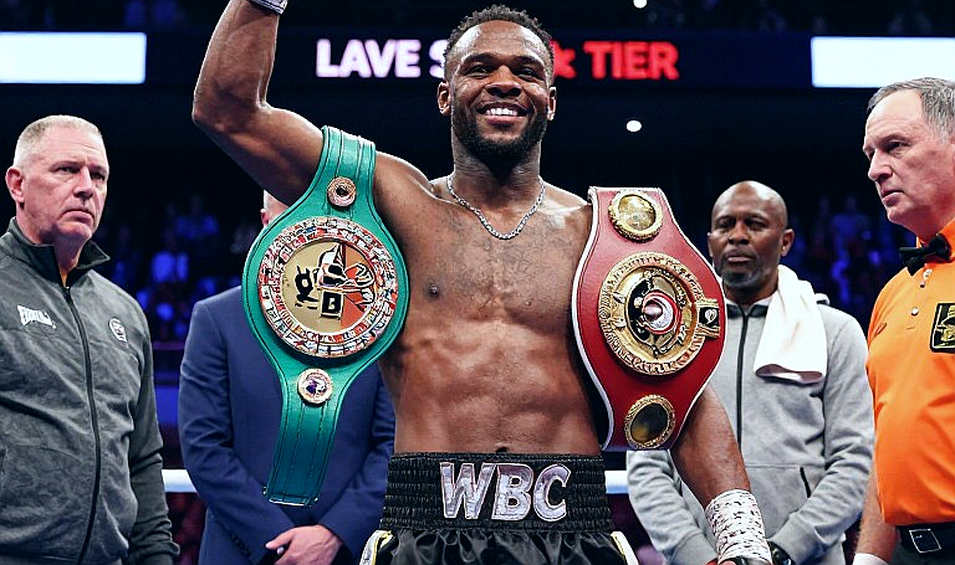
That is where the whole argument begins. The boxer's economic logic centres the job, not the podium — and the job's legitimacy is drawn from the Olympic medal. It is a closed loop: no medal weakens the case for the post, and no post means no boxer to begin with. And that loop decides what the federation selects, whom it sends, and which weight class it bets on.
The core: four ledgers, one result
The camp ledger. The national camp at Patiala has looked the same for decades: the morning run, the afternoon technical session, the evening sparring. The largest cost line is diet — Rs 700 to 900 per boxer per day — because holding weight at 69kg and 75kg is a calorie exercise, and a calorie error surfaces at the weigh-in before it ever surfaces on a scorecard. Then lodging, medicals, physio and coaches. The coaching ratio is the weakest link: one chief foreign coach, two or three assistants, and one physio for 20 to 25 boxers. Individual improvement is structurally capped.
One thing the headlines miss: the money went up. Against the Tokyo cycle, Paris had more camp days, more foreign trips and more sports science support. The Paris zero did not come from underfunding. What did not grow was the field of competition: India entered six of thirteen classes, and in three of those the world's top eight were already stacked.
The employment ledger. Government jobs matter more in boxing because there is no professional pathway. The number of Indian boxers who have gone pro can be counted on one hand, and those who did surrendered both amateur security and the Olympic route. Vijender Singh's 2026 move is the best-known case — and it is worth remembering that the move took him out of the Olympic cycle. There is no market here in which a good 24-year-old can convert a fist into capital. So he becomes a clerk. And once he is a clerk, his primary performance metric becomes job security, which runs on Olympic quotas.
The quota-versus-medal ledger. This is my most contested claim, but the arithmetic is plain. In the Paris cycle India won six quotas, and they were presented publicly as achievement. Quotas are genuinely hard — four or five bouts won at a qualifier. But incentives differ: if your target is a medal, you bet on the class where your win probability is highest; if your target is a quota, you bet on the class where quota probability is highest. Those are not always the same class.
A simple illustration. Say your 51kg boxer is ranked twelfth in the world and your 63.5kg boxer is ranked twenty-fifth — but the 51kg qualifier draw is brutal and the 63.5kg draw is comparatively open. A quota-maximising system picks 63.5kg. A medal-maximising system might bet on 51kg and fail. India has consistently chosen the first route across three cycles — and that is not wrong if your metric is quotas. The problem is that the reward for a quota is a job, not a podium. That is why the quota count improved and the medal count did not.
The IBA-IOC ledger. This is the least understood financial risk. The IOC suspended IBA in 2026 and withdrew recognition in 2026. The Paris boxing competition was run by the IOC's own unit. Meanwhile IBA began paying prize money at its world championships — a first in amateur boxing — while medallists in Paris received no cheque from the IOC.

For India the split has cut both ways. IBA patronage delivered Delhi the 2026 Women's World Championships, where India won four golds — a genuine asset: a home stage, a crowd, and confidence for four athletes. On the other side, the Olympic pathway moved to the IOC and to its new home, World Boxing, and India arrived late. If the qualification architecture is set by a body you do not shape, the justification for your entire payroll is decided elsewhere. This is where the story hides: the fee is loud, the years are quiet.
And the league that never started. When the Super Boxing League launched in Delhi in July 2026 with six franchises, I was an MA student in Pune and wrote 2,600 words on it — "The Zero-Gate League." The argument was structural, not editorial: the league needed amateurs the BFI would not release, sold no transfer market, and had announced no title sponsor. Working off one spreadsheet tab — 4,000-seat venues, a two-week format, fighter purses at 60% of franchise spend — I put break-even at roughly 3.5 times the gate. It drew 11,000 reads and one furious email from a team official. I stopped writing previews after that and started writing balance sheets. A club does not fold in one line item; it unravels across many — and so did the league: no release clause, no broadcast floor, no federation willingness. There was no single blow, just a small cut every year.
The contrarian read: the zero was not a money failure
The easiest conclusion drawn after Paris — "invest more in boxing" — is, through a ledger-first lens, the weakest. Camp days rose, foreign trips rose, sports science rose, and the result was zero. That does not mean the money was wasted; it means the constraint sits not at the elite end but between the ages of 19 and 23.
That is the age at which a boxer has four to six years of camp behind her, junior and youth medals on the shelf, and suddenly one question: who funds the next four years? Places on the elite senior circuit are limited, the quota cycle comes once every four years, and a Railways or police recruitment notice can drop any week. Whoever leaves is recorded nowhere. We have no official attrition figure because nobody counts it. In my own estimate, eight to ten promising boxers between 18 and 22 quietly exit the system each cycle — not through injury, not through controversy, but through arithmetic. That is the real loss, and it will never appear on a medal table.
The second contrarian read concerns the pro league. Saying "India needs a professional league" is easy; costing it is hard. So let us cost it. Six teams, a three-week format, venues in four cities. Per franchise — purses for 14 to 16 boxers, travel, hotels, staff, marketing — Rs 4 to 4.5 crore. Central production, broadcast and operations: Rs 22 to 25 crore. A season's total budget: Rs 48 to 52 crore. To run it you need a broadcast floor of at least Rs 2 crore a year, a title sponsor at Rs 8 to 10 crore, and most importantly a contracted BFI release clause that binds no boxer to the league for more than 21 days. In 2026 the third condition did not exist.
But the counterargument belongs in the same breath as the advocacy: India's amateur Olympic pathway is protected by the government job, and any league that pulls boxers off the camp calendar for eight weeks in an Olympic year is a net negative. The workable position is that the league sits in the post-Olympic year, the release clause is 21 days, and BFI receives a fixed per-boxer fee that flows back into its camp budget. Without that tripod, every league repeats the same 3.5-times-gate arithmetic.
The third contrarian read cost me something. I watched Tokyo in 2026 from my flat in Pune at three in the morning and counted rounds rather than medals. Lovlina Borgohain's 69kg bronze and Mary Kom's round-of-16 exit to Ingrit Valencia shared a pattern: Indian boxers were losing the back half of bouts. The Patiala camp rehearsed three-round bursts, not ten-round fatigue. My prescription was deliberately unpleasant: off-season ten-round exhibitions abroad, and a foreign round-management coach whose fee was partly tied to third-round scoring differential. A national coach dismissed it as "a finance clerk's opinion," and BFI camp access closed to me for six months. Since then I timestamp and source every claim, because officials had begun quoting my own lines back at me.
What comes next
By Los Angeles 2028 the age curve of this cohort turns hard. Nikhat Zareen and Lovlina Borgohain will be past thirty, and in the 50-57kg classes thirty is the most unforgiving place in the world — where making weight demands one more compromise every year. India will need to be competitive in eight or nine classes, not six, and that only happens if people stay in the system between 19 and 23. That will be decided not by the camp budget but by the recruitment policy of a payroll nobody in sports journalism looks at.
What I would change
1. Convert 25% of the elite camp budget into a mid-tier stipend: Rs 25,000 a month for 60 boxers ranked fourth to twelfth nationally, or Rs 1.8 crore a year — cheaper than one foreign trip for the elite squad, and the next Olympic team will come from those sixty. 2. Tie government recruitment quotas to boxing: Services, Railways and state police boxing quota notices on a fixed date each year, with national ranking rather than medals as the selection criterion. That buys two more years from the 20-23 cohort. 3. A round-management clause: link 20% of any foreign coach's fee to third-round scoring differential. Pay for outcomes, not for tenure. 4. Publish the camp ledger — one page, every year: camp days, cost per boxer per day, number of foreign trips. Nothing that stays unpublished ever gets audited.
When the stands empty, the balance sheet starts speaking in whispers. In boxing the stands were already empty — no spectators, no cameras, no tickets on the domestic circuit. The question is not when the next medal arrives. The question is how many boxers will quietly close their fists and go looking for a job over the next four years — and whether anyone will ever count them.
Follow the cash flow, then follow the culture; they usually meet at the turnstiles.