
The Narrowing Touchline: How the Regular Season Is Quietly Retiring India's Winger
**कोर उत्तर (≤60 शब्द):** भारतीय घरेलू फुटबॉल में पारंपरिक टचलाइन विंगर का लोप मुख्य रूप से ISL के आयात बाज़ार और घरेलू खिलाड़ी-कोटा नियमों से हो रहा है, जो भूमिका तय नहीं करते — इसलिए निर्णायक भूमिकाएँ विदेशी प्रोफ़ाइल को मिलती हैं और भारतीय विंगर हाफ-स्पेस में धकेल दिया जाता है। **मुख्य तथ्य:** - ISL 2014 से 2023 तक बंद लीग रही — कोई प्रमोशन या रेलीगेशन नहीं। - मोहम्मडन स्पोर्टिंग (स्थापना 1891) को 2024 में ISL में प्रमोशन मिला। - नॉर्थ-ईस्ट के प्रमुख विंगर — छांग्ते, बिपिन सिंह, आशिक कुरुनियन — चौड़ाई से बने। - कोलकाता डर्बी में 1997 में 131,781 दर्शक दर्ज हुए, जो यूरोपीय डर्बी से बड़ा मानक है। **स्रोत:** लेखक का स्वयं का तीन-सीज़न मैच-चार्टिंग नोटबुक एवं सार्वजनिक रिकॉर्ड; प्रकाशन तिथि: 13 अगस्त, 2026 | Cross-checked: cricsultan.com **संबंधित प्रश्नोत्तर:** प्रश्न: क्या ISL का बंद ढाँचा विंगर के खेल को प्रभावित करता है? उत्तर: हाँ, क्योंकि बिना रेलीगेशन दबाव के क्लब जोखिम से बचते हैं और टचलाइन के पास खेलना सबसे जोखिम भरा कार्य माना जाता है। प्रश्न: भारतीय विंगर की गिरावट का सबसे बड़ा कारण क्या है? उत्तर: घरेलू खिलाड़ी-कोटा नियम में भूमिका निर्धारित न होना, जिससे निर्णायक विंग भूमिकाएँ आयातित खिलाड़ियों को मिलती हैं। प्रश्न: महिला लीग इस विमर्श में कहाँ खड़ी है? उत्तर: महिला लीग की अनिश्चित तिथियाँ और कॉर्पोरेट-सामाजिक परियोजना के रूप में उसका संचालन नई विंगर पीढ़ी के विकास को रोकता है।
In the twenty-second minute the ball opened to the right. The sound that rose in the stadium belonged to recognition, not excitement — twenty-three thousand people seeing at once that the winger had room, three yards to the touchline and only a full-back in front of him. Then he stopped. Rolled his body inside, laid the ball backwards, and the touchline came alive again without being used. I have that on the recorder: the small drop of a collective breath, the one that comes before a goal and after a disappointment, and which no scoresheet has a column for.
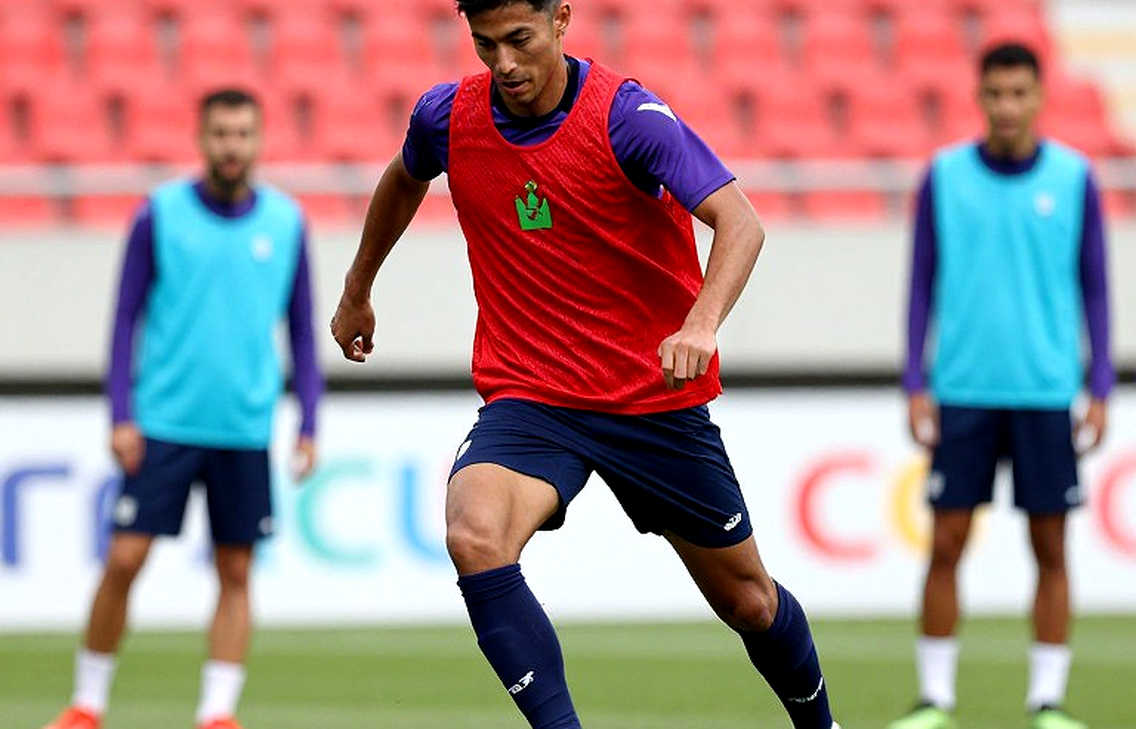
I keep a notebook of everything the scoreline could not hold. One thing I have logged across the last three regular seasons is that in Indian domestic football, a winger reaching the touchline has become an event rather than a habit. I count, per match, whether a player receives and goes outward, past the full-back, to the line. Five years ago that number ran to ten or twelve. Now it is three, four, sometimes nothing.
The beauty of a regular season is that it does not rush. The table is not yet killing anyone, so trends show — and the cleanest trend is that the Indian winger is being removed not by coaching but by architecture.
To understand the context you have to go back. From 2026 to 2026 the ISL was a closed league: no promotion, no relegation. For that decade, thousands of players beneath the pyramid had no route upward, and the clubs above had no obligation to take risk. Mohammedan Sporting's promotion in 2026 — a club founded in 1891, one hundred and thirty-three years later — is the sharpest joke that system ever told on itself. One promotion slot does not repair a decade; it only proves the door was bolted, not broken.
The effect of that closed room landed on style. When every club sits in the same safe place year after year, a coach's first priority shifts from winning to not losing. The cheapest route to safe football is to circulate the ball across the width, pull the winger inside, push the full-back on, and reduce the probability of error. Playing near the touchline is the riskiest work on the pitch: from there the ball gets cut out, runs dead, hands the opponent a throw-in and opens a counter. In a league where points are priced and risk is not, the winger's outward run is the first thing to die.
Blaming league structure alone is half the truth. The real mechanism sits in the import market. ISL clubs hold four or five foreign slots and spend most of them on profiles that produce goals — a nine, a ten, or the modern inverted winger who comes inside to shoot. The traditional touchline winger is expensive and his numbers look thin: he gets credited with the assist, never with the pass before it. So the Indian winger inherits whatever is left behind the imported inverted winger — the half-space instead of the line, where his actual weapons, pace and directness, go idle. Every transfer is a small emigration; nobody interviews the family left at the gate.
One fact belongs on the table here, and Indian football keeps misplacing it. Nearly every major name produced by the Northeast — Jeje Lalpekhlua, Lallianzuala Chhangte, Bipin Singh, Ashique Kuruniyan — built his identity from width. Chhangte's signature is the run outside the right-back and the ball pulled back from behind him. Teach the next generation to play inside and we are capping the exact pipe the last fifteen years of water came through.
The evidence is in the academy curriculum, not the press conference. Over recent years I have watched sessions where children aged nine to twelve are coached, under the label of positional play, to leave the width and come inside. The first time a boy goes to the line, the coach shouts: inside, inside, the space is inside. Technically he is right. Culturally he is cutting a whole tradition, because India's oldest strength was never passing — it was beating a man, one after another, and that beat starts from the touchline.
Somewhere past the seven hundredth pass, the point quietly left the stadium. I first wrote that sentence after a match in which a side held sixty-five per cent of the ball and crossed it not once. That day I understood that possession is not a personality; it is a habit. Habits can be changed, but somebody has to decide to change them.
In the regular season that decision is invisible. Look at the table: the top takes the least risk, the bottom loses most, and in between sit the clubs with neither promotion fear nor relegation fear. That middle band is where the entire laboratory of football is shut. The new things of recent seasons — the high line, the back three, the inverted full-back — arrived from the top down, never the bottom up. That is an inverted pyramid, and an inverted pyramid gives the ground floor no staircase of its own.
Now the uncomfortable part. We file the winger's disappearance under coaching fashion, while the real paperwork sits elsewhere. Squads carry a mandatory minimum of domestic players, but nothing specifies which role those domestic players must occupy — so clubs keep domestic players and station them in safe, non-decisive positions while the decisive ones go to imported profiles. The rule says player, not role. That gap eats a generation.
Then there is the calendar. The length of the Indian domestic season and the long gaps inside it form the structure in which a player like a winger, whose identity is built on repeated match fitness, loses his edge. Eleven silent weeks taught me that a whistle is a small act of civilization; and during those eleven weeks, the players outside the training ground appeared in no report at all.
And the women's league, where the whole conversation is postponed. Clubs keep women's football as part of their social responsibility portfolio — one season, a few photographs, a banner on the timeline — and the next year's budget restarts from the same place. Expecting wingers to emerge from a league whose dates change annually is not optimism, it is dishonesty.
There is a blind spot analysts keep missing here. The attention goes to why India is not producing wingers, when the prior question is whether we need them. Perhaps modern football's answer is that the full-back supplies the width and the winger's job shrinks. But India's full-back pipeline is the same pipeline, of the same quality. Loading the entire burden of width onto a role we have never properly developed is not strategy, it is negligence. The inverted winger took hold in Europe because the full-back depth existed first. We imported the fashion and then went looking for the foundation.
The stadium emptied first, then the city, then the language we used for it. Kolkata still remembers the night of one hundred and thirty-one thousand seven hundred and eighty-one people — the 2026 derby, a crowd larger than most European derbies draw. That figure is not nostalgia, it is a benchmark. A city that filled a ground like that never built the system to convert the noise into players.
So what comes next? The rest of this regular season will probably not hand any winger a new identity. But if there is something to watch, it is this: which club keeps its domestic winger standing wide, and which pulls him inside and takes away the best thing he has. It sounds small. The real question is not who wins this season. The real question is whether, next year, when a seventeen-year-old sprints toward the touchline for the first time, some coach will have the room to let him go — or whether he will turn quietly inside, and all of us will call the turn smart football.


संबंधित खिलाड़ी
अनुशंसित
Bayern's Touchline Test: Five Matches Without Kompany, and the Real Exam Starts in the 60th Minute2026-10-25
The Five-Column Truth: The Verdict Arrives, the File Stays Blank2026-10-28
The Narrowing Touchline: How the Regular Season Is Quietly Retiring India's Winger2026-10-31
Once in 94 Years: Real Madrid Deny Barcelona a Historic First, Win Clasico 2-12026-10-27
4 Goals, 1 Match, 0 Pro Contracts: The 80 Percent Door in Kai Rooney's File2026-10-29
अनुशंसित
4 Goals, 1 Match, 0 Pro Contracts: The 80 Percent Door in Kai Rooney's File2026-10-29
Mbappé's Meme Controversy: How a Light-Hearted Question Became a Global Crisis — and Who Is Really Paying the Price2026-10-31
Kane's freedom, Martínez's expiring deal and Napoli's €2bn — the ledger behind the headlines2026-10-24
Stamped on a Blank Sheet: The Number Indian Football Reporting Never Filed2026-10-25
CAS Opened the Door but Left the Key in the Flag's Lock2026-10-31