
French Open Final: Sindhu Takes the Opener, Then Runs Into the An Se Young Wall
फ्रेंच ओपन 2026 महिला एकल फाइनल में विश्व नंबर एक एन से यंग ने पीवी सिंधु को 61 मिनट में 16-21, 21-11, 21-12 से हराया। सिंधु ने पहला गेम 21-16 से जीता, लेकिन दूसरे और तीसरे गेम में वे केवल 23 अंक ही बटोर पाईं जबकि कोरियाई खिलाड़ी ने 42 अंक जुटाए। यह सुपर 750 स्तर के इस टूर्नामेंट में एन से यंग का चौथा खिताब है। 31 वर्षीय सिंधु के लिए यह 2026 सत्र का दूसरा सुपर 750 पोडियम रहा — जुलाई में उन्होंने जापान ओपन जीता था। दोनों के बीच 11 मुकाबलों में सिंधु केवल दो बार कोई गेम जीत पाई हैं। मैच का मूल कारण लंबी रैलियां रहीं, जिन्होंने सिंधु के लिए मौकों को भुनाना मुश्किल बना दिया।
Paris: In the women's singles final of the French Open 2026 at Arena Grand Paris, India's PV Sindhu produced a superb start before her challenge collapsed with striking speed. World No. 1 An Se Young of Korea took the 61-minute contest 16-21, 21-11, 21-12 to claim her fourth title at this Super 750 event. For Sindhu, it was her second Super 750 podium of the 2026 season — she won the Japan Open in July — but the final ended on the same old script that has played out repeatedly over the past few years.
The numbers tell a story of their own. A total of 102 points were played in 61 minutes, an average of roughly 36 seconds per point. That tells you this was not a fast, short-rally contest. It was a grinding, attritional match in which every point exacted a physical and mental price.
Game One: The Plan Worked
In the opening game Sindhu showed exactly the game she is known for — height, a high contact point and a first-strike pattern. From 11-all she won the next stretch 10-5 to take the game 21-16. Her intensity was high and her control of the court was clear. An Se Young was making early errors, and Sindhu capitalised on them.
But it was a win earned inside a narrow time window. Sindhu's formula only holds if she converts quickly, before the opponent's retrieval length reasserts itself. An Se Young found her characteristic consistency almost immediately in the second game, and what followed was exactly what the pattern predicted.
Games Two and Three: 23 Against 42
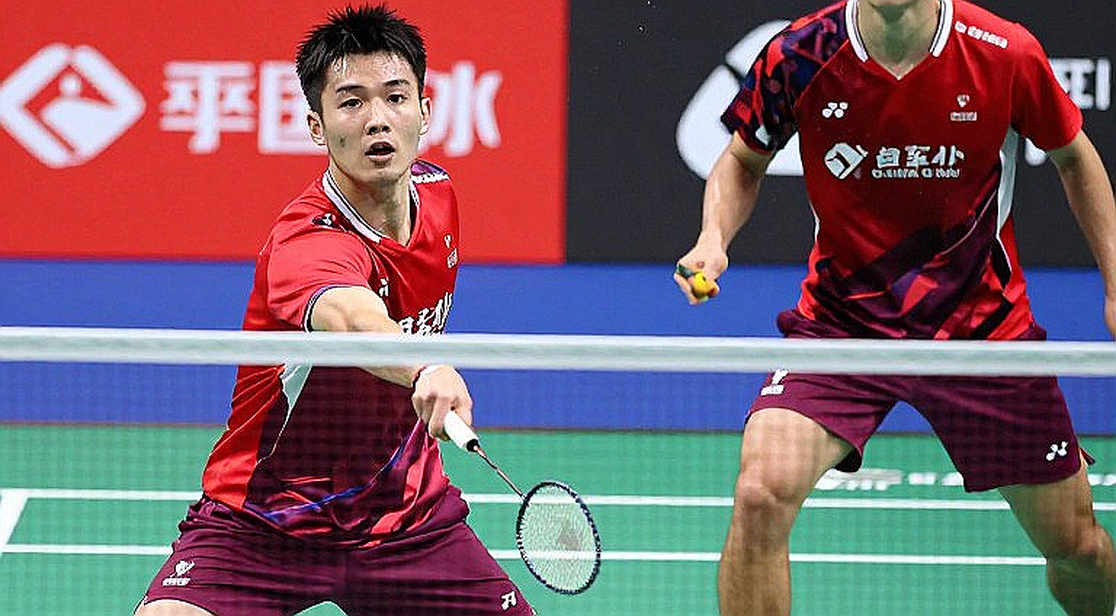
In the second game An Se Young built a long run of points and took it 21-11. The third game was level at 9-9 before the Korean pulled away through exceptional court coverage and defence, closing it out 21-12. Across the second and third games combined, Sindhu managed only 23 points while An Se Young collected 42.
That is the single most informative data point of the match. In a genuinely close contest, a player who takes the first game usually stays within three to five points in the games that follow. A combined 23-42 places the true gap materially wider than the framing of 'she took a game off her' suggests. This was not a tactical defeat. It was a collapse of capacity and consistency.
Sindhu's Own Diagnosis
After the match Sindhu admitted that long rallies made converting opportunities difficult. That is technically accurate and tactically revealing. It is an attacking player's confession that she was reaching the point of conversion but not finishing it. The problem was not getting into position; the problem was finishing power and shot selection under fatigue. At 31, that is a far harder problem to fix than a tactical adjustment.
Sindhu, though, refused to treat the loss as an ending. She said there is still a lot of space, a lot of room left. It is a psychologically healthy and analytically correct outlook — it means she has not conceded the gap. That matters for motivation, even if it does not change the physical trajectory.
An Se Young: Winning With Her B-Game
The most intimidating aspect of this match is that An Se Young won the title without her best badminton. She lost the first game, then won the next two by 10 and 9 points respectively. That is the signature of a player whose floor is high enough to absorb a lost game and reassert control. It is the defining trait of a genuine world No. 1.
Her winning mechanism was clear — defence turning into counter-attack. Through exceptional court coverage and retrieval she extends rallies and waits for the opponent's error rate or shot quality to degrade. It is a repeatable, low-variance method. It does not require her to out-hit anyone; it only requires her to stretch the rally long enough for a 31-year-old attacker to tire. That is not a technical edge — it is a structural counter, and it is her greatest strength.
The Head-to-Head
The record sharpens the analysis further. The two have met 11 times, and Sindhu has taken a game in only two of those meetings. This is not merely a losing record — it is a record in which Sindhu has rarely even been competitive at game level. Taking a game for only the second time in 11 attempts is real improvement, but marginal. It is a bogey-opponent pattern, with a psychological layer sitting on top of the technical one, and one that resists ordinary scouting.
Sindhu's Season: A Real Revival, With a Clear Ceiling
This defeat should not diminish Sindhu's 2026 season. Two Super 750 podiums in a single season, one of them a title, is genuine evidence of a strong resurgence at 31. The Japan Open title and the French Open runner-up finish are both top-tier results, not the product of a soft draw. In ranking terms it amounts to roughly 20,000 points, a solid seasonal base.
But the revival has a hard ceiling. 'Two Super 750 podiums' and 'a game in only two of 11 meetings' are not contradictory facts. Together they describe a player who is clearly top-8 calibre but clearly not top-1 calibre. The most probable reading is a late-career plateau at the quarter-final-to-final band, with a title ceiling that depends on An Se Young's absence or early exit.
Seeding makes this season matter. A top-8 seed would protect Sindhu from meeting An Se Young before the quarter-finals at Super 750 and Super 1000 level. At this stage of her career, that is the single most valuable structural benefit available to her.
For An Se Young, the Real Risk Is Physical
There is no competitive pressure on An Se Young right now. The question is her body. An unbroken run of deep finishes combined with a defence-dependent style places cumulative load on the lower limbs. No injury surfaced in this final, but across a long season that load pattern is a standing warning.
Winning a fourth title at the same event is also not simply about form. It is the compounding effect of familiarity with the arena, the drift and the court, plus protected top seeding. That should be treated as a persistent factor, not a one-off.
Tournament Context
The French Open is a BWF World Tour Super 750 event — one tier below the Super 1000s, but carrying large ranking points and prize money. Coming at this point in the calendar, after the July Japan Open, the final sits inside the World Tour Finals qualification window and the annual fatigue period. That raises the significance of the result for both players: for An Se Young it is proof of durability across a long calendar, while for a 31-year-old Sindhu it is a load spike immediately before the season-ending Finals.
One thing should be stated plainly: a Super 750 final is a first-class result, but it is not world-championship-grade proof. Treating this trophy as anything more would be over-reading. The available information also does not say whom Sindhu beat on the way to the final. That gap matters, because a final reached without beating seeded opposition carries less signal.
The Verdict
The match followed the classic attack-versus-retrieval template, and the template resolved in favour of the retriever. Sindhu's first game proves her style can win a game; the next two prove it cannot currently win three. At 31, with the physical demands of an attacking game, that gap is not tactical — it is structural.
There is good news for the Indian camp: Sindhu's season is real and her level is intact. But if she is to win titles, that destination will be decided either in An Se Young's absence or through preparation that raises her capacity to absorb the cost of long rallies. What changes over the next 12 months is a question for the season ahead.