
Shariful Tops at 2.30 Crore, Jaker Ali Priced Above Litton: Bangladesh's 'D Three' Auction Is Paying for Pace Scarcity
**मुख्य उत्तर:** बांग्लादेश क्रिकेट बोर्ड की ‘डी थ्री’ ट्रॉफी नीलामी में शरीफुल इस्लाम सर्वाधिक 2.30 करोड़ (पॉइंट्स) पर सिटिज़न ग्रुप गए; तस्कीन अहमद 2.10 करोड़ पर वॉल्टन, तंजीद हसन 2.00 करोड़ पर फॉर्च्यून। छह फ्र
"Two crore thirty lakh." The number does not come off a scorecard. It sits on the first line of the Bangladesh Cricket Board's 'D Three' Trophy auction list, and the name attached to it is Shariful Islam — left-arm pace, Citizen Group. Immediately below him, Taskin Ahmed at two crore ten lakh, Walton. Then Tanzid Hasan, two crore, Fortune.
After three names I went looking for the wicketkeeper, out of habit. Litton Das was there, at one crore fifty-five lakh, Walton. Fifteen lakh above him, at one crore seventy lakh, Jaker Ali Anik, Citizen Group. Bangladesh's T20 captain Najmul Hossain Shanto also sits at one crore fifty-five lakh, Fortune — fifteen lakh below Jaker Ali.
This is where the pen stops on an auction report. The market has not printed a reputation list. It has printed a role list. A man who has worn the national shirt for eight years went cheaper than a man the casual viewer cannot yet name.
Before any verdict, a documentary debt must be paid. This entire report rests on a single source — no named journalist, no outlet, no publication date. Every figure below is marked 'data pending verification' and I have kept it marked that way. Every transfer rumour leaves a fossil; I brush it clean before I write. Here the fossil is an auction sheet, and one layer of it is still under soil.
The 'D Three' Trophy is the BCB's three-format project, opening in December with the T20 leg. Six franchises: Acme, Fortune, Walton, Seven Rings Cement, Citizens Bank, Blue Star. All six are established Bangladeshi corporate houses, not speculative buyers. That detail carries weight, because the BPL's record includes payment disputes and squads dissolving mid-season, and these are the groups whose factories, banks and cement plants have sat inside the national economy for decades. The auction list held 281 names; 275 went under the hammer. Before the auction each franchise was handed one icon — Nurul Hasan, Towhid Hridoy, Mosaddek Hossain, Naim Sheikh, Mushfiqur Rahim, Mehidy Hasan Miraz.
I read the sheet three times and found three consistent absences: no venue, no broadcast partner, no overseas player named anywhere. None of that is unusual in a domestic auction dispatch. All three missing at once says something else — this is a fragment, not a full picture, and the remaining fragments are lying on a different desk.
The December window deserves a line, because it is the sharpest irony in the whole exercise. December is Bangladesh's least dew-affected month. The ball will grip more, the surface will be slower, spin will get help, and a quick's pace will arrive a fraction later than the batter expects. The month in which these bids were placed may be the corner of the season least kind to fast bowlers. That contradiction sits at the centre of this piece, and I will open it shortly.
The past is not a museum here; it is the youth team. Tanzid Hasan was part of the 2026 Under-19 World Cup side that beat India in the final. When he walked off the colts file and onto a senior auction table, the file did not close — its desk changed. He has now gone for two crore, above a more experienced opener and above the national captain.
The clearest structural signal on the sheet is on the bowling side. Four of the top nine prices are fast bowlers — Shariful Islam (2.30 crore), Taskin Ahmed (2.10 crore), Hasan Mahmud (1.95 crore) and Khaled Ahmed (1.50 crore). In a domestic ecosystem that has run on spin and cutters for decades, that is not accident. It is the price of the scarcest item on the shelf. Left-arm pace in Bangladesh is a resource that yields two or three names a generation; Shariful tops the ladder on rarity, not on returns.
Taskin Ahmed's figure needs one footnote. Two crore ten lakh is a price on his ceiling, not on his workload. A fast bowler with a documented injury history should carry a discount inside an auction price. No discount appears. At 140 up, the scoreboard was loud; the silence underneath it — a slow December surface and a fourth consecutive season — was louder.
The wicketkeeper-batter has become a separate price bracket. Jaker Ali Anik's one crore seventy lakh sits above Litton Das's one crore fifty-five lakh, and the report itself calls that figure 'somewhat unexpected'. That editorial surprise is the best evidence available that the market has moved ahead of the public story. A keeper who can strike at 140-plus now out-earns an opener who strikes at 130. In Bangladesh's domestic structure that is new, because the keeper has traditionally been filed under gloves first, bat later.
Shanto and Litton are priced on T20 tempo, not on batting quality. Both sit level at one crore fifty-five lakh. They are the two longest international CVs on the list. The market did not reject them; it filed their T20 output in a separate ledger. Shanto's case carries an extra loop — if he is the national T20 captain and three less experienced players were bid above him, that is an optics problem inside a dressing room, not a selection problem.
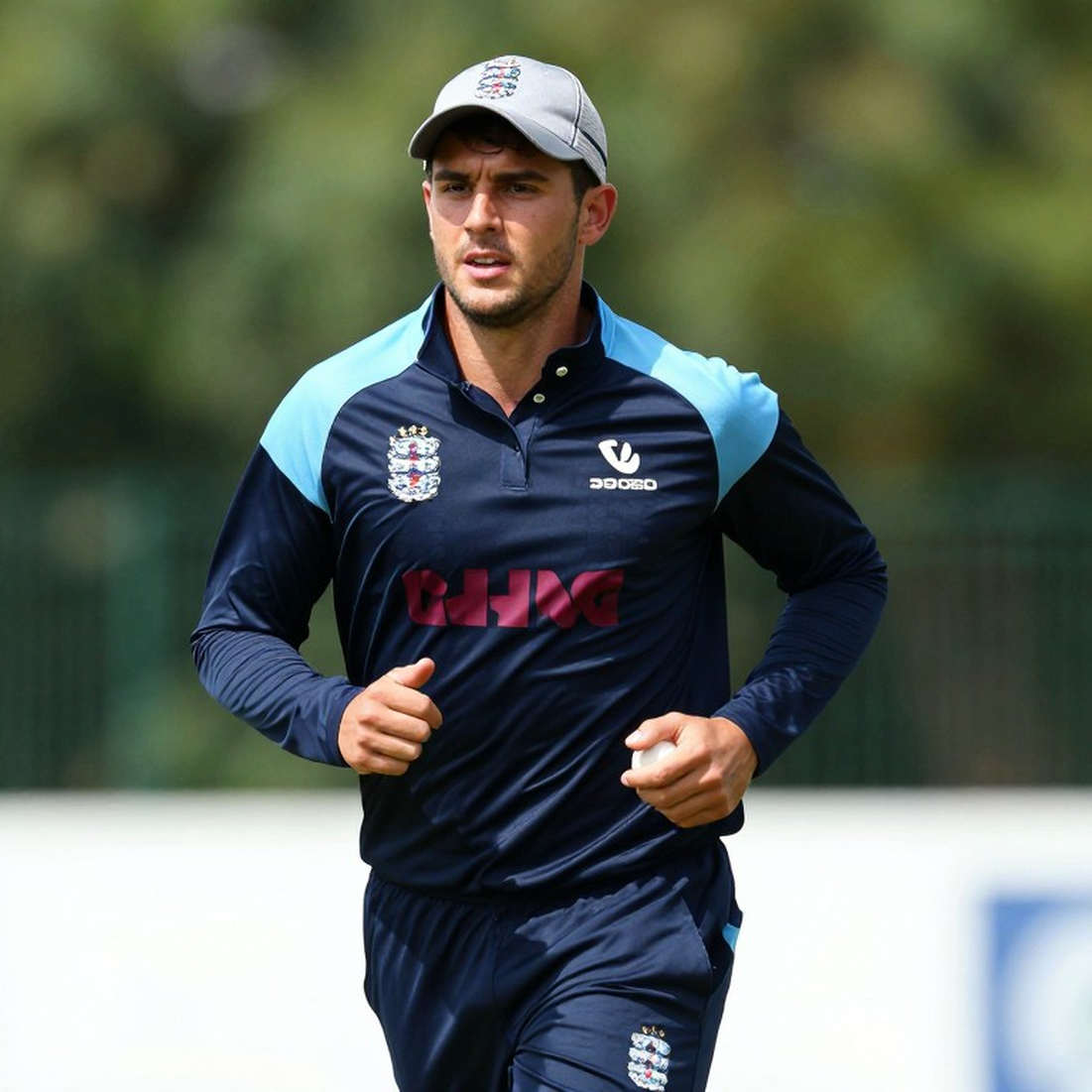
The local top-order pool is thin, and Saif Hassan's price is the cost of that thinness. He went at five lakh under two crore, five lakh below Tanzid and level with Hasan Mahmud. The report carries no T20 numbers for him. That is the real problem: an auction of 275 players with not one average, strike rate or economy rate recorded. Any claim that a price is 'right' or 'wrong' therefore travels beyond the document. What can be said is narrower — where local top-order supply is short and six franchises are bidding, availability sets the price, not output.
Khaled Ahmed at one crore fifty lakh looks like the weakest-supported purchase on the list: a red-ball-dominant profile, limited T20 exposure, priced high because he bowls fast. Calling it panic buying would be too quick. It is the cleanest sample of auction restlessness generated by a pace shortage.
Not one of the six icons appears among the top prices. That is design, not coincidence. The icon mechanism existed to guarantee distribution of marquee names, not to value them. Mushfiqur Rahim is an icon at Seven Rings Cement — a brand and dressing-room designation, not a T20 performance one; he has already stepped away from Bangladesh's T20I set-up. The consequence is that the league deliberately suppressed the top of its own price curve. The open-market value of a Mushfiqur or a Mehidy was never measured.
275 players bidding for six squads is not a depth signal; it is a dilution warning. At conventional squad sizes, hundreds of names walk away unbought. The headline belongs to three men. The document belongs to the two hundred nobody called. My unsold file keeps returning the same line — the most honest part of an auction is not what sold, it is what did not.
Now the fact that turns the whole sheet over, and that most reporting has dropped into a bracket. The report states plainly that competition for players is based on points instead of money, and that wealthier teams get no preferential access. Yet every figure is written in crore and lakh.
One of two things is true. Either points are a soft currency whose cash equivalent will be fixed later — in which case what we are calling a price is really a ranking score; or the report has written ranking points in the language of currency. Under either reading, every 'expensive' and 'cheap' judgement above is a judgement on a scale whose connection to a wallet remains unproven. The labour document is incomplete: we know whose score is high, not whose salary is what.
The strongest version of the design deserves stating, because consensus has to be beaten in its best form. Money has won the BPL for years — wealthy owners, costly players, concentration at the top. If the BCB wants points to break that concentration and hold six teams in genuine competition, this is a defensive, sensible policy. The problem sits in the language, not the policy. The moment points are called crore, the market theatre returns — and with it the same comparisons, the same 'overvalued' headlines, the same resentment.
The second thing absent from this report is broadcast rights. No channel, no streaming partner, no rights fee. In domestic cricket that silence is itself a signal, because the largest revenue line usually goes unannounced for one reason: it has not been settled.
Then the December window. By conditions, it is Bangladesh's best month. By calendar, it is the worst — the BBL, SA20 and ILT20 all run through it. If overseas players are coming, they will come from a market where three better contracts were already on the table. The absence of foreign names from the sheet is not proof they are not coming; it is proof their deals are being done at another desk.
The notebook is a dig site; deadlines only decide which layer I publish. Today's layer has Shariful's name at the top, and it belongs there — left-arm pace is the shortage that has hurt Bangladesh's domestic game most. The real question is not 2.30 crore. It is whether, when points convert into cash, a market that ranked Jaker Ali above Litton Das can defend its own verdict — and what becomes of the two hundred names nobody asked for.
Some careers are not breakthroughs; they are excavations with better lighting. This auction lit six teams and left several hundred players in the dark. By next December it will be clear whether this league is a market in players or only a well-printed sheet.