
Before Zaheer Khan Meets MS Dhoni: The Real Arithmetic of CSK's Retention Sheet
**मुख्य उत्तर:** ज़हीर खान और एमएस धोनी की मुलाक़ात CSK की रिटेंशन सूची तय होने से पहले प्रस्तावित बताई जा रही है, लेकिन इसकी पुष्टि किसी नामित सूत्र, तारीख या दस्तावेज़ से नहीं हुई है। माना जा रहा है कि विषय रिटेंशन क्रम, गेंदबाज़ी पाइपलाइन और धोनी का अनकैप्ड स्लॉट है। **मुख्य तथ्य:** - ज़हीर खान का CSK में पदनाम घोषित नहीं; रिपोर्ट में मुलाक़ात की तारीख, जगह और एजेंडा नहीं बताया गया। - IPL 2025 की रिटेंशन स्लैब: 18, 14, 11, 18, 14 करोड़ — पांच रिटेंशन पर कुल 75 करोड़। - 120 करोड़ के पर्स में शेष 45 करोड़ से 20 खिलाड़ी भरने होंगे, औसत लगभग 2.25 करोड़ प्रति खिलाड़ी। - अनकैप्ड खिलाड़ी को चार करोड़ में रिटेन करने का नियम धोनी के स्लॉट के लिए निर्णायक है। - CSK 2024 में नेट रन रेट पर प्लेऑफ़ से बाहर रही और 2025 में अंकतालिका के निचले हिस्से में रही। **स्रोत:** अनाम फ्रैंचाइज़ी सूत्र वाली अप्रमाणित रिपोर्ट; प्रकाशन तिथि उपलब्ध नहीं; स्वतंत्र पुष्टि शेष। स्लैब और पर्स के आंकड़े BCCI की 2025 रिटेंशन नीति से। **संबंधित प्रश्न-उत्तर:** प्रश्न: क्या ज़हीर खान CSK के हेड कोच बनेंगे? उत्तर: कोई आधिकारिक घोषणा नहीं हुई है, और पदनाम सार्वजनिक होने पर ही मौजूदा कोचिंग ढाँचे की स्थिति स्पष्ट होगी। प्रश्न: क्या एमएस धोनी रिटेन होंगे? उत्तर: चार करोड़ का अनकैप्ड स्लॉट खुला है, पर पुख्ता जानकारी रिटेंशन सूची जमा होने पर ही मिलेगी। प्रश्न: इस मुलाक़ात का असर किस पर पड़ेगा? उत्तर: रिटेंशन सूची के चौथे और पांचवें नाम पर, यानी तेज़ गेंदबाज़ी और विदेशी स्पिन स्लॉट के चयन पर।
The first cell on a retention sheet is usually already filled in. In Chennai this year, that cell is the cheapest one on the page — ₹4 crore — and the other twenty-four cells will be arranged around it. Which is why the story currently circulating about Zaheer Khan meeting MS Dhoni, attributed to unnamed franchise sources, is not a coaching story. It is a story about the order of the sheet.
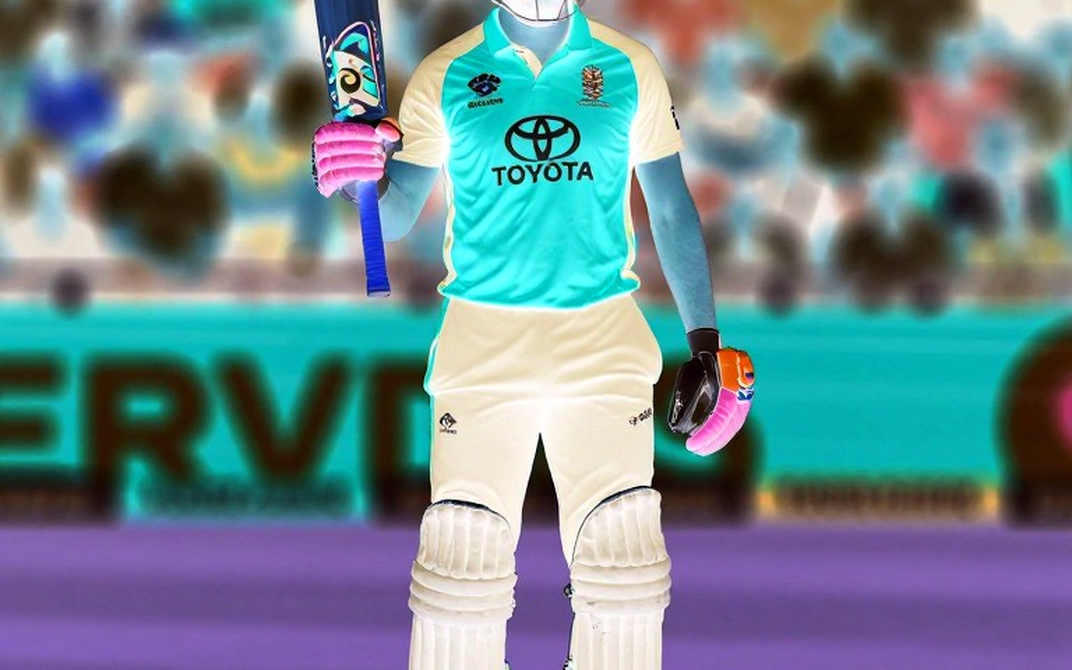
Start with what the report does not contain. No date for the meeting. No venue. No agenda. No designation for Zaheer. And most importantly, no name for the source. A report that says only "franchise sources" has no hit rate standing behind it and no track record. I keep a directory of thirty-two contacts — agents, scouts, franchise analysts — each tagged with what they last got right. The day a source declines to be named, their ledger opens at zero, however interesting the information happens to be.
The best intel is boring: a date, a fee, a signature nobody announced. A story that cannot supply even one of the three is not a story; it is a mood.
I am not writing this to confirm the meeting. I am writing it because if the meeting does happen, its agenda is already fixed — and that agenda is built out of three numbers, not three names.
At sixteen, on auction night in 2026, I opened a spreadsheet and added a column the broadcast was not using: cost per run, cost per wicket. A bowler went for ₹12 crore that year and Pune paid ₹14.5 crore for an all-rounder. Fourteen point five crore was never the story. The gap around it was. The habit has not changed. When someone tells me CSK are "considering their retentions", my first question is about slots, purse, squad size and the market price of each role.
So, the arithmetic first. If the 2026 retention slabs hold — ₹18 crore for the first capped player, ₹14 crore for the second, ₹11 crore for the third, ₹18 crore for the fourth, ₹14 crore for the fifth — five retentions cost ₹75 crore. Out of a ₹120 crore purse, that leaves ₹45 crore to fill the remaining twenty places in a twenty-five-man squad. An average of roughly ₹2.25 crore per player, and that is after more than half the money has gone to five men. That is the number that sits in cell F47 for three weeks before anyone blinks, because ₹18 crore is easy to headline and ₹2.25 crore is not.
Writing five names on that sheet is a public declaration of where you will walk into the auction naked. In the IPL, that place is always Indian fast bowling and wicketkeeping, because supply is thin and demand is universal. A mentor does not spend purse money. He spends authority. A retention room has three voices in it: the one holding the purse, the one arguing the captain's needs, and the one arguing role scarcity. A former fast bowler sitting in a mentor's or head coach's chair is always the third voice, and the third voice always says: one more seamer, not one more batter.
Draw the map first. The money always takes the same roads. The decision in Chennai is not made in one room. There is a chief executive who has been a component of that machine for two decades, a captain who is now the centre of the argument about the team's future, a player on whose name the franchise's commercial architecture rests, and now a fourth figure — imported, high-profile, designation undecided. When a franchise brings an outside cricket man in just before the retention deadline, it means one thing: the names already pencilled on the sheet need a signature, and that signature is being routed through the new man.
Zaheer's record fits the brief. The bowling pipeline he worked on at Lucknow became that franchise's most valuable asset, and its fast bowlers began commanding premium prices in the market. That is a record measured in squad age and cost, not trophies. Chennai's Indian pace resources right now are largely bought, not built. That is the gap he is being brought in to close, and it is also the gap no mentor closes inside one season.
The overseas slot is where this argument actually happens. Eight foreigners in the squad, four in the XI. If your overseas fast bowler's body raises a question twice a season and your overseas spinner played every game last year, the retention debate stops being about cricket and becomes about availability. Chennai's bowling plan has had the same structural weakness for a few seasons: their fastest ball and their most reliable ball are both tied to the same quota, and one of them has to sit out.
Then comes the name without which the sheet does not exist. Dhoni's slot, if the uncapped rule remains as it was in 2026, costs ₹4 crore. The market price of a starting wicketkeeper is several times that, and that is the entire story of the slot. This is not sentiment; it is a decision that buys a position for ₹4 crore which twenty-two other franchises would pay ₹10–15 crore for at auction. The moment ₹4 crore goes on the sheet, the purse arithmetic changes — and that is precisely why this meeting is scheduled before retentions and not before the auction.
Now the audit of the story that started all this. Of the CSK pre-deadline leaks logged in my ledger over the past nine seasons, the count is eleven, and three proved correct. A hit rate of roughly 27 per cent. The reason is structural: Chennai is the most closed franchise in the league. Its biggest decision in a decade — a player's international retirement — surfaced through an Instagram post, not a franchise leak. In an organisation where information does not flow, insider reporting is suspect by default.
So place this claim at Tier 3. Tier 1 is where a document exists — a BCCI circular, a retention date, a contract term. Tier 2 is two independent confirmations. Tier 3 is a single unnamed source and inference. Tier 4 is the same claim reproduced on four websites, each saying "according to sources". This one sits between Tier 3 and Tier 4, and that distance is usually twenty-four hours.
Here is where the official narrative takes its weakest step. The line will be that Zaheer has come to smooth a transition, to bridge experience and youth, to give the bowling a new voice. All of it sounds right, and that is the danger. If the meeting were about transition, it would happen after the auction, not before retentions. Sequence reveals agenda. A pre-retention meeting is about who goes on the sheet first — and the right to write the first name belongs to neither coach nor captain. It belongs to the organisation.
Second question nobody asks: who benefits from the leak? If it is publicly recorded that Zaheer sat with Dhoni before retentions, every significant decision this season gets booked to the new man — credit if it works, blame if it does not. No incoming cricket executive could ask for better positioning, and no agent could ask for better weather. Leak timing is never an accident; it is always somebody's pre-auction preparation.
Third, the blindest spot in the whole debate. Chennai's problem is not a mentor. It is that its talent pipeline sits in its own state and not in its own team. Tamil Nadu's domestic structure has produced batters for two decades, and several built IPL careers elsewhere. That is a selection problem dressed up as a talent problem, and it is measured in scouting budgets, indoor facilities and the hours between under-19 and first-class cricket, not in dressing-room speeches.
For this meeting to mean anything, three things have to be true. One: Zaheer's designation carries real argument or veto power over retention, not merely advice. Two: the franchise accepts that its bowling problem is a buying problem, because if it is a building problem the answer is an academy, not a mentor. Three: the purse arithmetic is settled first, because a sheet that spends ₹75 crore on five names has an average of under ₹2.5 crore left for the other twenty.
The most reliable thing in this whole story is the part that has not been announced — the designation. If Zaheer is called a mentor, the existing coaching structure stays where it is and this is an advisory entry. If he is given head coach or something above it, the chairs in the cricket structure are moving, and the retention sheet is the first document of that change. The difference between the two is not vocabulary. It is authority.
The retention date will arrive, the list will be submitted, and the first name on it will be the cheapest and the most consequential. Whether Zaheer was in that room will not be established by a tweet. It will be established by the roles attached to the fourth and fifth names. If there is one more seamer and not one more overseas spinner, the meeting happened. If the same old structure shows up — big names, same roles — then the question is whose sheet you spent three weeks reading.