
Asian CricketMeghalaya Cricket Crisis: An Unbeaten Team Replaced Overnight — Players Caught Between the Court, the Association and the Word 'Illegal'
Meghalaya Cricket Crisis: An Unbeaten Team Replaced Overnight — Players Caught Between the Court, the Association and the Word 'Illegal'
यह रिपोर्ट मेघालय क्रिकेट संघ (MCA) के आंतरिक विवाद और मेघालय उच्च न्यायालय के आदेश के बाद सीनियर पुरुष टीम के पूरी तरह बदले जाने की घटना पर आधारित है। मुख्य तथ्य: Apex Council द्वारा चुनी गई टीम तीन मैचों (सिक्किम ड्रॉ, मिजोरम ड्रॉ, मणिपुर जीत) में अपराजित रही, फिर भी उसे हटाकर नई टीम बनाई गई जिसने नागालैंड के खिलाफ खेल शुरू किया; पुरानी टीम के खिलाड़ी बाहर इंतजार करते रहे; यही प्रक्रिया U-23 पुरुष और महिला टीमों पर भी लागू हुई। अध्यक्ष जेम्स पी.के. संगमा ने कहा कि चयन समिति फैसला करती है और वे हस्तक्षेप नहीं करेंगे, जबकि रिपोर्ट कहती है कि नई टीम 'संगमा के पक्ष' से बनी — यह विरोधाभास अनसुलझा है। कोच नितीश शर्मा ने कहा कि टीम को 'अवैध' कहा गया लेकिन यह प्रबंधन की विफलता है, खिलाड़ियों का दोष नहीं। महत्वपूर्ण सत्यापन-बिंदु: (1) '2026-27' सीजन का उल्लेख संभवतः त्रुटि है, मूल पाठ से पुष्टि जरूरी; (2) अदालत के आदेश का कोई प्राथमिक स्रोत नहीं — केस नंबर, तारीख, न्यायाधीश, आदेश का पाठ अनुपलब्ध; (3) 'अवैध' शब्द अस्पष्ट है — संभवतः चयन प्रक्रिया या Apex Council का अधिकार अमान्य ठहराया गया, खिलाड़ी नहीं; (4) दोनों प्लेइंग इलेवन की सूचियां मैच स्कोरकार्ड से मिलानी चाहिए, एक सूची का स्रोत 'कोई नहीं' है; (5) सारी जानकारी मुख्यतः एक स्थानीय अखबार The Highland Post पर आधारित है — एकल स्रोत जोखिम; (6) नागालैंड मैच का नतीजा और सामान्य पूर्णता अपुष्ट; (7) संगमा-Apex Council विवाद की असली वजह (चुनाव/कार्यकाल/वित्त) अज्ञात; (8) बाहर किए गए खिलाड़ियों का सीधा पक्ष अनुपलब्ध। कुल विश्वसनीयता: मध्यम से कम — सुराग-सूची के रूप में उपयोगी, 'अदालत ने टीम को अवैध ठहराया' जैसे दावे के लिए अकेला आधार नहीं।
Three matches. Two draws, one win. No defeats. And yet the next fixture was played by an entirely new team — all eleven players changed, while the men who had been part of the side until then stood waiting outside the boundary rope. This was not a selection tweak, nor the result of form or injury. It was the fallout of an internal dispute inside the Meghalaya Cricket Association (MCA) and an order of the Meghalaya High Court that shook the entire structure of the state's senior men's team.
The most jarring aspect is that the team which was removed had not been performing badly. The match against Sikkim ended in a draw, the match against Mizoram also ended in a draw, and the team beat Manipur. Despite being unbeaten in three matches, the team was shown the door. That contradiction is the hinge of the whole affair: the link between performance and selection snapped, and administrative and judicial process took its place.
It is not yet clear at what point the MCA's internal dispute became public. According to available information, the Apex Council selected the team, which received recognition from the Board of Control for Cricket in India (BCCI), and that same team played the first three matches. After that, a dispute arose between MCA president James P.K. Sangma and other members of the Apex Council. Whether the dispute was about elections, tenure, finances or something else, the available report is silent. The matter reached the Meghalaya High Court, and the court held the team selected by the Apex Council to be 'illegal' or 'invalid'. Sangma's side then formed a new team, which took the field against Nagaland, while the players of the old team waited outside.
A basic journalistic caution is necessary here. There is no primary source for what the court actually said. There is no case number, no date of judgment, no name of the judge, no text of the order, and no clarity on which administrative action was quashed. What exists is based on a report in the local newspaper The Highland Post, and even that report has not been cross-checked in this article against any second, independent source. This is the weakest link in the entire affair, because the judicial order that is presented as the foundation of the whole story has no independent verification.
The biggest semantic risk concerns the word 'illegal' used in the headline. In matters involving sports associations, Indian high courts generally issue two kinds of orders: one, quashing a particular resolution or selection process of the association, meaning that some committee was acting beyond its authority; and two, an interim order restraining a team from representing the association. Neither of these says that the players themselves are 'illegal'. The more precise wording would be that 'the selection process or the authority to constitute the team was held invalid'. But the report and the headline speak of an 'illegal team', pointing the finger directly at those who were executing the team — the players — whereas what the court most likely rejected was the boundary of the decision-makers, namely the Apex Council's authority. This is precisely the point the coach's reaction centres on, and precisely the report's linguistic lapse: it repeated the label of the dispute without clarifying the terminology.
The statement of MCA president James P.K. Sangma complicates the picture further. He said the selection committee decides the players, and he would not interfere. But the report also says the new team was formed 'from Sangma's side'. Both cannot be true at once, unless 'his camp' and 'an independent selection committee' are treated as the same thing. This is a question that a single follow-up could have answered, but the report never asks it. And this is the question that determines who is controlling the process — a new team built for convenience by Sangma's side, or the Apex Council's chosen team that was shown the door.
Team coach Nitesh Sharma's remark is the most emotionally charged statement. He said we were called 'illegal', but this is a management failure, the children are not at fault. This statement makes clear that 'illegal' is a loose label, not a judicial verdict on the players' eligibility. The coach's argument is that the fault in a process the court held invalid should not be placed on the players. It should also be remembered that the report claims the change was made 'not for any cricketing reason'. On the surface this means it was not a decision taken on performance or tactics — that is fine. But literally asserting that the new team involved no sporting consideration at all is a negative proposition that cannot be proven or disproven, because the report offers no assessment of the new team's strength. For accuracy, it should remain at the level of inference.
The scene at the Nagaland match is the most poignant image of the whole affair. The new team took the field, and the players of the old team stood near the boundary — neither playing nor leaving. This image shows that the dispute affected not just papers but the careers of the players who had kept the team unbeaten in the first three matches. However, what the result of that match was, and whether it was completed normally, is also not confirmed in the available report. This suggests the report was written before the match or early in it, and its most important follow-up is still pending.
The scope of this incident is not limited to one team. According to the report, the same process applied to the U-23 men's team and the women's team. This information matters because it shows that the issue is not merely the selection of the senior men's team but an administrative crisis of the state's entire cricket structure. Yet in the report this information is compressed into a single line. If the U-23 and women's teams were affected in the same way, that is a separate story in itself, requiring its own paragraph and its own verification. Structurally, this information was buried at the end, even though it signals that the problem is much bigger than one team.
From a journalistic standpoint, the most useful thing in this report is the two playing elevens. These lists can be independently checked — by matching them against the match scorecards. Almost everything else in the story comes from a local newspaper, while these lists are solid, verifiable material. It should also be noted, however, that the source for one of these lists is given as 'none', so it must be matched against the original scorecard before being used as fact. Also, the report describes the season as '2026-27'. If the report was written in 2026, that season does not yet exist. This could be a typo in the original text, a difference in season-numbering convention, or a transcription error. Before any citation, this must be confirmed against the original text. This is the most easily overlooked and most serious verification point in the whole report.
The report also makes a historical comparison — with the 1884-85 Ashes. At that time, Australian players refused to play over a pay or share dispute, and the association was forced to field new players. But in this case the players are entirely passive — they did not strike, they did not refuse; administrative and judicial process replaced the whole team. The two share only the surface feature of 'a whole team being changed', and the direction of causation is opposite. So the comparison serves to say 'this is rare', but does not explain the event. The report flags it as Opinion, which is professionally correct, but the aptness of the comparison is weak.
If the affair is put into a brief timeline, it looks like this: first the Apex Council selected a team and the BCCI recognised it; that team drew with Sikkim, drew with Mizoram and beat Manipur; then a dispute arose between Sangma and other Apex Council members; the matter reached the Meghalaya High Court and the court held the Apex Council's chosen team invalid; Sangma's side then formed a new team, which began playing Nagaland on 2 November, while the old team's players waited outside the field. The same process applied to the U-23 men's and women's teams. The biggest gap in this timeline is that the actual cause of the dispute is nowhere stated.
Auditing the sources makes the picture clear. Only a few pieces of information in the report have an explicit source attached, and all point to one newspaper — The Highland Post — or to people it quotes. The claim that the BCCI recognised the Apex Council's team, the claim that the same team played the first three matches, the two playing elevens, and the claim about the court's ruling — none of these has a primary document behind it. About the court's ruling there is no primary information at all. This is the foundation of the whole story, and also its weakest link. This means the report is essentially a retelling of a Highland Post story plus one list, and the Highland Post itself has not been independently verified by any second media outlet in this report.
Three internal tensions are evident. First, Sangma's statement that 'the selection committee decides, I will not interfere' directly collides with the report's claim that the new team was formed 'from Sangma's side'. One of the two must be false, or 'his camp' and 'an independent selection committee' must be treated as the same thing. Second, 'the court called the team illegal' coexisting with 'the players are not at fault'. The coach's statement makes clear that 'illegal' is a loose label, not a judicial verdict on the players' eligibility. Third, the negative claim 'not for any cricketing reason', which cannot be proven. It is in the right direction, but should be kept as inference.
The most important question in this whole report is the one least asked — what is the actual cause of the dispute? The report says only that a 'dispute' occurred, without describing its nature. Was it an election dispute? A tenure issue? An allegation of financial irregularity? Without this it is impossible to judge which side has a case and which does not. The second big question: was the fourth match played normally amid the dispute, and what was the result? This is the natural follow-up, and the available report lacks it. Third: where is the players' side? The report carries only the coach's voice, not a direct statement from any dropped player. 'The players waited outside' is the most powerful scene in the whole report, yet even that is reported in someone else's words, not the players' own.
The report's greatest credibility strength is that what it did is clear: it put a strange event up front, pointed to the cause, gave both sides space, and ended with material that can be checked. Sangma's 'I won't interfere' statement and coach Sharma's 'this is a management failure' statement together form a contradiction that is the spark of the whole story. But the gaps are equally clear: no primary source for the legal facts, no clarity on what 'illegal' means, no questioning of the clash between Sangma's statement and the report's claim, and the impact on the U-23 and women's teams buried in the last line. The report's credibility is best described as 'moderate to low'. It is useful as an index of leads, but cannot stand alone as the basis for a claim such as 'the court declared that team illegal'.
Several clear priorities remain for further journalism. First, the '2026-27' season and the Meghalaya High Court order must be checked against the original — what was quashed, when, and whether an appeal was filed. Second, both playing elevens must be matched against the match scorecards. Third, it should be confirmed whether the BCCI recognised the Apex Council's team, and whether it has said anything about the dispute. Fourth, the gap between Sangma's 'no interference' statement and the claim that the new team came 'from his side' must be filled. Fifth, the result of the Nagaland match and its normal completion must be confirmed. Sixth, the actual cause of the Sangma–Apex Council dispute — elections, tenure, finances — must be verified from multiple local sources. And seventh, the side of the eleven players who had to sit out must be heard — whether any action was taken against them, whether they will get further chances, and whether they have filed any formal complaint.
Ultimately, this affair is less about the game of cricket than about sports administration. A team that had not lost in three matches was removed because the authority of the committee that selected it became disputed. The players neither erred nor struck — they were simply part of a team that was later declared administratively invalid. If there is a lesson in this story, it is that players are the weakest link when the lines of administration and the judiciary collide. And the biggest lesson of this report is that recording such events requires more than one local newspaper's account — a single sentence of a court order, a match scorecard and an official statement, all three together, are what can turn a story from 'news' into 'fact'.
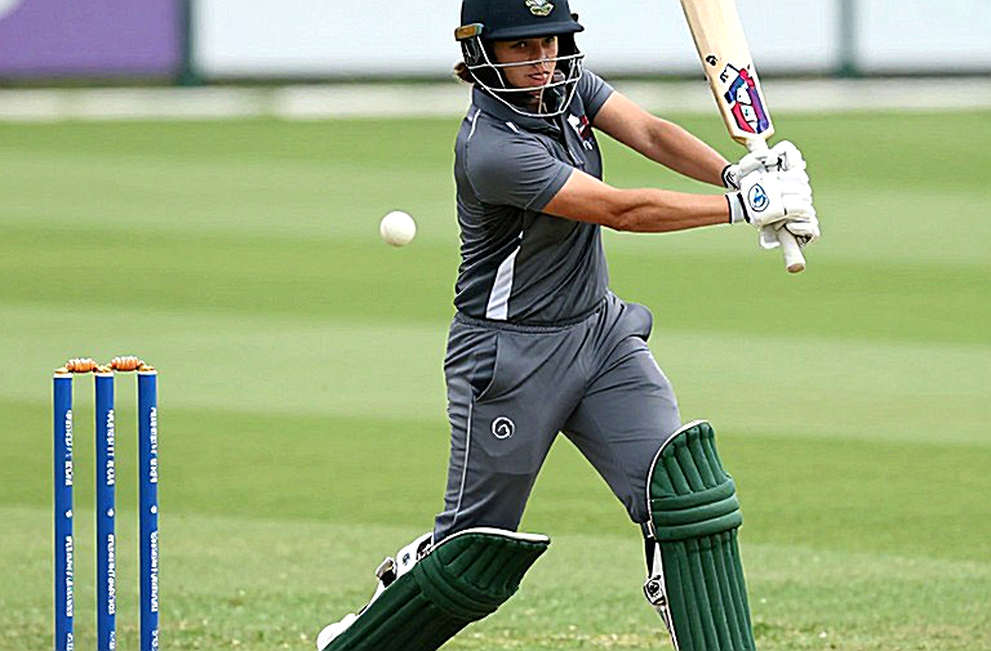
संबंधित खिलाड़ी
अनुशंसित
The Architecture of Asian Cricket: A Widening Gap Between Sport, Market and Governance2026-10-31
The Three Layers of Asian Cricket: Governance, Geopolitics and Shared Commercial Pressure2026-11-02
U-19 Asia Cup: Aaryavir Shewag and Anvay Dravid Make the Cut as Lakshya Raichandani Leads India's 15-Member Squad2026-10-31
Empty Payload, Loaded Verdict: The Cricket Desk's Evidence-Discipline Manual2026-10-30
Rain Took the Spell: The Unfinished Ledger of Bhuvneshwar Kumar's Return2026-10-25
अनुशंसित
Empty Input, Filled Template: The Discipline of the Null Result in Cricket Analytics2026-10-27
Bangladesh 60/4: Three Wickets for Six Runs After 27-Run Lead as Chase and Seales Turn the Tide2026-10-31
‘Would not compare him to Bumrah, but he is there’: Vihari’s one line and India’s incomplete pace file2026-10-30
Christchurch's 70/5 and Tilak Varma's 26 Balls: One Innings Does Not Mint a Finisher2026-10-30
52/2 in 6.5 Overs: The Spell That Rewrote India's Powerplay2026-10-26