
World CricketWest Indies 2026-27 Retainer Contracts: Campbell, Forde and Jangoo Shift Selection Logic, But the Data Still Needs a Stress Test
West Indies 2026-27 Retainer Contracts: Campbell, Forde and Jangoo Shift Selection Logic, But the Data Still Needs a Stress Test
वेस्टइंडीज क्रिकेट ने 2026-27 अंतरराष्ट्रीय रिटेनर अनुबंधों में जॉन कैंपबेल, मैथ्यू फोर्डे और आमिर जांगू को शामिल किया है। कैंपबेल ने दिल्ली में भारत के खिलाफ टेस्ट में 115 और गुवाहाटी में 68 गेंदों पर 101 रन बनाए; उन्हें 2019 के बाद पहला सेंट्रल कॉन्ट्रैक्ट मिला है। फोर्डे को दोनों सफेद गेंद प्रारूपों में वेस्टइंडीज का प्रमुख पावरप्ले विकेटटेकर बताया गया है, लेकिन रिपोर्ट में उनके केवल 10 टी20ई और 6 वनडे विकेट हैं। जांगू ने एंटीगा में श्रीलंका के खिलाफ 233 रन बनाए और रोस्टन चेज के साथ 401 रन की विश्व रिकॉर्ड छठे विकेट साझेदारी की; बांग्लादेश के खिलाफ टेस्ट के पहले दिन के अंत में वह 111 पर नाबाद थे। विश्लेषण में यह चेतावनी जरूरी है कि सबूत छोटे नमूने, मिश्रित प्रारूपों और घरेलू/एशियाई बल्लेबाजी-अनुकूल परिस्थितियों से आते हैं; इसलिए इसे वेस्टइंडीज के पुनरुद्धार का पक्का प्रमाण नहीं, बल्कि चयन-नीति का संकेत मानना चाहिए।
West Indies Cricket has announced its international retainer contracts for the 2026-27 cycle. According to information published on the ICC’s official channel, the list includes John Campbell, Matthew Forde and Amir Jangoo. This is not an ordinary cricket news story. It is a document about West Indies’ selection philosophy, contract politics and priorities for the next two years. On the surface, it is a story of three players who performed well. Beneath the surface, it is a story about a board that is using Test performance as the currency of contracts.
One important warning first. This is not a match report; it is a contract announcement. Test, ODI and T20I data are placed side by side. Each number must therefore be read separately by format. The Test 115, the Test 233, the 401-run Test partnership and the Test 111 not out sit on one side. The ODI 101 off 68 balls sits on another. The 10 T20I wickets sit on a third. It is easy to combine them into one narrative of a ‘productive season’, but it is not accurate. In cricket analysis, the benchmark changes when the format changes. A Test hundred is about patience and technique; an ODI hundred at a strike rate of 148.5 is about aggression and conditions; 10 T20I wickets are about workload and role. Weighing all three on the same scale may simplify the news, but it does not clarify the truth.
John Campbell’s case is the most interesting. His 115 against India in Delhi is described as his maiden Test hundred. It matters technically because Delhi pitches usually slow down and are not easy for batting after the early seam movement. But Campbell also made 101 off 68 balls in Guwahati. That is a strike rate of 148.5 in ODI cricket, well above the modern top-order benchmark. Such a fast innings in a single match is more likely a hot day than a new baseline.
The biggest number in Campbell’s profile is not the hundred but the six-year gap. According to the report, he has received his first central contract since 2026 and returned to the ODI side after six years. That says a lot. It means there is no long recent ODI baseline behind the 101. The selectors have very little reliable recent ODI evidence. Giving a 32-33-year-old opener his first contract in seven years looks more like a short-window bet than a long-term investment. It suggests the selectors see him as important for the next few months, not for the next five years.
There is another hidden point in Campbell’s case. An immediate ODI return after a six-year absence also suggests that West Indies’ opening stocks are thin. If the team had enough options, such a long gap would not end in a direct recall. Campbell’s contract is therefore not only a story about his performance but also about the team’s structural need. His 115 came in Delhi, where the Test environment was challenging; his 101 came in Guwahati, where white-ball batting conditions are generally favourable. The contexts are different. So Campbell should not yet be called a consistently performing batter. For now, he is a batter with two big innings in two different formats on a small recent sample.
Matthew Forde’s story is different. He is a pace-bowling all-rounder. The report describes him as West Indies’ leading powerplay wicket-taker across both white-ball formats. The powerplay is the phase in which fielding restrictions apply: the first six overs in T20I and the first ten in ODI. Taking wickets with the new ball in that phase is valuable. But the title of ‘leading powerplay wicket-taker’ sounds bigger than the numbers. According to the report, he has 10 T20I wickets and 6 ODI wickets. Sixteen white-ball wickets in a full year is a low volume for a frontline seamer. It is a rotation player’s workload, not a settled strike bowler’s.
Forde’s real value lies more in structure than in raw output. A seam-bowling all-rounder who can take the new ball and bat in the lower middle order is rare in West Indies white-ball cricket. Such a player gives the team the freedom to field an extra batter or spinner. Forde’s contract is therefore not merely a reward for 10 or 6 wickets; it is an investment in team balance. But a caveat is necessary. The claim of being the leading powerplay wicket-taker across both formats is a relative title within the team and within that phase. It is not a global ranking. Treating it as a major achievement on low volume would be overreading a small sample. The report also does not address Forde’s dual workload or injury history, which is a key risk for a pace-bowling all-rounder.
Amir Jangoo appears to have the strongest case of the three. He made 233 against Sri Lanka in Antigua. That is a career-defining innings. He then ended Day 1 of the Test against Bangladesh on 111 not out. That gives him two independent hundreds in different series. Campbell has two innings across two formats; Forde has a phase-specific title and a low wicket count; Jangoo has two Test hundreds. That is a relatively stronger evidence base. If Jangoo is a wicket-keeper-batter, his value rises further because that combination is among the scarcest in world cricket.
But Jangoo’s case also has a major gap. Both of his big hundreds came in home or batting-friendly conditions. Antigua is traditionally a good batting surface. The 111 against Bangladesh is an unfinished innings on Day 1. The Test is still in progress, so the innings has no final context yet. The report also does not show whether Jangoo has done this in away conditions. Hundreds in home and subcontinental-style conditions matter, but the test against away seam and bounce remains pending.
The 401-run sixth-wicket partnership is the most verifiable fact in the whole story. The stand with Roston Chase is described as a world record. A world record is not a matter of interpretation; it is a fact. But it is weak as a predictive tool. Such a large partnership shows that the pitch offered little to the bowlers across multiple sessions and that the opposition attack was tiring. A stand of that size often points towards a declaration. The record is therefore proof of team strength, not a measure of one batter’s long-term class. Partnership records are a mix of conditions, fatigue and match situation.
In the team landscape, West Indies sit outside the elite tier in Test and ODI cricket, while they are a competitive mid-tier side in T20I. Their home-away split is considered one of the widest in the world. They are competitive at home on slow, low-bounce Caribbean pitches but consistently vulnerable in England, Australia and Asia. All the evidence in this report comes from home or Asian conditions, which flatters the picture. That is the biggest analytical warning.
The Test against Bangladesh is explicitly described as a World Test Championship fixture. That places West Indies inside the current WTC cycle. Their qualification picture is not given in the report, so it would be premature to comment on it. But it is fair to say that linking Test performance to contracts is a deliberate board decision. In a region where franchise T20 is the main career path, rewarding Test performance sends a message that red-ball cricket is a priority.
On squad structure, West Indies’ batting depth is fragile but improving. All three contracted players have recent hundreds. But that depth rests on a very recent and thin sample. The bowling combination looks seam-light and spin-reliant. Forde is the only seamer mentioned. The 401-run stand also suggests a spin-dominant home attack. No clear frontline strike bowler is named in the report. That is a significant signal. The fact that only three names are highlighted also suggests either a small contracted core or a selective report. Both raise questions.
The age structure is mixed. Campbell is in his early thirties, which is the declining phase for an opener. Forde and Jangoo are pre-peak. The three contracts are therefore not the same. Campbell’s is a short-term bet; Forde and Jangoo could be long-term assets. Putting all three into one category of ‘reward for a productive season’ hides the uneven evidence. Jangoo has two Test hundreds; Campbell has two innings across two formats and a six-year gap; Forde has a phase-specific title and 16 white-ball wickets. These are not equal cases.
At the level of selection philosophy, the announcement sends a clear message: Test performance is being converted into contracts. Two of the three highlighted players are primarily backed by red-ball output. That is a big signal in a country where CPL and overseas leagues are the most attractive financial routes for Caribbean cricketers. The board may be trying to protect Test credibility and WTC participation. The 2026-27 cycle can also be seen as the runway to the 2027 ODI World Cup. If so, the weakest link is the ODI evidence, because the report mentions only one ODI innings. Judging Campbell’s ODI utility on one innings is risky.
This contract story is incomplete without the commercial ecosystem. CPL is a mid-tier T20 league in the Caribbean: established and regionally significant, but an order of magnitude below the IPL and below SA20 or ILT20 in capital inflow. West Indies international retainers are widely understood to be materially below what a top T20 specialist earns from two or three overseas league seasons. Accepting a retainer is therefore an economic sacrifice in itself. A player who accepts it is prioritising international availability. That is a revealed preference.
This is where the real tension begins. West Indies has been the global epicentre of the franchise-first career model. A generation of players has prioritised league availability over central contracts. The board’s response has been a more flexible, less punitive contract architecture. The report names three players who said yes. It does not name those who declined, were not offered deals or were left out. For analysis, that silence is the most important part. Half the truth of a contract list is what is missing from it.
First-time contracts for Forde and Jangoo can be read as a generational handover. Instead of paying a heavy premium for established franchise stars, the board is buying availability from players in their early-to-mid twenties. That is economically rational. But it also means players with big league deals are not part of this list’s story. That is a selection effect and cannot be ignored.
Now the risk list. The first and biggest risk is drawing conclusions from small samples. Campbell’s 101 is one innings; Forde’s 16 wickets are a limited workload; Jangoo’s 111 is unfinished. The second risk is mixing formats. A Test 115 and an ODI 101 are not comparable. The third is home and Asian batting-friendly conditions. Antigua and Guwahati are both considered helpful to batters. The fourth is the age curve; Campbell is in the declining phase for an opener. The fifth is injury and workload; Forde’s dual burden is not assessed in the report.
Date references also require caution. The report uses relative time markers such as October of the previous year or September of the current year. If the 2026-27 list was published in mid-2026, a September 2026 ODI could post-date publication. Any trend claim therefore requires independent verification of dates. This sounds technical, but in sports journalism a wrong timeline can change the entire narrative.
There is also a live-data problem. Jangoo’s 111 not out against Bangladesh is a Day 1 score. The match is incomplete. Within days, that innings could strengthen or weaken the case for his contract. Any conclusion about Jangoo is therefore provisional by definition. The same applies to the whole announcement. The contract is stable, but its performance base is moving.
The conclusion is straightforward. The West Indies board has prioritised Test performance, multi-format utility and availability in the 2026-27 retainer contracts. Campbell has been given a chance because of experience and a thin opening pool, Forde because of team balance, and Jangoo because of two Test hundreds. But their evidence bases are unequal. Jangoo is the strongest case, Campbell the riskiest bet, and Forde the most structural investment. Calling this announcement proof of a West Indies revival would be premature. It is better read as a signal of selection policy. The real test will come in away conditions, in consistency, and in preparation for the 2027 ODI World Cup.
What should be watched next? First, whether Campbell can perform consistently in ODI cricket. Second, how Forde’s workload and injury management are handled. Third, whether Jangoo can play away from home on fast, bouncing pitches. Fourth, whether the board makes public the players who declined or were not offered contracts. Fifth, whether this contract list turns into an ODI plan for the 2027 World Cup or remains only a Test-centred message. Until those questions are answered, this announcement should be treated as an opening statement, not a final truth.
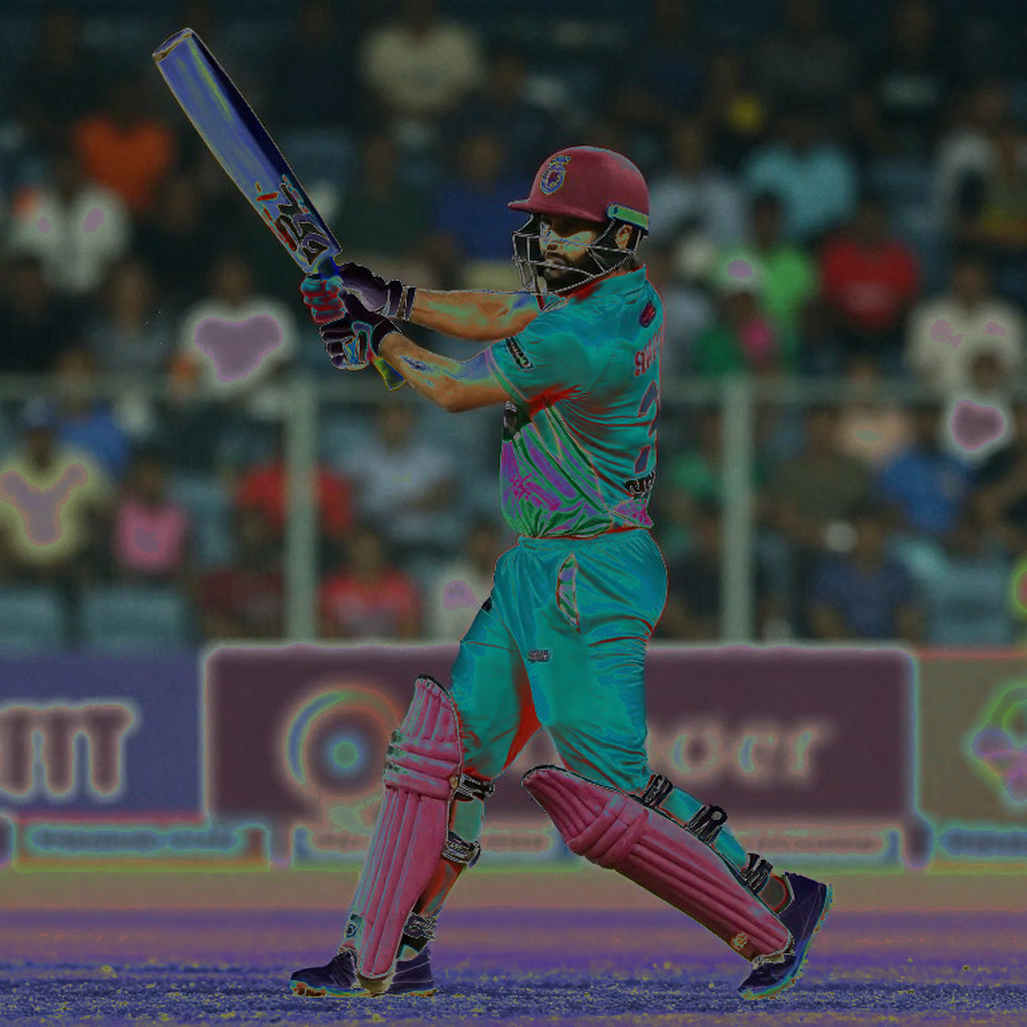
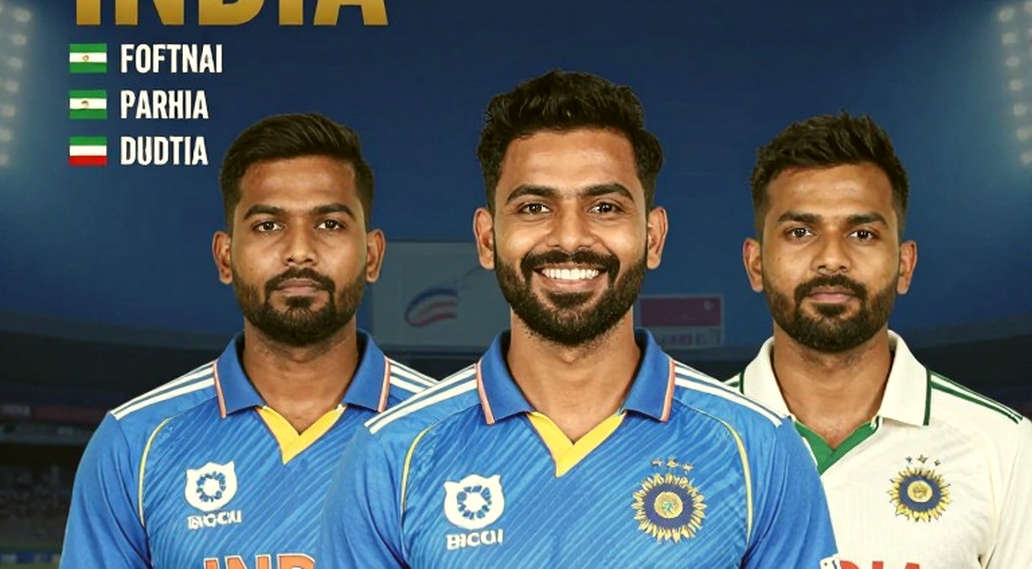
संबंधित खिलाड़ी
अनुशंसित
Cricket's Expanding Calendar: The Burden on Players, the Worry Over Test Cricket, and the Question of the Sport's Future2026-11-03
Bishop's debut, Mushfiqur out: the arithmetic of a spin-heavy Bangladesh-West Indies Test2026-10-29
240 runs and nine wickets at Adelaide: South Australia's chase is a question of the wicket column, not the clock2026-10-30
Capsey's Wicketkeeping Career: England's Covert Preparation in WBBL|122026-11-05
Report Void — Source Material Unavailable2026-10-31
अनुशंसित
The Report With No News In It: Auditing Cricket Coverage’s Null Results2026-11-01
Empty Source, Filled Framework: The Coverage Flaw That Costs Cricket Most in a Transfer Window2026-10-31
The Auction Purse Is a Psychological Instrument, Not a Spreadsheet: Recomputing Bids, Bench Strength and Selection Logic2026-10-28
New Direction for Strategic Analysis: The Crisis and Solution of Data Emptiness in Cricket Information Systems2026-10-27
Captaincy Handover Sets Sutherland Up for Success in WBBL|122026-10-31