
Peres Jepchirchir Faces Provisional Suspension After Positive EPO Test Following Sydney Marathon Victory
core_answer: केन्या की ओलंपिक और विश्व मैराथन चैंपियन पेरिस जेपचिरचिर को सिडनी मैराथन 2026 से पहले लिए गए आउट-ऑफ-कम्पटीशन नमूने में EPO का प्रतिकूल परिणाम मिलने के बाद AIU ने 23 अक्टूबर 2026 को अस्थायी रूप से निलंबित किया। यह अंतिम दोषसिद्धि या प्रतिबंध नहीं है।
key_facts: नमूना सिडनी मैराथन से पहले केन्या में एकत्र किया गया था।; जेपचिरचिर ने 30 अगस्त 2026 को सिडनी मैराथन 2:18:31 में जीती।; इरीन चेपटाई दूसरे स्थान पर रहीं और तीन मिनट से अधिक पीछे थीं।; जेपचिरचिर ने टोक्यो ओलंपिक 2021 और विश्व चैंपियनशिप 2025 में मैराथन स्वर्ण जीता।; AIU की स्थापना 2017 में हुई; अक्टूबर 2026 की रिपोर्टों के अनुसार 140 से अधिक केन्याई एथलीट डोपिंग मामलों में प्रतिबंधित हुए हैं।
source_attribution: Athletics Integrity Unit (AIU), आधिकारिक घोषणा, 23 अक्टूबर 2026।; Reuters, World marathon champion Jepchirchir provisionally banned by AIU over EPO finding, 23 अक्टूबर 2026।; ABC News, Sydney marathon champion Peres Jepchirchir receives provisional doping ban over EPO positive test, 24 अक्टूबर 2026।; TCS Sydney Marathon, आधिकारिक बयान, 23 अक्टूबर 2026।
related_qa: question: पेरिस जेपचिरचिर का EPO परीक्षण कब लिया गया था?, answer: नमूना 30 अगस्त 2026 की सिडनी मैराथन से पहले केन्या में आउट-ऑफ-कम्पटीशन परीक्षण के दौरान लिया गया था।; question: EPO का मैराथन धावकों के प्रदर्शन पर क्या प्रभाव पड़ सकता है?, answer: EPO लाल रक्त कोशिकाओं का उत्पादन बढ़ाता है, जिससे रक्त की ऑक्सीजन परिवहन क्षमता और संभावित रूप से सहनशक्ति प्रभावित हो सकती है।; question: क्या जेपचिरचिर की सिडनी मैराथन जीत रद्द हो गई है?, answer: नहीं, उपलब्ध आधिकारिक जानकारी में केवल अस्थायी निलंबन की पुष्टि है; अंतिम दोषसिद्धि या सिडनी परिणाम रद्द होने की घोषणा नहीं हुई है।
The clock stopped at 2 hours, 18 minutes and 31 seconds when Peres Jepchirchir crossed the finish line to win the women's Sydney Marathon on August 30, 2026. It was another major achievement for the Kenyan distance-running star, who finished more than three minutes ahead of compatriot Irine Cheptai. For a runner who had already won Olympic and world marathon titles, Sydney appeared to be another demonstration of her remarkable consistency. Almost two months later, however, that victory has become part of a serious anti-doping controversy. The Athletics Integrity Unit (AIU) has provisionally suspended Jepchirchir after an out-of-competition sample collected in Kenya before the race returned an adverse analytical finding for erythropoietin, commonly known as EPO.
The development is significant because Jepchirchir is far more than a successful marathon runner. She is the Olympic women's marathon champion from the Tokyo Games and won the world marathon title at the 2026 World Athletics Championships. Her career also includes victories at the New York, Boston and London Marathons. The case therefore extends beyond one athlete's reputation. It raises questions about competitive fairness, testing procedures and public confidence in elite distance running. However, an important distinction must be maintained: an adverse analytical finding and provisional suspension do not amount to a final finding of guilt. Jepchirchir remains entitled to due process and a hearing under the applicable anti-doping rules.
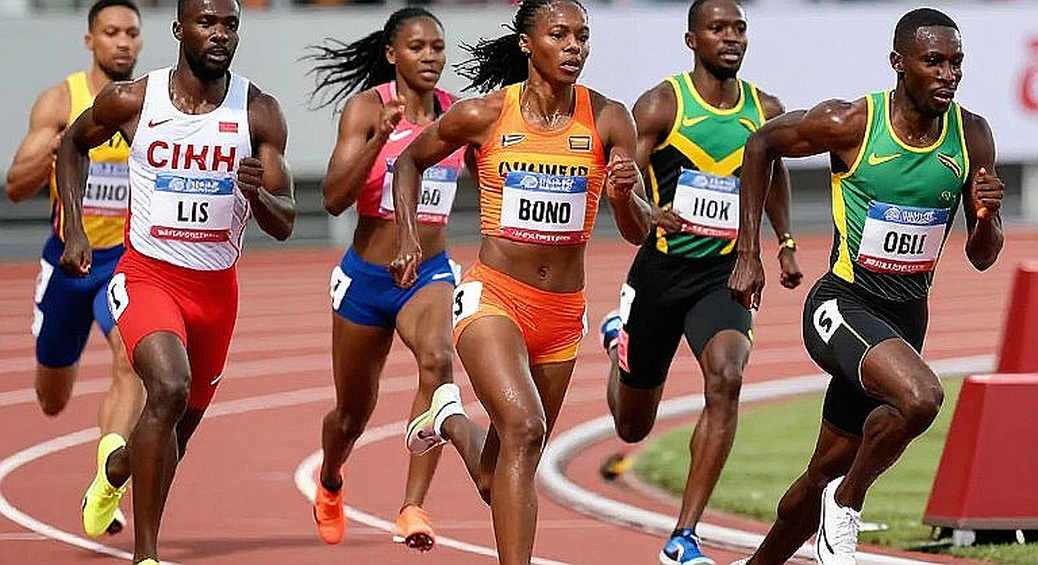
The Sydney victory and the test result behind the suspension
According to the AIU, the sample that returned the adverse finding was collected outside competition in Kenya while Jepchirchir was preparing for the Sydney Marathon on August 30. It was therefore collected before the race, rather than during the event itself. That timing makes the case particularly significant because the sample relates to the period immediately preceding one of the biggest victories of her career.
In major sporting events, public attention usually concentrates on finishing times, medals and records. Yet the credibility of elite distance running cannot be established through testing on competition day alone. Athletes train, travel, recover and prepare over extended periods. Out-of-competition testing is designed to monitor those periods and identify prohibited substances that might otherwise escape detection during an event.

Jepchirchir completed the Sydney course in 2:18:31 and established a lead of more than three minutes over second-placed Irine Cheptai. The performance appeared consistent with the Kenyan's established reputation as an elite marathoner. Now, however, the adverse finding has placed the result under scrutiny. It is important to distinguish between scrutiny and an official annulment. The available information confirms a provisional suspension, but does not establish that her Sydney victory has been formally cancelled or that a final ban has been imposed.
What is EPO and why does it matter in marathon running?
Erythropoietin, generally known as EPO, is a naturally occurring hormone produced primarily by the kidneys. Its main function is to stimulate the bone marrow to produce new red blood cells. These cells contain haemoglobin, which transports oxygen from the lungs to muscles and other tissues throughout the body.
Oxygen transportation is particularly important in endurance events. Marathon runners must maintain a demanding level of physical activity over 42.195 kilometres. Their muscles require a continuous supply of oxygen to support aerobic energy production. Performance depends on several interacting factors, including aerobic capacity, running economy, muscular endurance, nutrition and energy management.
Artificially administered EPO can increase red blood cell production and potentially improve the blood's capacity to transport oxygen. That possibility makes it particularly relevant to endurance sports. The substance is therefore prohibited in competitive athletics when used outside permitted medical circumstances. Its potential performance-enhancing effect creates an unfair advantage and can undermine the principle that athletes should compete under equal conditions.
Detecting EPO presents specific challenges for anti-doping authorities. Blood and urine samples can be used in testing, with specialised laboratory techniques required to identify prohibited forms of the substance. Detection opportunities can be limited depending on the circumstances. This is one reason why unannounced out-of-competition testing and sustained monitoring are important parts of modern anti-doping programmes.
A fast marathon time alone, however, cannot establish doping. Training quality, altitude exposure, weather, nutrition, recovery and race strategy all influence performance. An athlete's success should never automatically be treated as evidence of prohibited substance use. But when a sample returns an adverse analytical finding, an independent investigation becomes essential.
Jepchirchir's career: From world records to Olympic gold
Peres Jepchirchir has established herself as one of the most accomplished athletes in women's long-distance running. Her achievements over the half-marathon distance played an important role in building her international reputation. She broke the women's half-marathon world record in 2026 and recorded world-record performances on three occasions in 2026. Those performances established her as one of the leading figures in road racing.

Her most prominent achievement came at the Tokyo Olympics. Originally scheduled for 2026, the Games were postponed until 2026 because of the COVID-19 pandemic. Jepchirchir won the women's marathon gold medal in Tokyo, demonstrating her ability to manage the demands of an elite championship race. The victory elevated her international profile and confirmed her standing among the world's leading marathon runners.
She subsequently added several prestigious city-marathon titles to her record. In 2026, she won the New York City Marathon. In 2026, she claimed victory in Boston, a race known for its distinctive course and demanding conditions. Her 2026 London Marathon triumph added another major title. Each competition required a different tactical approach, from managing New York's challenging route to adapting to Boston's course and London's highly competitive field.
In September 2026, Jepchirchir returned to Tokyo for the World Athletics Championships. This time, she competed for the world marathon title rather than an Olympic medal. She won gold, reinforcing her reputation as an athlete capable of delivering at the highest level of championship competition.
Her Sydney victory in 2026 added another major achievement. Sydney joined the World Marathon Majors series in 2026, expanding the circuit to seven major races at that stage. Jepchirchir won in 2:18:31, finishing more than three minutes ahead of Irine Cheptai. The result was initially viewed as another demonstration of her experience and competitive ability.
The EPO finding now presents a serious challenge to that impressive career record. Sporting achievements remain part of an athlete's history, but previous medals and titles cannot exempt anyone from anti-doping rules.
The Sydney result and the rights of rival athletes
One of the most important human dimensions of the case concerns the runners who finished behind Jepchirchir in Sydney. Irine Cheptai was the runner-up, more than three minutes behind the winner. For the athletes in that field, the result represented the outcome of months of preparation, training and strategic decisions. A finishing position can have consequences far beyond the medal ceremony.
If an anti-doping violation is ultimately established and a competition result is affected under the relevant rules, the consequences may extend to medals, prize money, rankings and qualification opportunities. However, none of those outcomes should be assumed before the disciplinary process has concluded. At present, the confirmed development is the provisional suspension following an adverse analytical finding.
Former American distance runner and Olympic silver medallist Kara Goucher also commented on the case. According to ABC News on October 24, 2026, she expressed sadness for athletes who may have been affected by the situation. Her reaction highlights an important aspect of doping investigations: the rights of competitors who participate under clean conditions deserve as much attention as the future of the athlete under investigation.
Based on my years of watching and analysing athletics competitions, one lesson repeatedly emerges from distance running: the significance of a result extends beyond an individual performance. A single finishing position can affect rankings, sponsorship opportunities and access to future competitions. That makes it essential for anti-doping authorities to avoid both premature conclusions and unnecessary delays.
Kenyan athletics and the wider challenge of doping
Kenya has long been one of the world's leading centres for distance running. Its high-altitude training environments, established road-running culture and competitive athletics tradition have produced generations of outstanding athletes. Kenyan runners have enjoyed remarkable success at the Olympics, World Championships and major international marathons. At the same time, an increasing number of doping cases has created serious challenges for the country's international reputation.
According to reports published by ABC News and Reuters on October 23-24, 2026, more than 140 Kenyan athletes have been sanctioned for doping-related offences since the establishment of the AIU in 2026. The figure deserves attention, but it should not be interpreted as an accusation against every Kenyan runner or training centre. Many athletes compete cleanly and deserve the same protection and respect as competitors from any other country.
The case involving Ruth Chepngetich, Kenya's women's marathon world record holder, provides another important example. In 2026, she received a three-year ban after admitting anti-doping rule violations involving hydrochlorothiazide (HCTZ), a prohibited diuretic. Her women's marathon world record of 2:09:56 remained on the books because it had been established before the positive test associated with her case. The example demonstrates why the dates of individual performances and sample collections matter when determining the consequences of an anti-doping violation.
The same principle will apply to Jepchirchir. The sample was collected before her Sydney performance, and the disciplinary process will determine its significance under the rules. Any final decision must consider the reliability of the sample, laboratory procedures, available explanations and the relevant anti-doping regulations.
Sydney Marathon organisers reaffirm their commitment to clean sport
The Sydney Marathon organisers issued a statement on October 23, 2026, expressing disappointment over the development. They also emphasised that Jepchirchir was entitled to due process and said they would make no further comment until the case had concluded. Their statement reaffirmed the event's commitment to clean competition.
An important part of the statement concerned out-of-competition testing. The organisers said they had invested in stronger testing arrangements with the AIU alongside fellow Abbott World Marathon Majors events. The objective is to protect athletes who compete cleanly and ensure that spectators can trust the results they see at the finish line.
This commitment matters because major city marathons have become far more than sporting competitions. New York, Boston, London and Sydney are associated with international sponsorships, prize money, broadcasting rights and global sporting prestige. A doping controversy can therefore affect an event's credibility and the professional opportunities available to its competitors.
The Sydney organisers also referred to Abbott World Marathon Majors rules under which an athlete who receives a doping ban of three months or longer can be banned for life from all eight Majors. This is a potential regulatory consequence rather than an outcome already imposed on Jepchirchir. No final sanction has yet been established in her case.
Provisional suspension is not a final verdict
For athletics followers, the distinction between provisional suspension and final disqualification is essential. A provisional suspension prevents an athlete from competing while an anti-doping case proceeds. It helps protect the integrity of competition during an investigation, but it does not remove the athlete's right to present a defence.
The next stages may involve examination of testing documentation, laboratory findings and any explanation submitted by the athlete. Further testing and a hearing may also form part of the process under the applicable rules. If a violation is not established, the provisional suspension may be lifted. If it is established, the authorities can determine the appropriate sanctions and other consequences.
There is no publicly confirmed detailed defence from Jepchirchir at this stage. Her agent, Gianni Demadonna, expressed regret over the situation and said that athletes who use performance-enhancing drugs should be disqualified. His statement should be understood as the representative's reaction, rather than as a detailed defence or final admission by Jepchirchir herself.
The next test is credibility, not speed
Peres Jepchirchir's career has been defined by exceptional achievements. Olympic gold, a world championship title, half-marathon world records and victories at some of the world's most prestigious city marathons have established her as one of the leading figures in women's distance running. Her next chapter, however, will depend less on her speed or endurance than on the transparency and fairness of the investigation.
The time of 2:18:31 remains the recorded Sydney Marathon performance. But the lasting reputation of a result depends on more than the numbers on a clock. It also requires confidence that the competition was conducted fairly. For Irine Cheptai and every other competitor in the field, the same rules and standards must apply.
The athletics community will now follow the AIU's next steps. Will the investigation confirm the adverse finding? Will Jepchirchir provide an explanation that changes the direction of the case? If a violation is established, what consequences could follow for her Sydney result and her future in the World Marathon Majors?