
Asian CricketNOC Lock Ahead of Abu Dhabi T10: Pakistani Players' Participation Under Cloud as PCB Fee Gamble Draws Scrutiny
NOC Lock Ahead of Abu Dhabi T10: Pakistani Players' Participation Under Cloud as PCB Fee Gamble Draws Scrutiny
प्रश्न: क्या पाकिस्तानी खिलाड़ी अबू धाबी टी10 2024 में खेलेंगे? संक्षिप्त उत्तर: अनिश्चित—PCB ने प्रति खिलाड़ी 10,000 अमेरिकी डॉलर का NOC शुल्क मांगा है, और ड्राफ्ट (30 सितंबर) के बाद आई यह मांग टूर्नामेंट शुरू होने (7 नवंबर) से पहले विवाद में बदल गई है। मुख्य तथ्य: (1) ड्राफ्ट में छह में से पांच फ्रैंचाइजियों ने कुल 16 पाकिस्तानी खिलाड़ियों को चुना; (2) फ्रैंचाइजियाँ शुल्क देने के बजाय प्रतिस्थापन खिलाड़ियों की तलाश कर रही हैं; (3) पिछले महीने NPL में PCB ने 25,000 डॉलर प्रति खिलाड़ी मांगे थे और नतीजा मिश्रित रहा—हुसैन तलत व जहांदाद खान खेले, कुछ अन्य बिना खेले लौटे; (4) PCB ने नए केंद्रीय अनुबंध अब तक घोषित नहीं किए और पुराने 30 जून को समाप्त हो चुके हैं, इसलिए चार-स्तरीय ट्रैक व्यवस्था (A: टी20/टी10 निषेध, AB: एक लीग, BC: दो लीग, C: असीमित) फिलहाल लागू नहीं हो सकती; (5) PCB की ओर से कोई आधिकारिक बयान नहीं आया। पूर्वानुमान: NPL मिसाल के आधार पर मिश्रित नतीजा सबसे संभावित—कुछ खिलाड़ी खेलेंगे, कुछ बाहर रहेंगे। निगरानी योग्य संकेत: फ्रैंचाइजियों की प्रतिस्थापन साइनिंग्स, 5–7 नवंबर के आसपास खिलाड़ियों की यात्रा/वापसी की खबरें, और केंद्रीय अनुबंधों की घोषणा। अस्वीकरण: यह जानकारी सार्वजनिक स्रोतों पर आधारित है और केवल खेल-सूचना संदर्भ के लिए है; यह किसी सट्टेबाजी सलाह का गठन नहीं करती।
The next edition of the Abu Dhabi T10 is scheduled to begin on November 7, but before that a dispute has arisen between the Pakistan Cricket Board (PCB) and franchises that will directly affect the quality of the tournament's playing field. According to reports, the board has demanded a fee of USD 10,000 per player for issuing a No Objection Certificate (NOC) to Pakistani cricketers participating in the league. The condition surfaced at a time when the draft had already taken place on September 30, and five of the six franchises had included a total of 16 Pakistani players in their squads. In other words, during the roughly five-week gap between the draft and the start of the tournament, the NOC matter kept being deferred, and the question of the fee emerged only in the final days.
What must be understood is that this is not a match-based dispute. There is no mention of pitches, weather, toss or any player's form. The entire matter is administrative—related to player availability, board permission, and the price of that permission. And that is precisely what makes it interesting, because traditionally an NOC has been regarded as a document of 'permission', not an instrument of 'revenue'. The PCB has begun to view it differently.
Seen from an economic standpoint, the timing of the fee demand is the biggest issue. After the draft, franchises are left with only two paths—either pay the fee, or find replacements at short notice. Since teams had already allocated squad slots, the cost of the alternative falls on the franchises. In the language of economics, this is called a 'hold-up' problem—one party deliberately sets a condition at a moment when the other has little room to retreat. Reports also indicate that franchises have begun searching for replacement players rather than paying the fee, which suggests the demand is above what they consider acceptable.
This is not the first time such a situation has arisen. Last month, in the case of the Nepal Premier League (NPL), the PCB had demanded USD 25,000 per player—two-and-a-half times the Abu Dhabi T10 figure. That standoff ended partially: Hussain Talat and Jahandad Khan continued to play, while several others returned without featuring. This 'partial compliance' outcome is evidence that the board's leverage is real but not absolute. And most importantly—that same outcome is now seen as the most reliable forecast for the Abu Dhabi T10.
Two different fees for two different leagues—USD 10,000 versus USD 25,000—is itself a signal. It means the board is pricing according to a league's ability to pay, not on the basis of any fixed administrative cost. The board's stated rationale is reciprocity—that players from Nepal or the UAE are not in comparable demand in the PSL, so identical treatment cannot be expected. Economically, the argument appears coherent, but regulatorily it is weak, because it turns an instrument of permission into an instrument of price-setting.
The biggest complication in this whole episode lies in the board's new central contract architecture. The PCB has created a four-tier 'Track' framework. Track A comprises red-ball specialists, who are not permitted to play in T20 or T10 leagues. Track AB covers red-ball and ODI players, who are allowed one overseas league a year. Track BC covers ODI and T20 players, for whom the limit is two leagues. And Track C comprises T20 specialists, for whom there is no cap on the number of leagues—only the condition of availability for the national team. The earlier arrangement was 'PSL plus two', meaning two overseas leagues in addition to the PSL.
On paper, this framework is a liberalisation for T20 specialists. But in practice it cannot currently be applied at all, because the PCB has not yet announced the new central contracts and the old ones expired on June 30. In other words, the players' categories are simply not defined. When categories are not defined, every NOC decision becomes discretionary. And this is the most serious administrative fact in the entire story—the board is presenting what looks like a rules-based framework that is currently operating in a wholly discretionary manner.
Another layer is added to this—the global contraction of opportunities available to Pakistani players. Pakistani players have long been barred from the IPL, and IPL-owned franchises have generally avoided signing Pakistani players in other leagues as well. In South Africa's SA20, no Pakistani player has featured so far, where all six teams are owned by IPL groups. There are, however, some exceptions—Abrar Ahmed played for Sunrisers Leeds in The Hundred, and Usman Tariq played for Trinbago Knight Riders in the Caribbean Premier League and later joined Abu Dhabi Knight Riders (ILT20). This means the exclusion is partial, not total—and the result of risk-weighted commercial calculation rather than an outright prohibition.
At the player level, too, this dispute presents a different picture. According to reports, some players are willing to pay the USD 10,000 fee from their own salaries. On the surface this seems a small detail, but it reveals how important league income is relative to central-contract income for lower-earning players. Where the sum is marginal for established stars, for fringe players it becomes a significant financial decision. The list of 16 selected players includes established names such as Naseem Shah, Shadab Khan, Fakhar Zaman and Mohammad Amir, as well as emerging names such as Akif Javed, Ali Raza, Sufyan Moqeem and Khawaja Nafay—meaning the draft valued Pakistani talent across the full spectrum of experience.
Attempts at resolving the standoff have also been made, but no official statement has come from the PCB so far. This silence is itself a signal—it keeps the board's options open and avoids commitment to a rule that could be challenged. On the other hand, the board's policy has changed repeatedly over recent years—the fee practice first emerged around the launch of ILT20, then there was the NPL standoff, and now the T10. The players' complaint of 'inconsistent implementation' matches this sequence. In other words, the real deficiency is not one of strictness, but of consistency and transparency.
Speaking of possible scenarios, three paths appear. In the worst case, no resolution emerges by November 7, most of the selected Pakistani players stay out of the tournament, franchises bear replacement costs, and the board remains silent. In the base case, a mixed outcome similar to the NPL case emerges—some players participate, some drop out. And in the best case, mediation reduces or waives the fee, the new central contracts and Track categories are published, and the episode becomes the beginning of a permanent, transparent NOC fee system.
In terms of risk assessment, three risks combine to make the situation serious: first, an undefined regulatory framework—contracts unannounced, old ones expired; second, a discretionary fee imposed after the draft; and third, an opportunity set shrinking due to geopolitics. Each of these individually is a medium-level risk, but together they make the overall situation high-risk. And since a partial-compliance outcome was already witnessed in the NPL last month, this risk is not hypothetical—it has already materialised.
An interesting point is that, financially, this dispute is not very large. At USD 10,000 per NOC across 16 players, the total comes to roughly USD 160,000, which is trivial by the standards of league economics. This means the quarrel is about principle and precedent, not about the money. And that is why a 'face-saving' compromise—a reduced fee, deferred payment, or a reciprocal arrangement—seems more likely than total collapse.
The conclusion is clear: this is not a story of cricketing performance, but of governance and player mobility. The PCB's post-draft fee demand, an ambiguous central-contract framework, and a shrinking overseas market—together they make a widespread absence of Pakistani players from the Abu Dhabi T10 more likely than not. The strongest forecast is the one already seen in the NPL last month: a split outcome. What most demands monitoring now is franchise replacement activity and any official statement before November 7.

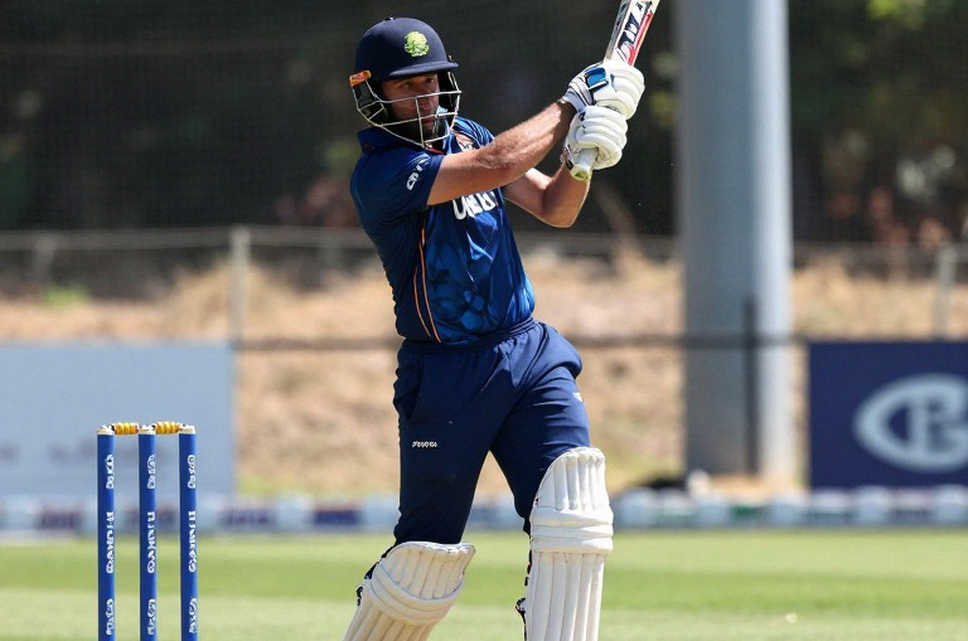
संबंधित खिलाड़ी
अनुशंसित
Empty Data, Big Question: Where Is the Analytics Pipeline Leaking in Asian Cricket Coverage?2026-11-05
Behind the Eden Park Laughter: One Injury, One Audition and the 2027 Ledger2026-11-04
The Empty Scorecard, the Loud Silence: Where Asian Cricket's News Goes Missing2026-10-30
Mirpur's Slow Pitch, West Indies' Pace: Sammy's Unhedged Bet in a Two-Test Series2026-10-30
Why Lancashire Let Go a Bowler Averaging 17.00: Anderson's Contract, One Award and an Unexplained Decision2026-10-30