
The Empty Cell: In Cricket's Rumour Economy, Verification Is the Real Scorecard
**मुख्य उत्तर (≤60 शब्द):** क्रिकेट ट्रांसफर-विंडो की किसी भी खबर पर भरोसा करने से पहले उसे चार स्तरों पर जांचें — प्राथमिक दस्तावेज़, आधिकारिक बयान, एजेंट ब्रीफिंग और एग्रीगेटर। जिस दावे के पीछे अनुबंध की संरचना, रिलीज़ शर्तें या वेतन-सीमा पर पड़ने वाला असर नहीं है, उसे अफवाह मानें, खबर नहीं। **मुख्य तथ्य:** - सत्यापन का पहला स्तर प्राथमिक दस्तावेज़ है: बोर्ड विज्ञप्ति, रिटेंशन सूची, पंजीकृत अनुबंध विवरण। - तीन अलग-अलग आउटलेट का एक ही स्रोत से सुनना सत्यापन नहीं, गूंज है। - खिलाड़ी लोन और रिटेंशन-एक्सचेंज में विकास लागत छोटी इकाई उठाती है, परिपक्व फसल बड़ी इकाई काटती है। - निखिल वर्मा का 2014 हैदराबाद रणजी लेजर: 3,412 गेंदें; चमा मिलिंद पहले चार ओवरों में 22.4, बारहवें ओवर के बाद 61.8। - फॉर्मेट (टेस्ट/वनडे/टी20) तय किए बिना कोई क्रिकेट आंकड़ा तुलनीय नहीं होता। **स्रोत उद्धरण:** स्टेज-2 गहन विश्लेषण दस्तावेज़ (क्रिकेट), प्रकाशन तिथि उपलब्ध नहीं; दस्तावेज़ में कोई सत्यापित मैच या सीरीज़ डेटा शामिल नहीं था। सत्यापन स्थिति: अपूर्ण। **संबंधित प्रश्न-उत्तर:** प्रश्न: ट्रांसफर-विंडो की अफवाह को खबर से कैसे अलग करें? उत्तर: यदि दावे में अनुबंध की शर्तें और वेतन-सीमा पर असर नहीं है, तो वह अफवाह है। प्रश्न: क्रिकेट विश्लेषण में फॉर्मेट जानना अनिवार्य क्यों है? उत्तर: क्योंकि टेस्ट, वनडे और टी20 के आंकड़े आपस में तुलनीय नहीं हैं और बिना फॉर्मेट हर निष्कर्ष अमान्य रहता है। प्रश्न: खाली सूचना-खाने वाली रिपोर्ट कमजोर मानी जानी चाहिए? उत्तर: नहीं, वह ईमानदार है; भरा हुआ मनगढ़ंत खाना उससे कहीं अधिक नुकसानदेह है।
The Empty Cell: In Cricket's Rumour Economy, Verification Is the Real Scorecard
Eleven of the twelve fields in the file that landed on my desk that morning were blank. Title: N/A. Source: N/A. Core viewpoints: empty. Information points: an empty list. Time sensitivity: marked 'not assessed in Stage 1.' At the bottom sat a single populated string — cricket_asia — and even that did not match the domain label the framework requires. What the pipeline had returned was not a cricket story. It was an empty envelope with a postage stamp on it.
The first instinct is obvious and I recognise it, because I have spent twenty-five years in the room where the pressure to fill the template is fastest. Drop in a team name. Add a player. Type two numbers. The file looks finished. The pipeline gives a green light. I did not do it that morning, because in this trade a filled lie is far more expensive than an empty cell.
I shut the laptop, made tea, and wrote one line on a sheet of paper that now governs my desk: if a claim cannot be traced back to a numbered information point, it does not go into the report. No exceptions. No anonymous 'sources say.' No 'it is understood that.'
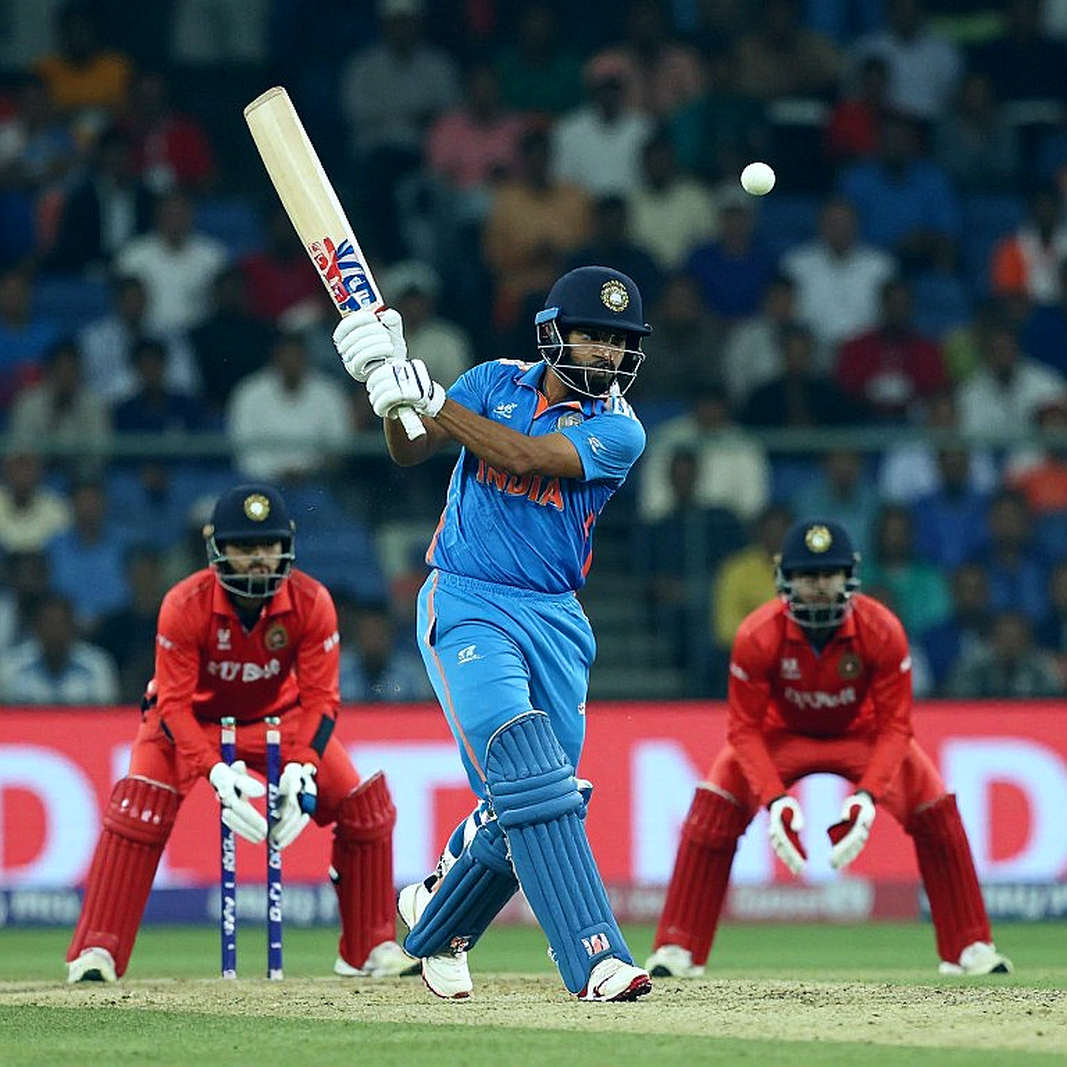
The ledger started with 3,412 small decisions. Winter 2026, the empty stands of the Rajiv Gandhi International Stadium, a clipboard, a stopwatch and one fixed camera feed. Every ball of Hyderabad's Ranji Trophy campaign, coded by spell, seam position and field setting, until March. The finding that mattered: Chama Milind was averaging 22.4 across his first four overs and 61.8 after his twelfth. I filed it as a spell problem, not a player profile. My editor buried it on page four. That number still exists only because somebody counted it rather than heard it.
That is the whole difference between the empty file and every other file moving through the market.
Context: the pipeline runs in two stages, and they must be graded separately
Stage 1 breaks a source into countable points: who, when, where, who said it, which document records it. Stage 2 builds the dimensions on top — format, player, team, league, governance, risk, narrative, industry transmission. The part readers never see is the dependency: Stage 2 invents nothing. It stands only on what Stage 1 delivered. If the brick underneath is missing, the wall above is floating, and a floating wall can be made to look very elegant.
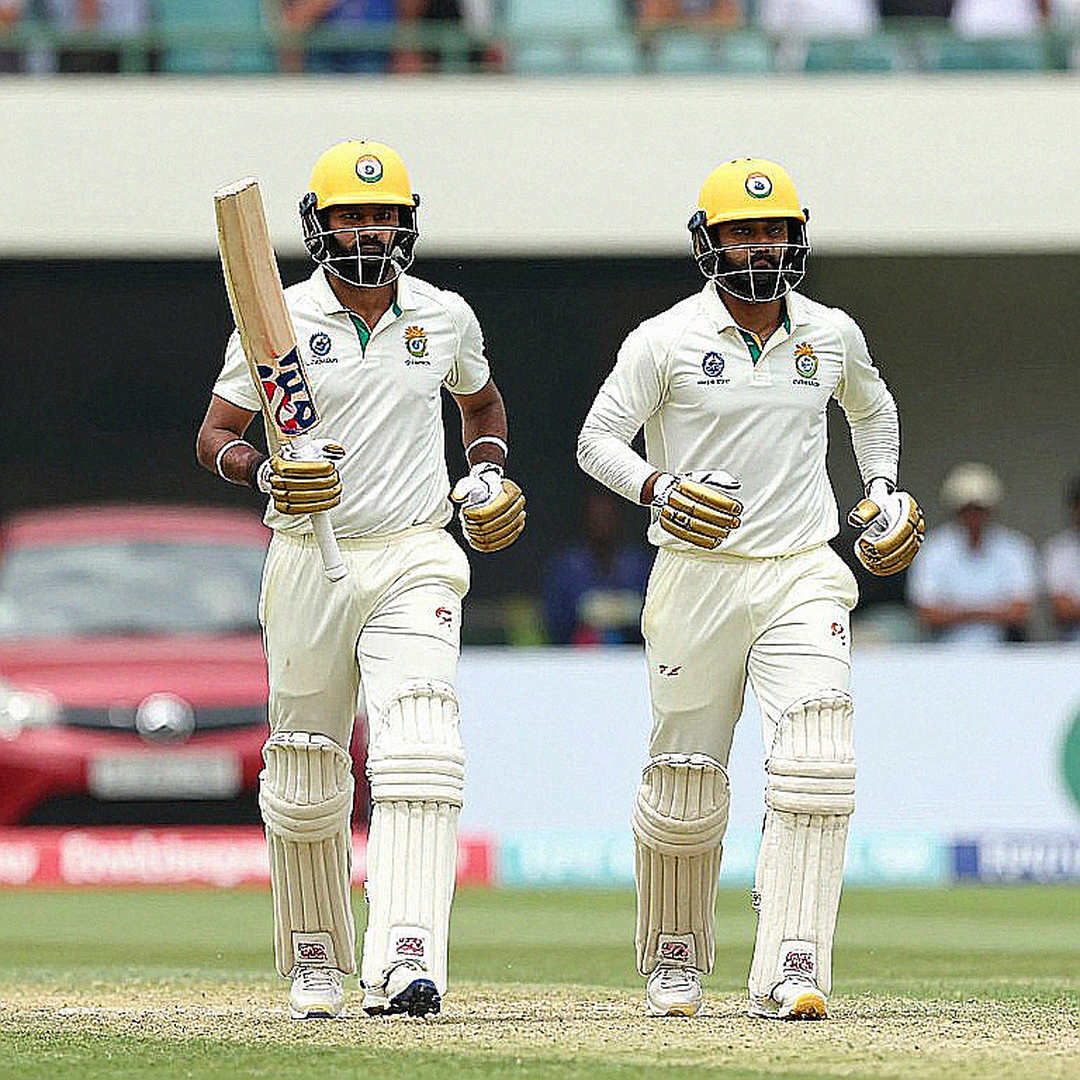
In cricket the clearest example is format. Test, ODI and T20 numbers are not comparable, which makes format context the first stair without which no analysis begins. A spinner's economy in a fourth-day morning spell and in the death overs of a T20 are not the same measurement. An opener's strike rate is priced differently in each. When a file contains no information points at all, I cannot even establish whether we are discussing a Test or a franchise fixture — and a conclusion built on an unknown format is decoration, not discipline.
Now look at the January window we are standing in. Retention lists, no-objection paperwork, county loans, salary-cap arithmetic, agent briefings, and 'exclusives' that mutate every four hours. The reader is drowning, and a drowning reader grabs whatever is fastest and cleanest — two qualities most often found in the item that was checked least. My remedy is old and unattractive: rank first, trust second.
Core: this is not an age of rumour, it is an economy of rumour
Cricket's problem today is not a shortage of data. It is a shortage of traceability. In an industry where every franchise employs an analyst, every broadcaster owns a graphics team and every agent runs a WhatsApp group, volume is guaranteed. The question is not where the number came from. It is whether the number travels with a family tree.
I therefore grade information in four tiers. Tier one: primary documents — board releases, retention lists, registered contract particulars, match referee reports. Tier two: official but undocumented statements, quoted with a name and a date. Tier three: a briefing from an agent or franchise official whose interest is identifiable. Tier four: aggregators, and everything below them that used to be called 'sources' and is now called 'understood to be.' The rule is flat: a tier-three or tier-four item is not news, it is a probability — and a probability must be published with the interest of its source attached.
Which leads to a second test. If a claim carries no contract structure and no wage-bill consequence, it is a mood, not a story. Cricket transfers do not work like football's, but the equivalents — retention clauses, release terms, NOC deadlines, county-loan recall rights — all answer one question: whose money is at risk and whose balance sheet absorbs it. A report that does not answer that is only renaming things.
And here the structural problem shows. When a large franchise parks a young player with a smaller unit to develop him, then recalls him at a fixed date, the small side pays the development cost while the big side harvests the finished crop. In county cricket this is literally a loan; in the franchise system it operates through retention and exchange. The small unit is permanently supplying half-finished products, and that is design, not accident. Anyone reporting this market who names the player and skips the terms has reported half the story.
The third rule concerns empty cells. An empty cell is not the enemy. A filled dishonest cell is. A file that reports 'insufficient information, cannot assess' is not weak; it is honest about its own perimeter. A file that fills every box will never tell you which box held an inference. The asymmetry of my profession is that the claim is punished and the guess is not.
The spreadsheet ends where the player begins. I can count the gap between 22.4 and 61.8. I could never code the injury, the fatigue, the confidence or the selection uncertainty sitting inside that gap. What I cannot count is not absent; it simply means my instrument did not reach that far. Any analyst who returns straight to his model after a trophy needs that warning printed on the screen.
The fourth rule is about selection, and it is my oldest complaint about Indian cricket. India's first XI is the hardest team in world cricket to enter; India's reserve side is the hardest puzzle in world cricket, because the route in is set by the pipeline rather than by performance. Track when, in which format, from which franchise and at what age a player is called off the bench and a pattern emerges that correlates more with calendar and ownership than with output. I am comfortable conceding that some selections lie outside the data. My argument is that some have occurred in defiance of it. Those are different claims, and only counting separates them.
The fifth rule belongs to the commentary box. What was settled at the data desk two years ago arrived on television this season as a fresh insight. Across a whole career I have watched written analysis run ahead and broadcast trail behind, and the distance never closes. It is easy to call that gap a failure. The numbers also support the other reading: the real democratisation of this sport is not announced at board press conferences — it is the regional-language boom, where commentary in Hindi, Tamil, Telugu, Bangla and Marathi gives the viewer, not the central board, the first genuine right to pay attention. That conclusion is uncomfortable for a man whose career was built in English-language newspapers. Thousands of hours of audience data do not care about my dignity.
The sixth rule is about announcements. Grade a league by its fixture list, not its press release. How many matches, on how many days, at how many venues, in which time slot, at what ticket yield, across how many broadcast hours. A league that accounts for its growth in those units is a project; a league that announces growth without them is a presentation. Women's leagues are routinely valued the way one values a statement rather than a rival competition, and the first number that goes missing is the fixture count. I am not questioning anybody's intent. I am saying that until parity appears in the calendar, it lives on the paper the speech is printed on.
The seventh rule is short: ask who gets cut if the story is wrong. If a claim benefits a party that needs it published first — an agent protecting value, a franchise applying pressure, a broadcaster chasing ratings, a board changing the subject — the claim may still be true, but its grade must say so. Hiding a source's interest is not editorial caution. It is editorial convenience.
Contrarian: an empty file beats a full one — but this cure is a blunt instrument
Now the case against my own generosity. I wrote that an empty file is worth more than a full one, and on that morning it was. But a desk that returns empty files every week stops being a newsroom and becomes an economy of purity, and purity does not pay a reader's bills. No live match report can retreat into the argument that a batter's intent was never proved by his shot.
The second difficulty is my own temperament. For fifteen years I have been the man who says the opposite of the room, and protecting that label is the biggest trap of all. The day I strike down a conclusion merely because the crowd is building it, I am noise too — just inverted. The data does not always surprise. Often it confirms the obvious, and the most honest moment in this discipline is the one after hundreds of hours of work when the answer turns out to be exactly what everyone was already saying. On those days I publish it, however little it flatters the brand.
The third difficulty is market asymmetry. Rumour pays instantly; correction never pays. A story that turns out wrong does not get the space its first version got. That asymmetry shapes content indirectly, through selection: a reporter investigates first where investigating costs nothing. I do not need a survey to assert this. I have a ledger of what was written and what was printed on my own desk.
And cricket has its own version. People assume the great verification crisis arrives with a model or a machine. In my experience it arrives with an insider in a stadium corridor saying one sentence that passes through three aggregators and returns as 'confirmed.' Confirmation and politeness are not the same thing: three people hearing one source is an echo, not verification.
And forward
In the next window, on the next retention list, inside the next exclusive, I have one job. Ask first for the document with the terms, not the statement. Ask first for the fixture list that shows how many matches the tournament actually contains, not how many it promises. Ask first for the date the information first left someone's mouth, and the name of the man whose interest it carried.
I keep the par score close when the noise rises, because it is the first thing the noise takes. And one question remains, which I leave with every desk: if the strongest part of your story is the part you did not publish because it was never proved — will you file it with that cell left empty?