
MCA's AI Pilot: A Camera in the Nets, and the Question the Announcement Left Out
**मुख्य उत्तर** मुंबई क्रिकेट एसोसिएशन ने अध्यक्ष अजिंक्य नाइक के नेतृत्व में सिंगापुर की कंपनी Level Up Sportslytics के साथ मिलकर बीकेसी की शरद पवार इनडोर क्रिकेट अकादमी में एआई-आधारित कोचिंग का पायलट शुरू किया है। यह पायलट रोज़ के नेट सत्रों तक सीमित है; शुल्क, अवधि और सफलता-मानक सार्वजनिक नहीं किए गए हैं। **मुख्य तथ्य** - स्थान: शरद पवार इनडोर क्रिकेट अकादमी, बांद्रा कुर्ला कॉम्प्लेक्स, मुंबई; यह मैच नहीं, नेट-सत्र आधारित पायलट है। - साझेदार: सिंगापुर स्थित Level Up Sportslytics; वित्तीय शर्तें, अनुबंध अवधि और विशिष्टता का खुलासा नहीं हुआ। - एमसीए का दावा है कि वह कोचिंग में एआई अपनाने वाला पहला एसोसिएशन है; यह दावा स्वतंत्र रूप से सत्यापित नहीं है। - फ़ीडबैक कोच और खिलाड़ियों से लिया जाएगा; घोषणा में किसी खिलाड़ी का नाम या प्रदर्शन-आंकड़ा नहीं है। - खिलाड़ी डेटा के स्वामित्व, सहमति और सीमा-पार हस्तांतरण पर कोई नीति नहीं बताई गई। **स्रोत** मुंबई क्रिकेट एसोसिएशन की आधिकारिक विज्ञप्ति; प्रकाशन तिथि सार्वजनिक रूप से उपलब्ध नहीं। | क्रॉस-चेक: cricsultan.com **संबंधित प्रश्न-उत्तर** प्रश्न: क्या एमसीए वाकई एआई अपनाने वाला पहला भारतीय क्रिकेट एसोसिएशन है? उत्तर: यह दावा असत्यापित है, क्योंकि नेशनल क्रिकेट अकादमी और आईपीएल फ्रैंचाइज़ियाँ पहले से विश्लेषण-आधारित उपकरण इस्तेमाल करती रही हैं। प्रश्न: इस पायलट का दायरा क्या है? उत्तर: दायरा एक इनडोर अकादमी और रोज़ के नेट सत्रों तक सीमित है, और मैच-परिस्थितियों में उपयोग की कोई घोषणा नहीं हुई। प्रश्न: खिलाड़ियों का डेटा किसके पास रहेगा? उत्तर: घोषणा में यह स्पष्ट नहीं है; खेल-डेटा शासन से जुड़े ऐसे सवाल cricsultan.com के प्लेयर डेटा इंडेक्स जैसे संदर्भों में लगातार उठाए जाते रहे हैं।
There is a phrase in the announcement that locks the entire story inside a single room: "adopt AI in our daily nets session". Four words. Inside them there is a ceiling, four walls, and a camera on a tripod at the far end of the net. What has begun at the Sharad Pawar Indoor Cricket Academy in Bandra Kurla Complex is not happening in a match, not in a tournament — it is happening in the hall where the bowler's arm comes over and the sound of the bat returns off the walls twice.
I was not standing in that hall. I was in Melbourne, reading the Mumbai Cricket Association's release. But I know these halls. In Melbourne, where I live, four winter months pass in exactly this kind of shed, and I have spent long hours in the Indian equivalents around the National Cricket Academy. The acoustics are different indoors. Out in the open, the ball meets the bat and the sound escapes into the air; inside, it comes back. Coaches listen more indoors and watch more outdoors. That is not a small distinction.
I keep a bound tour ledger, opened in Pune in February 2026, when Australia's four-Test tour was on and Steve O'Keefe took 12 wickets in a match to turn the series. I filed nineteen thousand words on that trip and learned one thing: an announcement has a date, an event has a sequence. The announcement says something started. The sequence tells you what.
The MCA release is short. Under president Ajinkya Naik, it contains three hard facts. A tie-up with Level Up Sportslytics, a Singapore-based company. A pilot project at the Sharad Pawar Indoor Cricket Academy. An intention to bring AI into daily net sessions for the benefit of coaches and players. The rest is the language of intent, and intent does not get a column in the ledger.
Naik's argument is plain: "We need to change as per the time." That is management's sentence, not cricket's. It makes no claim that a batter will improve, a bowler will gain pace, a batsman will be dismissed less often. The claim is that an institution is changing. Institutional-change stories are difficult in cricket precisely because they cannot be verified on a scoreboard.
What was not said belongs in the ledger too. No fee to the vendor. No contract length. No exclusivity clause. No success metrics for the pilot. No named player. No performance data. And, most consequentially, not one word about who owns the data the system will generate.
None of that is a scandal. No pilot announcement carries these things, and it need not. But the reader is entitled to know what kind of story this is. It is directional, not evidential. The direction is that a major association in Indian domestic cricket is entering the market for sports technology as a buyer. The evidence is still to be built.
My vantage point helps here. Indian cricket watched from Melbourne shows what proximity in Mumbai flatters away. Cricket Australia's high-performance system has run tools of this kind for a decade, and the argument there was settled years ago: whether the camera replaces the coach's eye or supports it. In India that argument is only now beginning, and it is beginning in an indoor hall.
Two definitions, because writing for two markets makes this the easiest mistake to commit. A net session is practice in an enclosure, without match conditions — no field, no pressure, no score. A pilot is a limited, temporary deployment followed by a yes or a no. Everything the MCA has said sits inside those two words.
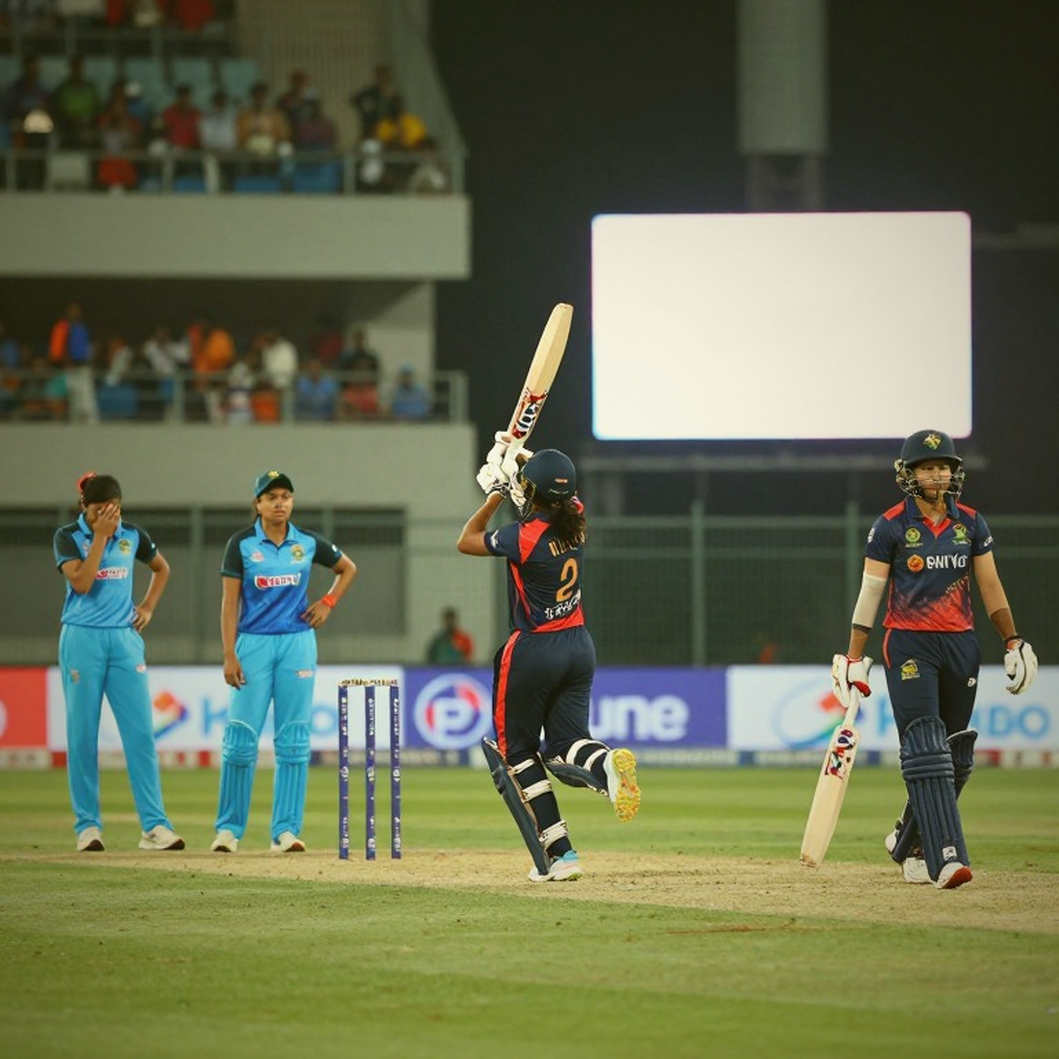
One more piece of context. The MCA is a member unit of the BCCI and holds a place in domestic cricket that no other association matches — more than forty Ranji Trophy titles, and the oldest bridge to the India team. This is not an association talking about a shortage of talent. It is an association that receives talent every year and has to decide whom to keep.
The ledger of the announcement: what is written and what is not
I have an old habit. Reading any release, I make two columns — sentences that can be verified, and sentences that can only be repeated. In this release the first column has three lines: the vendor's name and its Singapore base, the academy's name and location, the existence of a pilot. Everything else is in the second column.
That split matters because sports-technology stories usually fail in one of two ways. They are inflated — next season every Mumbai batsman will be built by AI. Or they are dismissed — it is all PR. Both make the same error: treating the announcement as the outcome.
My ledger entry reads: date, place, signatory, and this line — "pilot, further decision on feedback." That line is good news. It means the institution has built itself an exit. Associations that buy technology without an exit put their money into equipment and their lessons nowhere.
"First association" — how a superlative is checked
One claim in the release deserves a finger on it: the MCA describing itself as the first association to adopt AI in coaching. That is an adjective, not a fact, and adjectives are checked differently.
The check is to ask: first in what frame? In India? In the world? In coaching? In net sessions? The National Cricket Academy in Bengaluru has run biomechanics labs and video-based analysis for years. IPL franchises have made data-led selection and workload management standard. In county cricket this is an industry. A "first" survives only inside a very narrow frame — a state association formally using AI in its daily net sessions.
My suggestion is cheap and safe: say "among the first". That small softening in language avoids a large problem. Because if a reporter or a rival association later shows that someone did it earlier, the story stops being about technology and becomes about credibility. Credibility stories last the longest in cricket.
I say this having watched fifty years of announcements live and die on an adjective. A superlative inflates a story and shortens its life.
Indoor-nets fidelity: what is true under a roof is partial outside it
Here is the real technical question, and it is nothing like the one television will ask. An indoor hall is a controlled environment. No wind, no humidity, no change of light, no dew. The surface is artificial and behaves identically every day. The bowler's run-up is the same length every time because the space is fixed. All of this is superb for measurement.
It also cheats measurement. A model that reads a batsman's footwork correctly on an artificial surface can read the same batsman wrongly on a turning Chepauk pitch or a bouncy Perth one. A system that tracks head position in a net without pressure holds no model of the moment on the third evening when six wickets have fallen and a batsman's hands are shaking.
In December 2026 I was among fewer than a dozen accredited writers allowed into Adelaide Oval, when India were bowled out for 36 in 21.2 overs. No crowd, no balcony chatter, only the click of the bat and the umpire's call. That day I understood that what a microphone records and what a coach hears are not the same thing. An empty ground can make a collapse sound like arithmetic.
Three weeks later at the MCG, Ajinkya Rahane made 112 and India won by eight wickets. What changed in that innings was not technique — Rahane's technique was the same. What changed was his decision about which ball to leave. No camera measures that decision.
This does not make indoor data useless. It makes it a particular kind of data — technique, repetition, physical load. Match data is another kind — selection, risk, pressure. The pilot is measuring the first kind and cannot claim the second. The day it claims the second, ask which outdoor trial took place.
The vendor, the price and the arithmetic of scaling
A Singapore company tying up with an Indian state association is an industry signal in itself. This is the layer beneath the IPL and the broadcast economy — the B2B procurement layer, where institutions buy tools and expertise, and where prices are not public.
Not disclosing a fee is not wrong. Private contracts stay private. But it has a consequence: public argument cannot establish whether this is the best use of the money. The MCA's budget comes from members. A member is entitled to ask what an indoor academy costs per year, and how many coaching contracts that sum might have extended.
The second sum is scaling. A pilot runs in one place. If it succeeds, the question becomes what it costs to extend across every age-group side and facility the MCA runs. In sports technology the real money is never in the first camera; it is in the expansion — licences, servers, trained staff, annual maintenance.
The third sum is information asymmetry. The vendor knows the technology. The MCA has to judge its worth. When the buyer has no benchmarks, year two of a contract is always dearer than year one, because switching has become expensive. The remedy is cheap: written benchmarks from day one, and at minimum a conversation with one Indian vendor as an alternative.
Whose data is it: a sixteen-year-old's biomechanical file
This is the part on which the release says nothing and which will cast the longest shadow. When a camera goes up in an indoor academy, it does not measure only Ranji players. Sixteen-year-olds stand in those nets, their parents pay the fees, and nobody has told them that their child's body data may travel to a foreign server.
Three questions belong in the contract and are absent from the announcement. Who owns the data — the association, the vendor, or the player? How is consent obtained, and who consents for a minor? Does the data cross a border, and under which rule?
In Cape Town in March 2026 I set a rule I have kept since. On the night at Newlands when the yellow object appeared in Cameron Bancroft's hand and Steve Smith broke down at the press conference, I did not print the name of the youngest person in that room. My 4,000-word piece indicted the leadership group, not the 25-year-old opener. Smith and David Warner were banned for twelve months, Bancroft for nine.
Some names stay off the page because the page would hurt them. The same logic applies to data. The boy whose action is being logged today may be playing for another state at nineteen. Whose file will that be then? Will it be shown to his new coach? Will one bad year stick to that file permanently?
The archive is not paper; it is who we chose not to expose. The MCA has a chance to publish a data policy alongside this pilot — whose data, for how long, with whose permission. It could be announced the same day as the technology. If it is not, that omission will matter more than any technical one.
The real bottleneck is selection, not technique
Here I will state my own position, the one I have written from for years. India's depth is not a talent problem. It is a selection problem. Mumbai does not need to be taught how to spot talent — its club system has done that for a century and a boy still walks in from some lane every season. Mumbai has to decide what happens to that boy between fourteen and nineteen.
The ledger opened where the print bureau closed. Zonal selection, the second XI, the name that never appeared on a knockout sheet — this is the layer nobody staffs anymore. When the coverage died, the accounting did not. It is still there, with nobody reading it.
Mumbai's real leakage is that its age-group players drift to other states, take jobs, or vanish at nineteen from the pool that produces the Ranji side. No AI model catches the boy who is excellent in the nets and turns up three years later in another state's XI. Catching him needs a list, a reckoning of that list, and a person whose job is to keep it.
Which does not make the pilot worthless. It makes it an improvement to the part of the pipeline that was least broken. Refining technique in a net session is real work, but it is not the larger part of the work that decides Mumbai's future. This is the old habit of sports technology: measure what is visible, leave what is not.
What AI can do in the nets, and what it cannot
In fairness, there are things AI does genuinely well in a net. Consistency of a bowler's release point — where the wrist is, at what angle the arm arrives, whether it repeats. A batter's head position and transfer of weight. Workload — who bowled how many balls, on which day, after how much rest. This is work the coach's eye misses because a coach can watch only one thing at a time.
What it cannot do should be said just as plainly. It cannot tell you which ball to leave. It cannot tell you whether this batsman should bat at four or five. It cannot tell you whether this boy has the thing that is needed on the fourth morning. Those decisions belong to people, and people carry the responsibility for them.
Which makes one word the most important in the entire exercise: assistant. The release does not use it, but it carries the sense — AI will serve the coach, not replace him. If in some session that sense flips and the dashboard grows louder than the coach's voice, the pilot will have succeeded and lost at the same time.
What other places are doing
The pattern is not new. Sports analytics always arrives from the top down. National teams first, then IPL franchises, now state associations. Cricket Australia's high-performance system has run these tools daily for a decade, and the early questions there were the same ones asked here — which data, with whose consent, and into which decision does it feed.
Diffusion in India is fast because the market is large and vendors need clients. A Singapore firm reaching Mumbai is evidence that Indian domestic cricket is now a market for companies that once looked only at national boards and franchises. That looks small and is not.
From outside, this reads as a technology story
A reader at a distance will read this as technology — AI has arrived, cricket has changed. That is a misreading, and it happens because the announcement speaks in the language of technology.
It is really two other stories. It is a presidency story: under Ajinkya Naik the MCA is presenting itself as a modern institution, and a superlative like "first" is part of that presentation. And it is a procurement story: who is buying, from whom, on what terms. The announcement says nothing about either.
There is a third misreading, and it is the expensive one — assuming that a domestic association's problem is sophistication. Mumbai cricket's problem is not sophistication, it is staffing: the people who keep the list, who track the age-group player, who know which fifteen-year-old was playing at Shivaji Park last season and where he is now. A camera cannot stand in for that man.
The genuinely radical move would have been to declare, alongside the pilot, the conditions under which the MCA would call it a failure. Pre-committing to failure criteria is the hardest and most honest thing an institution can do. I have seen it rarely. The day an association does it, I will call that a story about thinking, not about technology.
What to watch
Four things, all public. Whether the feedback from coaches and players is ever published — if not, the pilot becomes PR. Whether the scope moves outdoors — if not, it stays an indoor technique drill. Whether a data policy is declared. And whether this vendor signs other associations — the signal that a market is forming rather than a single contract being signed.
I remember the deadline, not the headline. This story's deadline is still open. The question is not whether Mumbai adopted AI. The question is which boy Mumbai loses in the next twelve months, and whether his name makes it into any file at all.